How TOMRA is Unlocking Supply Chain Value From Mining Waste
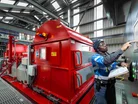
Mining waste represents one of the largest waste streams in the EU, according to the European Commission.
Beyond environmental and safety concerns, it poses a significant challenge for supply chain efficiency across the mining sector.
However, TOMRA's sensor-based sorting technology is transforming how mining operations manage material flows, turning previously discarded waste rock into valuable construction materials while reducing transportation costs.

As mining companies face mounting pressure to optimise their supply chains, waste management has emerged as a critical opportunity. The extraction and processing of mineral resources generates substantial quantities of tailings, waste rock and topsoil overburden.
Traditionally, these materials are transported over long distances to be stockpiled or dumped, requiring monitoring for decades. This creates substantial logistical burdens and ties up resources that could be deployed more effectively elsewhere.
Simultaneously, many operations import construction materials for plant foundations, tailings dams and infrastructure projects. In remote mining regions, transportation of these materials adds considerable costs to project budgets.
The company argues this represents a significant supply chain inefficiency, with valuable materials being discarded while similar materials are imported at considerable expense.
Optimising material flows
TOMRA's X-ray Transmission sorting technology addresses this supply chain disconnect by enabling mines to recover clean, stable construction materials from waste rock streams. The technology can detect fine-grained inclusions like base metal sulphides, allowing operations to remove acid-forming particles from the feed stream. The resulting low-sulphide material can then be managed more efficiently, whether placed in long-term storage, sold as aggregate or utilised on-site for construction purposes.
This capability could fundamentally alter the logistics and economics of mining operations. By processing waste rock close to the extraction point and redeploying it within the same operation, mines can reduce their reliance on external material suppliers.
"We are able to recover more metal from the same amount of material," says Rasoul Rezai, Global Segment Manager-Metals at TOMRA Mining.
"By rejecting waste early, operators feed higher-grade material into their mills, reduce operational expenditure, and improve overall efficiency. This is particularly crucial for critical minerals, where supply tensions are increasing worldwide."
Demonstrating supply chain value
At Kensington Mine in Alaska, TOMRA's XRT sorting has enabled the operation to transform its material handling processes, simultaneously enhancing gold recovery while producing clean waste that can be safely repurposed.
All supply chain, sustainability, Scope 3 and net zero leaders should attend:
- Procurement and Supply Chain LIVE: The Net Zero Summit - QEII Centre, London, March 4-5
- Procurement and Supply Chain LIVE: The US Summit - Navy Pier, Chicago, April 21-22
Co-located with Sustainability LIVE, these events brings together CSCOs, CSOs and senior decision-makers at a moment when sustainability, supply chains and commercial performance are increasingly interconnected.
Tickets can be booked online today for The Net Zero Summit and The US Summit. Group discounts available.
"In the latest publicly available technical report, 4,216 oz of gold were recovered from the pebble sorting operation in one year," says Jordan Rutledge, Area Sales Manager at TOMRA Mining.
"At current gold prices, that represents almost US$20m in recovered value – while still producing a clean, low-sulphide waste stream that can be safely placed or reused. That combination is what makes sorting so compelling for customers."
The Mt Carbine operation in Queensland, Australia demonstrates another supply chain model enabled by the technology. The facility uses TOMRA XRT to process tungsten-bearing ore, generating a barren waste stream that is being sold as aggregate. This transforms a cost centre into a revenue stream while addressing disposal challenges.
Reshaping operational models
By enabling operations to extend their lifespan through more efficient material processing, the technology allows companies to reduce procurement requirements while generating additional revenue from materials that would previously have represented purely a disposal cost.
This shift towards circular material flows within mining operations could reduce the sector's reliance on external suppliers and transportation networks, improving resilience against supply chain disruptions.
"Traditionally, operations have operated on a simple equation: ore generates profit, waste generates cost. Sensor-based sorting breaks that model," says TOMRA.
For supply chain managers in the mining sector, this represents an opportunity to fundamentally reconfigure material flows and unlock efficiencies that extend well beyond the processing plant itself.
Company portals

Executives
Jordan Rutledge
Area Sales Manager
Rasoul Rezai
Global Segment Manager-Metallic Ores