
Unlock Millions: Can You Optimise Assets like BHP?
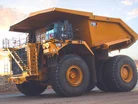
BHP's engineering breakthrough has unlocked an additional 1.52 million tonnes of iron ore haulage annually through a seemingly modest innovation: redesigned hoist cylinder systems for its haul truck fleet.
In the capital-intensive world of mining, where operations span kilometres and budgets reach billions, this case study demonstrates how targeted mechanical improvements can deliver substantial returns without the significant capital outlay required for new equipment.
The Western Australian Iron Ore (WAIO) division's achievement is a demonstration of how businesses can maximise value from existing assets. By addressing a critical inefficiency in the value chain, BHP has navigated the challenge of volatile global iron ore prices by extracting additional margin from its current fleet rather than expanding it.

The logistics efficiency of mining operations hinges on cycle time: the duration required for a truck to be loaded, travel to the primary crusher, deposit its load and return. In this high-stakes environment, seconds can determine whether quarterly targets are met or missed.
For WAIO, these crucial seconds were being lost during the tipping phase, when the truck's tray is raised to discharge its payload.
Prior to this intervention, certain trucks in the WAIO fleet operated under a mechanical constraint. The original hoist cylinders prevented trays from reaching an optimal discharge angle, resulting in "carry-back", a condition where substantial quantities of iron ore remained in the tray after tipping.
Trucks were effectively burning fuel and time transporting the same material repeatedly across the site.
Developing a tailored system
Identifying this bottleneck, BHP's South Flank Operations and Engineering teams rejected standard replacement parts in favour of bespoke engineering.
They engaged in strategic supplier collaboration with JC Cylinders, a specialist manufacturer in China, to develop a hoist system specifically designed for Western Australian operating conditions.
The engineering process required detailed analysis of the existing fleet's mechanical limitations and operational demands. Engineers mapped the precise angles needed for complete payload discharge across varying ore densities and moisture conditions.
This collaborative approach allowed JC Cylinders to manufacture components that addressed the specific challenges of the Pilbara environment, including extreme temperatures and abrasive dust conditions. The customised design incorporated enhanced sealing systems and materials selected for durability under continuous high-load operations.
The trial and subsequent deployment have yielded significant results. The new cylinders enable trays to tip higher and with greater precision, reducing carry-back frequency by 54%. By ensuring trays are fully emptied before trucks begin their return journey, the fleet now tips an additional 127,000 tonnes of iron ore monthly.
Rashpal Bhatti, BHP's Group Procurement Officer, explains: "These bespoke cylinder hoists have been a tipping point for haul truck productivity, resulting in a 54% reduction in the number of times product is carried back in the truck.
"It's a small solution with a big impact – we're tipping the productivity uplift to unlock tens of millions of dollars in additional revenue every year. We see every dollar we spend as a lever for performance and progress. This is how we can help proactively create the conditions for long-term competitiveness and true operational innovation."
Optimisation over expansion
This initiative aligns with a broader industry shift that Deloitte has termed "Operational Excellence 2.0." As the mining sector confronts mounting ESG pressures and economic volatility, focus has pivoted from expansion to optimisation.
According to PwC's 2025 Mine Report, the industry is entering an era where digital integration and mechanical reliability must converge. BHP's retrofit exemplifies this approach.
By improving the mechanical availability of the cylinders, the company has reduced unplanned maintenance windows that leave expensive machinery idle.
This hardware upgrade also establishes a foundation for AI-driven logistics. Data collected from these faster, more reliable cycles provides more precise inputs for predictive maintenance models.
The more predictable the hardware, the more effective the software analytics become.
The project was led from Adelaide, South Australia, where Rashpal manages BHP's global procurement operations.
"The scale of our global procurement spend gives us a unique opportunity to shape how we innovate across our supply chain and achieve solutions that deliver cost reduction, productivity, resilience and safety," Rashpal adds.
By leveraging substantial purchasing power to commission bespoke engineering rather than accepting standard replacements, BHP has effectively manufactured additional capacity. The 1.52 million tonnes of extra ore annually is a revenue uplift estimated in the tens of millions of dollars, achieved whilst maintaining a static fleet size.
Competitive advantage through efficiency
In a sector where margins often fluctuate with global markets, the ability to control internal efficiencies provides a significant competitive advantage. BHP's South Flank innovation demonstrates that expanding the fleet is not always necessary; sometimes the existing fleet simply needs to tip more effectively.
As the industry progresses towards 2030, this asset optimisation strategy could become standard practice, with these redesigned cylinders serving as levers that tip the balance towards a more resilient and productive operational future.
Company portals

Executives

Rashpal Singh Bhatti
Group Procurement Officer