How New EU Law Could Boost Agriculture & Food Supply Chains
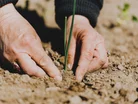
The European Union is putting soil health on par with water, air and marine ecosystems by adopting its first dedicated soil monitoring directive.
Passed by the European Parliament with support from 341 MEPs, the new law introduces a framework to restore soil health across the bloc by 2050.
With more than 60% of European soils in poor condition and degradation costing in excess of US$54bn every year, this legislation targets both environmental and economic recovery.

For agriculture and the food supply chain, the impact is direct. Degraded soil compromises crop quality and yields, increases dependency on synthetic inputs and weakens resilience to climate shocks. Healthy soil supports biodiversity, regulates water and stores carbon, all of which are central to farming and food production.
The law comes after years of debate, as a previous version stalled for nearly a decade before being dropped in 2014. Soil, while affected by several indirect EU rules, has lacked a dedicated legal framework. That gap is now closed. In adopting this directive, the EU signals a shift in priority, giving soil the same status as other core environmental assets.
Kristine De Schamphelaere, Policy Officer for Agriculture at PAN Europe, explains: "While much more will be needed to actually restore our soils, today policy makers took a first historical step to acknowledge the common ground: there is no future without healthy, living soils."
Standardised monitoring
The directive sets out common guidelines for how soil should be measured, monitored and reported.
Member states must assess soil condition using a shared methodology that covers physical, chemical and biological indicators. This includes monitoring for pollutants such as pesticides and microplastics, and measuring land take — the conversion of natural or agricultural land to artificial surfaces like concrete or asphalt.
Soil sealing and soil removal, especially through construction, are key areas of focus. These practices not only reduce the area of usable land but also limit the soil’s ability to absorb water and support crops.
Under the new directive, EU countries must introduce systems that monitor the scale and impact of such developments, with regular updates submitted to both the European Commission and the European Environment Agency.
Governments will also be required to identify and manage contaminated sites, using consistent criteria to classify and prioritise cleanup. This responds to long-standing concerns over fragmented and delayed remediation efforts, particularly in agricultural zones affected by industrial pollution.
Despite these improvements, some environmental groups believe the directive could go further.
Caroline Heinzel, Policy Officer for Nature at the European Environmental Bureau, says: "It is reassuring that a majority of MEPs resisted populism and disinformation, and stood up for Europe's soils today.
"While the law is not as strong as it should be, it's a first step in the right direction and a reminder that progress is still possible."
Implications for agriculture
The directive has clear consequences for farmers, agri-businesses and companies linked to the land through the supply chain.
From input suppliers to logistics providers, healthier soils mean more predictable harvests, better product quality and fewer disruptions linked to extreme weather or degraded land. These changes will also support Europe’s ambitions to reach climate neutrality by 2050.
Improved soil management can stabilise yields and reduce reliance on synthetic fertilisers and pesticides. With new reporting obligations and stronger oversight of land use, agricultural producers will need to adapt to more stringent data collection, field monitoring and land-use planning. This offers new opportunities for agri-tech, particularly in remote sensing, precision farming and soil analytics.
According to Martina Forbicini, Programme Officer on Soil Health at the Environmental Coalition on Standards: "Healthy soils are essential to all life on Earth, so it's good to see the EU finally legislating to protect this long-neglected, vital resource.
"The law could have been more ambitious, but it will remain a crucial tool to harmonise soil data collection and monitoring in the EU."
Support mechanisms are also part of the rollout. The Commission plans to develop standardised tools and promote best practice sharing across countries, ensuring that even smaller or less-equipped regions can meet the directive’s requirements.
The transition period gives states three years to integrate the new rules into national law, with final approval of the directive pending a final vote by the European Parliament.
Looking ahead, businesses involved in agriculture, construction or manufacturing must assess how the new rules could affect their operations.
Company portals


Executives
Caroline Heinzel
Policy Officer for Soil

Kristine de Schamphelaere
Policy Officer for Agriculture at PAN Europe
Martina Forbicini
Programme Officer on Soil Health
Ursula von der Leyen
President