Europe's Bold Bid to Achieve Sustainable Transportation
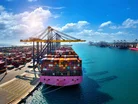
The European Commission's Sustainable Transport Investment Plan (STIP) is a roadmap to reshape fuel supply chains for the aviation and maritime sectors as they face pressure to decarbonise.
According to Air Transport Action Group, a Swiss based NGO, aviation produced 882Mt of CO₂ in 2023, showing the scale of the challenge.
The STIP aims to foster investment in renewable and low-carbon fuels, creating a new operational framework for these critical industries.

Scaling SAF and maritime fuel supply chains
The investment plan aims to establish reliable alternative fuel supply chains to meet new regulatory demands, aligning with the EU’s ReFuelEU aviation and FuelEU maritime regulations.
ReFuelEU is designed to increase the use of sustainable aviation fuels (SAF), including synthetic fuels, advanced biofuels and recycled carbon aviation fuels, to lower CO₂ emissions from air transport.
The FuelEU maritime regulation imposes limits on the yearly average greenhouse gas intensity for ships more than 5,000 gross tonnes calling at European ports.
From 1 January 2030, passenger and container ships will also be required to use onshore power supplies or other zero-emission technologies when docked. Fulfilling these targets will require a supply of approximately 20 million tonnes of SAF and investments totalling around €100bn (US$115.6bn) by 2035.
Mobilising capital for fuel production
A core component of the STIP is providing the regulatory certainty needed to attract significant private investment into the production of renewable and low-carbon fuels.
The European Commission is signalling to the market that its targets are firm and that it will support the sector through this transition. A series of EU measures are expected to mobilise at least US$3.1bn by the end of 2027. These include:
- InvestEU to mobilise at least US$2.1bn for sustainable alternative fuels by 2027
- About US$320m via the European Hydrogen Bank to support hydrogen production for SAF and sustainable maritime fuel (SMF) by year end
- Around US$142m for research and innovation projects under Horizon Europe
- A projected US$164m for synthetic aviation fuel projects and US$314m for maritime fuel projects through the Innovation Fund
- An eSAF Early Movers Coalition pilot, which aims to mobilise at least US$535m for synthetic aviation fuel projects
Apostolos Tzitzikostas, Commissioner for Sustainable Transport and Tourism, explains: "Our Sustainable Transport Investment Plan is a decisive step towards a sustainable future. It’s not just about cutting emissions; it’s about building a stronger, more competitive and resilient Europe that leads in sustainable transport.
"Success will depend on close cooperation among Member States, industry, financiers and civil society to turn this challenge into a strategic opportunity for Europe."
A strategic framework
The STIP is structured around three pillars to de-risk investment and build out Europe's market for renewable and low-carbon fuels:
- The first is a strategic framework that identifies critical investment needs and current gaps in the supply chain.
- The second pillar involves financing actions that set out short and medium-term measures to de-risk capital, unlock investment and bridge the gap between fuel producers and buyers.
- The third pillar is an external dimension focused on supporting the global production and uptake of these fuels. This aims to secure EU access to international supplies while ensuring a level playing field for European businesses operating in the global market.
By accelerating the production of EU-made sustainable fuels, Europe could strengthen its industrial competitiveness and reduce its dependency on imported fossil fuels, supporting the transition towards climate neutrality by 2050.