How Gerber's Supply Chain Strengthens Baby Food Quality
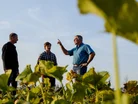
Gerber, a Nestlé subsidiary, keeps its focus on the ground — literally.
For more than 95 years, the baby food brand has rooted its mission in quality and safety, beginning not in the factory, but out in the fields with a group of farmers it's worked with for generations.
This isn't just about tradition — it's a supply chain strategy grounded in long-term relationships and an eye on regenerative agriculture.
At the centre of Gerber’s approach is its close connection with fruit and vegetable growers. Most are long-time collaborators, some spanning decades.
These farms, many of them based in Michigan, are the starting point of a supply chain built on consistency, trust and a shared mission to produce safe, nutritious baby food.
Dr Todd DeKryger, Sustainable Agriculture Manager at Gerber, explains: “We put quality at the forefront of everything we do.”
That attention starts at the very beginning of the chain — in the soil, where everything the company makes originates.
It’s here that Gerber backs regenerative agriculture, a method of farming that focuses on improving soil health, increasing biodiversity and limiting the environmental footprint of food production.
The method includes practices like planting cover crops — plants that are not harvested but are used to protect and enrich the soil — and reducing tillage, which disturbs the soil less.
It also encourages lower pesticide use, which not only protects the soil but supports local ecosystems. These efforts all feed into Gerber’s supply chain as early quality assurance steps, ensuring that what's planted already meets a high environmental and nutritional benchmark.
Gerber backs its growers technically and financially to adopt these methods. As Todd explains, “We’ve seen some positive outcomes so far — many of our growers are already advanced in utilising these methods.”
The company doesn’t just tell farmers what to do; it works alongside them, sharing data, research and investment so that better farming translates directly into better baby food.

Monitoring every step from field to jar
Gerber’s supply chain also relies on science to help determine how and where crops are grown. That means prioritising locations with the best soil and climate conditions for each ingredient. Crop rotation is guided by research, not just tradition, allowing Gerber to maintain soil health and reduce the risk of heavy metals entering the supply.
Root crops, like carrots or sweet potatoes, are particularly prone to absorbing heavy metals. For those, Gerber enforces stricter controls: every field must be approved before planting and regularly tested before harvest. The company uses soil sampling to monitor metal levels and takes action well before any crop is turned into baby food.
By integrating soil health and contaminant management directly into the supply chain, Gerber reduces risk early on — rather than correcting problems later in the process.
As Todd says: “Gerber is all about continuous learning and finding new solutions.” That includes investing in research and working with universities and experts in soil science and nutrient uptake. The goal is to stay ahead of challenges and keep making baby food that meets its internal safety and quality standards.
Building a chain that lasts generations
Gerber’s strategy hinges on its long-term grower relationships. These are not just suppliers, but critical partners in delivering the quality families expect. With shared data, field support and sustainable farming techniques, these farmers help shape every product Gerber puts on the shelf.
One technique Todd highlights is how fruit growers are adapting their orchards: “Our fruit growers are adopting natural control strategies in their orchards that help reduce pesticide use and preserve beneficial insects.”
By leaving tree trimmings in the orchards, they’re also helping carbon and nutrients return to the soil, feeding the next crop and extending the land's viability.
Gerber’s farm-focused supply chain doesn’t just improve baby food — it also works toward a healthier environment and sustainable food production model. The company’s strategy to protect the land where ingredients grow is part of its long-term quality commitment.
"I'm excited to build on the years of progress we've made, so we can continue protecting the land where our ingredients grow and ensure we can deliver quality baby food for generations to come," Todd concludes.
Explore the latest edition of Supply Chain Digital Magazine and be part of the conversation at our global conference series, Procurement & Supply Chain LIVE.
Discover all our upcoming events and secure your tickets today.
Supply Chain Digital is a BizClik brand.