What Does EU-Australia Trade Deal Mean for Supply Chains?
The EU and Australia have announced a significant security and defence partnership, strengthening their close relationship amid ongoing geopolitical uncertainty.
Alongside this, they have finalised negotiations on a balanced Free Trade Agreement in order to deliver on mutually beneficial outcomes through trade.
Agreements also include opening formal negotiations on Australia's association with Horizon Europe, which will help further the country's research and innovation capabilities.
"After eight years of negotiations, Australia and the European Union have signed a landmark trade deal," says Australian Prime Minister, Anthony Albanese.
The deal
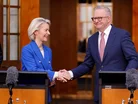
The free trade agreement (FTA) was finalised at a leaders' meeting between President of the European Commission, Ursula von der Leyen, and the Prime Minister of Australia, Anthony Albanese, which took place in Canberra.
The Security and Defence Partnership (SDP) was signed virtually by the High Representative/Vice-President Kaja Kallas, as well as Richard Donald Marles, the Australian Deputy Prime Minister and Minister for Defence, and Penny Wong, the Australian Minister for Foreign Affairs.
The agreement will be beneficial to both parties, bringing about better access to materials and business opportunities. The aim of the deal is to strengthen long-term business relationship capabilities, as well as economically benefit both regions.
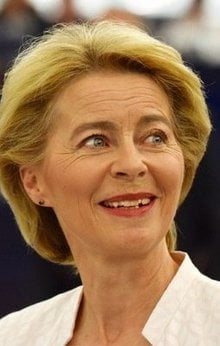
"The EU and Australia may be geographically far apart, but we could not be closer in how we see the world," says President of the European Commission, Ursula von der Leyen.
"With these dynamic new partnerships on security and defence, as well as trade, we are moving even closer together. These agreements put in place lasting, trust-based structures to support peace and security through strength, promote prosperity through rules-based trade, and work together to uphold global institutions.
"We are determined to create a cleaner and more digital future for our citizens, workers and businesses. And we are sending a strong signal to the rest of the world that friendship and cooperation matter most in times of turbulence."
Sustainability, procurement and supply chain leaders won’t want to miss Procurement & Supply Chain LIVE, taking place at Navy Pier, Chicago, on April 21–22.
Co-located with Sustainability LIVE: The US Summit, the event unites senior decision-makers at a time when supply chains, sustainability and business performance are more interdependent than ever.
Secure your place now for The US Summit – group booking discounts available
Prioritising security
Australia and the EU have been long-standing allies, with a shared global outlook in defencing multilateralism and a rules-based international order. The value of an increasingly deepening partnership between the regions is growing, particularly regarding security.
Supported by cooperation and building on a strong existing interaction, the SDP will create a significant framework to ensure efficiency amid ongoing geopolitical challenges.
Main benefits will include:
- Closer coordination of strategic priorities due to security and defence dialogues
- Strengthened cooperation on crisis management, missions and operations, including exercises, training and education, due to the Common Security and Defence Policy,
- Ongoing strengthened cooperation on maritime security, cybersecurity, countering hybrid threats and foreign information manipulation and interference
- Promoting exploration of new and disruptive technologies, like AI, as well as space security, non-proliferation and disarmament
- Closer communication to build situational awareness across regions
- Better capacity building for partners, with strengthened coordination in multilateral and regional fora
- A flexible and forward-looking approach to help deepen coordination in response to emerging security challenges
von der Leyen adds: "We are telling an important story to a world that is deeply changing. A world where great powers are using tariffs as a leverage and supply chains as a vulnerability to be exploited. In our story, open, rules-based trade delivers positive, sum outcomes. Trust matters more than transactions."

Increased access to materials
As the negotiations have finalised, the EU is introducing access to a fast growing economy, creating significant economic opportunities for European businesses, consumers and farmers.
Over the next decade, EU exports are expected to grow by up to 33%, with an export value of up to €17.7bn (US$20.5bn) per year. The main sectors that will see growth potential include airy products (expected to increase by up to 48%), motor vehicles (52%) and chemicals (20%).
There is a growth potential of 87% for EU investment in Australia, with plans to strengthen its strategic supply chains. The EU is aiming to strengthen its standing with critical raw materials, which will help the region become more resilient to geopolitical shocks.
Part of this includes the FTA's strong sustainability commitments, ensuring that imports meet standards for climate, environment and animal welfare, and that there will be greener and fairer trade.
For the EU, this also means a further diversification of its trading partners, strengthening its global position. The agreement also aims to help small and medium-sized businesses benefit from the agreement, with specific help to increase their exports. Moreover, it will be easier for EU professionals to work in Australia, with promoted innovation due to entry quotas for engineers and scientists.
- The agreement removes more than 99% of tariffs on EU goods exports to Australia, reducing tariffs by around €1 billion per year for businesses of all sizes
- It opens the Australian market to services in key sectors, including financial services and telecommunications
- It will give EU companies better access to Australian public procurement contracts
- The agreement sets ambitious rules on data flows that prohibit data localisation requirements
- It will secure supply chains for critical raw materials by lowering import tariffs and opening investment opportunities
Australia is a major producer of raw materials, which includes aluminium, lithium and manganese. Not only are these crucial to the EU's economic security, but demand for these materials has increased exponentially in recent years. This demand is also anticipated to grow further, due to increasing interest in electric vehicles and renewable energy.
The agreement provides EU access to Australian critical raw materials which will help provide a more stable supply for EU companies. Due to the sustainability measures of the agreement, this also means there will be a sustainable extraction of these materials. The EU is dependent on a steady supply, as it does not have capabilities to develop its own, putting it at risk of economic or geopolitical shocks. This partnership is therefore critical to EU stability in the market.
A sustainable food supply chain
The agreement will help promote agri-food exports, removing tariffs on key EU exports such as cheese, processed meats, wine, fruits and vegetables and chocolate. The agreement considered the interests of EU agricultural producers, allowing only zero-duty or lower-duty imports for sensitive agricultural sectors, such as beef, dairy and rice.
"It eliminates tariffs on key Australian exports, including wine, seafood and horticulture," explains Albanese.
"It means our high quality Australian produce, including beef, sheep meat, dairy, rice and sugar, will have access to consumers in the European market."
A bilateral safeguard mechanism is included in the agreement, meaning that if Australian imports have a negative impact on the EU market, European products will be protected. It also protects 165 geographical indications for agricultural products and foodstuffs, as well as 231 geographical indications for spirits.
Every part of the agreement will be held to the EU's standards on trade and sustainable development, including environment and climate, labour rights and gender equality.
Through this agreement, the EU and Australia are working to tackle supply chain fragmentation and geopolitical tensions. Rather than turning to localisation, these regions are expanding their relationships and diversifying sourcing, opening up the potential for stronger relationships and more resilient supply chains.
Company portals

Executives
Ursula von der Leyen
President