Amazon Fresh: Closing UK Stores for Online Innovation
Earlier this year, Amazon announced its commitment to invest £40bn (US$53.7bn) into the UK over the next three years.
As part of this investment, it is now working to add more grocery selection to its delivery service.
In order to more efficiently streamline this service, Amazon is closing all of its UK Amazon Fresh stores, making way for Whole Foods.

Changing consumer patterns
According to PwC, Britons are expected to conduct more than 25% of their food spending online by 2030.
By sales, Britain is the world's third largest online grocery marketplace, according to the Institute of Grocery Distribution.
There is an increase of almost 20% year on year of Amazon UK's grocery growth - hundreds of millions of everyday essentials were delivered the same day or next day across the UK in 2024.
Now, almost 33% of units sold on Amazon.co.uk fall under the 'essentials' category - groceries and household items such as cleaning products.
Amazon gets groceries to its customers through a range of online services:
- Amazon.co.uk store
- Amazon Fresh online
- Whole Foods Market
- Online delivery partnerships with Co-op, Morrisons, Gopuff and Iceland
Due to increasing customer demand, Amazon is working to make its delivery service accessible to more areas, creating a larger portfolio of grocery selection.
By early 2026, the company is aiming to double the amount of Amazon UK members with access to three or more online grocery delivery options, making shopping for groceries easier than ever.
With its expansion into same-day delivery, Amazon plans to introduce perishable groceries to its products. offering everything from seafood and frozen foods, to baked goods.
Due to investments into last-mile delivery services, such as introducing e-cargo bikes and drones, groceries can also be delivered much faster.
Amazon Fresh UK
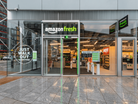
In 2021, Amazon launched its first Amazon Fresh store in Ealing, West London. These stores allowed customers to shop without the need for a till, simply using an app and relying on sensors to know which products were picked up.
With a virtual basket, customers could pick up and put down whichever items they wanted and could walk out of the shop without having to wait in queues. Instead, the customers could pay on the app or tap in/out of the store.
The UK is currently host to 19 Amazon Fresh stores: Aldgate, Angel, Chingford, East Croydon, Euston, Holborn, Hounslow, Hoxton, Kensington, Liverpool Street, Moorgate, Monument, Notting Hill Gate, Southwark, Sevenoaks, Wembley, West Hampstead, White City, Wood Wharf.
However, this convenient shopping experience has not taken off as anticipated, with customers still preferring other stores or online alternatives.
As a result, Amazon is closing all shops.
"Since 2008, we've worked hard to innovate to help our customers save time and money when shopping for groceries and household essentials," says John Boumphrey, Country Manager, Amazon UK.
"We continue to invent and invest to bring more choice and convenience to UK customers, enabling them to shop for a wide range of everyday essentials and groceries with low prices and fast delivery through Amazon.co.uk, Amazon Fresh and Whole Foods Market stores, alongside our third-party grocery partners, including Morrisons, Co-op, Iceland and Gopuff.”
The market impact
Five of the closing Amazon Fresh locations will be transformed into Whole Foods Market stores.
This will introduce greater access to natural and organic foods, which have been carefully sourced from trusted suppliers.
This could change the high street grocery market, especially as Amazon is already planning for 12 Whole Foods Market stores in the UK by the end of 2026.
Consumers who are eager to buy ethically sourced foods - such as animal-welfare certified meat and sustainable wild-caught and responsibly farmed seafood - or organic bakery items, are no longer limited to dedicated sections in larger chain stores.
With a specialised 'responsible' store coming into the UK food market, consumers may turn away from their more convenient options - such as big names like Tesco and Sainsburys.
Amazon is working hard to limit the impact on its Amazon Fresh UK employees, with John explaining: "We're deeply invested in the UK's economic growth and creating opportunities for both customers and employees.
“We’ll be working hard to support any potentially impacted teams throughout these planned changes and are deeply grateful for their dedication. If the proposal moves forward, we’ll support our employees by offering alternative employment opportunities within Amazon wherever possible.”
With Amazon's investment into its online services, it may create a higher need for delivery drivers and roles within fulfilment centres.
Moreover, its determination to partner with more brands in order to grow online grocery delivery options, popular UK stores may see less footfall.
The stores which partner with Amazon will see the same amount of purchasing, but gone will be the busy aisles and long check-out queues.
If Amazon is able to deliver on its promises, UK consumer habits may change forever.