Tetra Pak: Transforming Waste Supply Chains with AI
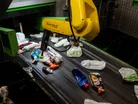
Packaging firm Tetra Pak is targeting a critical point in the reverse supply chain with its 2025 UK investment programme, installing AI-powered sorting technology to enhance how recyclable materials are processed.
The initiative begins with a project at Levenseat Resource Management's facility in Central Scotland.
Tetra Pak's investment has reached US$1.8m, Tetra Pak’s largest single investment in British recycling infrastructure.
The investment shows a strategic effort to improve the flow of used beverage cartons from consumer waste back into the production cycle.

Levenseat is now the first materials recycling facility (MRF) in Scotland using Recycleye's QuantiSort technology.
The system uses artificial intelligence and advanced cameras to identify items like beverage cartons in mixed waste. Pneumatic valves then separate the carton from other materials.
The Levenseat installation is the final part of a three-phase UK-wide programme by Tetra Pak.
It follows the installation of two robotic sorting arms at J&B Recycling in Hartlepool and the first UK deployment of QuantiSort at Cumbria Waste Management.
Bolstering the recycling supply chain with AI
The integration of this technology at facilities serving multiple Scottish regions, including Lanarkshire and Ayrshire, could have a notable effect on carton recovery rates.
Through automating the sorting process, the technology addresses a key operational challenge in the recycling supply chain, potentially increasing both the speed and accuracy of material separation.
This investment aligns with new regulatory frameworks such as Scotland's Circular Economy Act and England's Simpler Recycling programme, both of which seek to standardise waste collection and improve recycling outcomes.
Awantika Chadha, Sustainability Manager at Tetra Pak UK, says: "We are delighted to be able to demonstrate the power that investment in cutting-edge AI technology holds when it comes to improving the UK's recycling infrastructure."
The project at Levenseat is seen as a possible template for enhancing carton sorting capabilities across the UK, creating a more robust infrastructure for the circular economy.
Automation for enhanced processing capacity
The collaboration pairs Tetra Pak with British startup Recycleye, the developer of the AI sorting solution. For Recycleye, the partnership provides a key application for its technology within the waste management sector.
The system's ability to be scaled, demonstrated by successful use in Spanish MRFs prior to the UK rollout, highlights its adaptability.
Through improving how materials are sorted at the processing stage, the technology offers a direct solution to operational bottlenecks.
Victor Dewulf, Co-Founder and CEO of Recycleye, explains: "AI has the capability to transform waste management, and we hope that our work with Levenseat and others will show MRFs and local authorities the possibilities this flexible technology offers."
This flexibility could be key to integrating advanced sorting into varied and complex waste management supply chains.
Closing the infrastructure gap
This UK-focused programme is part of a wider global strategy by Tetra Pak, which allocates approximately US$44m each year to developing packaging recycling systems worldwide.
A specific fund of US$3.1m has been designated for UK carton sorting infrastructure, reflecting the market's strategic importance.
The need for such investment is highlighted by collection data. According to ACE UK, almost three-quarters of British councils now offer kerbside collection for liquid cartons.
This high collection rate creates a downstream challenge if processing capacity cannot keep pace.
"With almost three quarters of UK councils now collecting liquid cartons at the kerbside, it is vital that there is investment in MRF infrastructure," explains Mandy Kelly, CEO of ACE UK.
The investment by Tetra Pak and the technology from Recycleye directly address this gap between the supply of collected cartons and the capacity to process them, potentially improving the efficiency of the entire UK beverage carton recycling system.