Why Waitrose is Trialling an AI-Powered Shopping Trolley
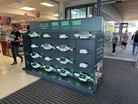
Waitrose is trialling a new AI-powered smart trolley in a bid to make the shopping experience more efficient for customers.
Regular trolleys are receiving an upgrade in the form of the Shop-E device, which automatically scans items as shoppers go from aisle to aisle.
The innovation carries the potential to reshape the consumer experience and introduce new visibility to retailers, allowing for a full supermarket upgrade.
Waitrose's remarkable growth
Waitrose is a British supermarket chain, founded in 1904 as Waite, Rose & Taylor by Wallace Wait, Arthur Rose and David Taylor. The latter founder left in 1908, resulting in the formation of Waitrose.

The company grew quickly from its origins as a high street shop in Acton, diversifying into wholesale trade during the First World War before introducing new branches across the South of England.
In 1937, it was acquired by the John Lewis Partnership, which continues to operate the brand today.
Waitrose opened its first supermarket in 1955 in South London and, by the early 1970s, there were 50 branches overall. This included several large supermarkets, as well as a distribution centre at Bracknell to meet growing demand.
Today, there are 421 Waitrose stores across the UK. The business exports own-label and branded goods to more than 50 countries around the world.
The Shop-E integration
Bidding to further establish itself as a leading supermarket, Waitrose is trialling an AI computer vision system which can identify items as shoppers place them in their trolleys.
Devices have been supplied by Shopic, an Israeli software development company dedicated to providing a smooth shopping experience for all.
Waitrose's Bracknell site is the first to trial the software. Each upgraded trolley has a scanner and cameras on the handlebars, which can automatically identify items.
Shopic's AI-powered Shop-E clip-on device enables any trolley to become a smart cart, using computer vision to identify products and display their cost on a touch screen, allowing customers to track their shopping and budget at all times.
Moreover, customers can pay via their cart once shopping is complete, meaning they don't need to wait in long checkout queues – reducing customer wait time and improving store efficiency.
A Waitrose spokesperson said the technology "works in a similar way to our Scan, Pay, Go handsets, with a bigger screen – that identifies every item placed into or removed from the cart, and with a real-time tally of products and prices so shoppers can keep track of purchases.
"We're exploring options for more frictionless payment for our customers, while still maintaining conventional checkouts for customers who value interaction with our partners."
Retailer benefits
Waitrose's new devices will not only enhance customer experience, but also provide retailers with deeper insights.
The smart carts are able to track stocking levels and provide real-time data on customer behaviour.
Shopic states that its device "turns any standard shopping cart into a smart cart, a retail media channel and a data collector".
Retailers can discover how long shoppers spend in each aisle, how they walk around the store and their shelf interactions – which items they're more interested in and what's being picked up – in order to get a stronger understanding of how customers are shopping.
The smart cart can also help advertise offers, drawing the customer's attention to new deals in a more streamlined way, encouraging them to spend more money. What's more, it's thought the tech will help to reduce instances of shoplifting.
"This is another example of retailers testing and trialling technology to help digitalise the physical store," says Toby Pickard, Retail Futures Senior Partner at IGD.
"Retailers that embrace the digitalisation of the physical store will gain unparalleled insights that will enable them to share more accurate and real-time information and data with suppliers to drive even more efficiencies and profits.
"Retailers have to accelerate their investment in technology to digitalise the physical store so that they create a hyperconnected environment that enables them access to unparalleled data and insights to drive efficiencies and profitability."
With speed and accuracy of recognition, the device is sure to help improve efficiency for customer and retailer, helping amplify the shopping experience.