
A Better Burrito: Chipotle’s Supplier-Driven Integrity
Chipotle Mexican Grill, better known as Chipotle, is a global favourite, particularly with younger generations. Born out of a single burrito shop in Denver in 1993, the brand now runs more than 3,800 restaurants across the globe, the vast majority of which are in the US.
Its Founder, Steve Ells, set out to fund his fine-dining ambitions but instead created a fast-casual empire inspired by San Francisco taquerias and built on fresh ingredients served at speed. Backed early by McDonald’s in 1998, the brand took off across the US before McDonald’s exited in 2006, by which time Chipotle already had more than 500 restaurants.
Now headquartered in Newport Beach, California, the company employs more than 100,000 people and posts group revenues north of US$8.6bn.
From the start, Chipotle decided it wasn’t going to be just another fast-food name. Its mantra, “Food with Integrity”, means it sticks to responsible sourcing, upholds animal welfare standards and backs local suppliers. In the World Benchmarking Alliance’s Food & Agriculture Benchmark, Chipotle ranks eighth in restaurants and food service and leads on governance and strategy, including sustainability-linked pay and transparency on stakeholder input. That approach set it apart from rivals and helped define fast-casual dining; fast service, higher-quality ingredients and a sharper focus on provenance.
At the heart of operations is Carlos Londono, Chipotle’s Vice President and Head of Supply Chain, who oversees the full scope of logistics. His remit covers direct and indirect procurement, transport networks, planning and continuous improvement – critical for a brand built on freshness.
Carlos brings decades of experience in the global food and beverage space, having previously served as Global Vice President of Supply Chain at Owens-Illinois, led the Coffee, Tea, Food and Merchandising supply chain team at Starbucks, and held supply chain leadership roles at Kraft Heinz.
Now at Chipotle, he helps steer the complex machine behind every meal, ensuring that the promise of “Food with Integrity” rings true from farm to foil.

How does Chipotle build long-term partnerships with farmers and suppliers to maintain product integrity?
Our long-term partnerships with farmers and suppliers are built through our commitment to Food with Integrity.
We require all suppliers and farmers to use sustainably grown and raised ingredients, avoid non-therapeutic antibiotics and added hormones and be compliant with labour and environmental laws.
We are continuously vetting suppliers for compliance through company-led and third-party audits to ensure our rigorous standards are met.
How has Chipotle adapted its supplier governance model to account for changes in global supply chain risk, such as climate events or geopolitical challenges?
We've embedded risk sensing and resilience directly into supplier relationship management (SRM).
Our teams map climate and geopolitical exposure at the ingredient and region level, diversify origin where feasible and dual-source critical categories. We run scenario planning for extreme weather, add surge capacity and safety stock for at-risk items, and maintain playbooks for logistics disruptions.
Can you share an example of how Chipotle worked collaboratively with a supplier to solve a sourcing or quality challenge?
For the past seven years, we have been aggressively seeking out farms and suppliers that can satisfy our immense demand for avocados outside of Mexico.
We’ve established partnerships with suppliers in Colombia, Peru, the Dominican Republic, Brazil and Guatemala to ensure a year-round supply of the fruit for our famous hand-mashed guac that is made fresh in our restaurants every day.
How does SRM contribute to Chipotle's innovation in menu development?
SRM is a direct engine for menu innovation. Long-standing relationships let us more efficiently and effectively meet our ingredient needs at scale.
Since our partners understand our business and our commitment to using responsibly raised ingredients, we can introduce new menu innovations without having to onboard a variety of new suppliers.
What supply chain innovations are you most excited about for the next five years?
We are excited about our work to leverage radio-frequency identification (RFID) technology to enhance our traceability and inventory systems at our distribution centres and restaurants.
As a leader in food safety, we take pride in being one of the first national restaurant companies to leverage RFID case labels to track ingredients from suppliers to restaurants through serialisation.
How do you see supplier relationships evolving as consumer expectations around transparency, sustainability and ethical sourcing continue to rise?
As consumer expectations for transparency, sustainability and ethical sourcing rise, our supplier relationships will become even more data-rich and outcome-oriented to further align with our mission to Cultivate a Better World.
With suppliers serving as an extension of our brand and our purpose, the future is fewer transaction-based relationships and more partnership-aligned incentives, shared investment, and shared accountability for serving Food with Integrity to our guests.
Did you know?
Company portals

Executives
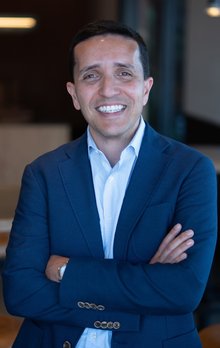
Carlos Londono
Head of Supply Chain