Samit Shankar: How to Build Supply Chain Resilience with SRM
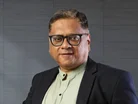
As supply chains are increasingly under pressure due to geopolitical instability, supplier relationship management (SRM) has become a strategic necessity.
Samit Shankar, former Director at EY and now Consultant at Arinox AI, brings over 15 years of supply chain optimisation experience to the table, arguing that businesses ignore SRM at their peril.
SRM as a strategic pillar
With a background that began in hospitality before moving into software, operations and eventually supply chain transformation, Samit’s experience spans major organisations including GE Capital, Diageo, Allianz, JPMorgan and EY.
In every case, he places SRM at the core of operational improvement.
"In today's world, where things can change on a dime – whether it's geopolitical shifts, supply chain disruptions, or economic uncertainty – effective supplier relationship management isn't just a 'nice-to-have’; it's a fundamental pillar for survival and staying ahead of the competition," he says.
His SRM strategy focuses on three essential functions: risk mitigation, leakage prevention and strengthening supplier relationships.
Leakage prevention is about visibility and control over spend. "Think about those volume discounts you negotiated – are they being applied correctly? Are there duplicate payments creeping in? Is consumption at par with entitlement? SRM is the detective that uncovers these hidden costs."
Beyond compliance and risk, SRM also builds trust and unlocks mutual value.
Samit gives examples where businesses saved US$10m by reclassifying underused software licences or halved cloud storage costs by scaling capacity dynamically.
These results show that managing supplier performance isn’t just about cost; it’s about intelligence and insight.
Implementation lessons
Samit’s work implementing SRM frameworks and contract lifecycle management (CLM) systems has shown that the biggest challenge isn’t always technology – it’s culture.
Many organisations fail to clearly articulate why SRM matters.
"You need to clearly articulate the value SRM brings to the organisation and, crucially, how it directly benefits each stakeholder," Samit explains.
He considers: "You can have the fanciest system in the world, but if it's not set up in a way that makes life easier for the people who have to use it every day, interest quickly fades and the ROI evaporates. It's like having a state-of-the-art kitchen that no one wants to cook in."
Samit’s method begins with defining the supplier base, identifying those vendors critical to operations or exposed to higher levels of risk.
This leads to a tailored framework including roles, responsibilities and performance indicators. Implementation then follows with internal workshops, change management and detailed supplier engagement playbooks.
The result shows greater supplier accountability, clearer communication and smoother procurement cycles.
For Samit, these building blocks are essential for any business looking to operate efficiently in a volatile environment.
Measuring SRM value beyond cost and compliance
One of the difficulties in supply chain management is quantifying the full impact of SRM. Samit argues that organisations need to move beyond savings alone.
"To really measure that value, you need a structured approach, starting with crystal-clear goals for your SRM initiatives," he adds.
A robust measurement framework, according to Samit, includes cost avoidance, operational efficiency, innovation contribution and supplier risk reduction.
He estimates that a well-functioning SRM programme should deliver a tenfold return annually.

In one case, he worked with a computer vision analytics start-up aiming to improve retail execution.
Through deep workshops, the supplier’s technology was aligned with commercial goals, leading to a threefold increase in retail volume growth.
"These weren't just surface-level meetings," he says. "We really dug deep, creating a collaborative space to iron out any gaps in understanding – both in terms of what the business was trying to achieve and what the AI technology was truly capable of delivering."
This approach elevated the vendor to strategic partner status. For the client, it meant higher sales and operational alignment.
For the supplier, it secured long-term engagement and practical application insights.
"The mutual value was clear: for us, it was superior retail execution and significant sales growth. For the startup, it was the opportunity to deeply integrate their technology into a major player in the CPG space, gain invaluable real-world insights and solidify their position as a key strategic partner."
Looking ahead, Samit believes SRM will rely more heavily on predictive tools. "Imagine AI sifting through vast amounts of data to identify potential disruptions or opportunities for collaboration that humans might miss."
He continues: "The future of SRM is about leveraging technology to build more resilient, sustainable and value-driven partnerships with strategic suppliers, ultimately contributing significantly to the overall success and competitive advantage of the organisation."
From AI-driven forecasting to deeper integration with sustainability metrics, the SRM function is set to become the heart of future-ready supply chains.
However, none of this replaces the need for clear planning, communication and internal buy-in.