IKEA’s Climate Action: Supply Chains at the Heart of Change
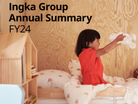
Ingka Group’s latest annual report highlights its commitment to sustainable growth, demonstrating that investing in climate action delivers real business benefits.
CEO Jesper Brodin says the results prove the “business case for investing in climate action works.”
The company, the largest IKEA retailer, has cut its climate footprint by 30.1% compared to its 2016 baseline, all while expanding operations.
The report states that Ingka “prioritised investing across the business as part of its ongoing transformation to make IKEA even more accessible, affordable and sustainable.”
Jesper emphasises that this approach continues despite economic pressures: “In challenging times, we decided to invest €2.1bn (US$2.17bn) into lowering the prices on thousands of products to support many more people to fulfil their dreams and needs in life at home, no matter the size of the wallet.”
He adds, “At the same time, we took important steps in strengthening our science-based climate targets, remaining deeply committed to the Paris Agreement.”
The numbers tell a compelling story.
Ingka Group reports a 23.7% increase in revenue since 2016, while 96.6% of electricity in 28 countries is now sourced from renewables. Zero-emission vehicles now handle 41.1% of customer home deliveries, demonstrating a shift towards greener logistics.
Sustainability through supply chains
A major driver of Ingka’s climate progress is its supply chain transformation. The company is cutting emissions across its value chain by improving transportation, increasing circularity and scaling up renewable energy investments.
As part of a EUR 7.5 billion commitment to renewable energy by 2030, Ingka has allocated an additional €0.7bn (US$726m) to energy generation.
The group also continues expanding its IKEA Preowned programme, allowing customers to buy and sell used furniture at reduced prices. This initiative helps extend product life cycles and keeps materials in use longer, reducing waste.
Chief Sustainability Officer Karen Pflug stresses the need for collaboration: “By radically collaborating across industries and communities, I am confident we will reach our goals.”
While progress is evident, she acknowledges the complexity of embedding sustainability into every part of the business: “Challenges remain, as we continue to integrate sustainability across our business and take action on the complex challenges facing the world – from climate to rising inequality.”
One key aspect of Ingka’s strategy is supporting a circular economy. The company has bought back nearly 500,000 used products from customers and provided over 8 million free assembly parts to extend the life of its furniture.
Meanwhile, the Sustainable Living Shops initiative highlights products and ideas that encourage environmentally friendly choices at home.

Investing in a sustainable future
Beyond supply chain changes, Ingka Group is also making significant financial commitments to climate action.
The company has strengthened its climate targets, aiming to halve absolute emissions across its value chain by 2030 and reach net zero by 2050. These targets align with the Paris Agreement and have been validated by the Science Based Targets initiative (SBTi).
Ingka’s investments go beyond just environmental impact. The Skills for Employment programme, designed to support refugees and asylum seekers, aims to help 3,000 more people by 2027.
The company also maintains a 50/50 gender balance in management roles and continues to expand its emergency response programmes, which have already reached over 81,000 people.
Meanwhile, Ingka is integrating digital tools to improve customer experience and efficiency. The IKEA app now includes features like a 3D product visualiser, back-in-stock notifications and a scan-and-pack tool for faster checkout.
AI advancements are being leveraged to optimise logistics and streamline operations, further reducing emissions.
A clear path forward
Despite a 3.8% downturn in the home furnishing sector, Ingka Group reports €41.8bn (US$43.3bn) in revenue and a net income of €0.8bn (US$830m). The company remains committed to affordability, reflected in its €2.1bn (US$2.18) investment in price reductions across thousands of products.
Ingka Investments continues expanding into renewable energy, having committed €4.2bn (US$4.3bn) to wind and solar projects since 2009. The group’s focus on clean energy extends across its operations, with 100% of electricity at IKEA stores and Ingka Centres now coming from renewable sources.
The company’s annual report is structured around four key areas—Better Homes, Better Lives, Better Planet and Better Company—each highlighting a different aspect of its progress.
Explore the latest edition of Supply Chain Digital and be part of the conversation at our global conference series, Procurement & Supply Chain LIVE.
Discover all our upcoming events and secure your tickets today.
Supply Chain Digital is a BizClik brand.