Airbus Hydrogen Delays: Are Supply Chains To Blame?
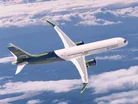
Airbus has long positioned hydrogen as a key technology for cutting aviation emissions through its ZEROe programme.
However, the company now acknowledges that the hydrogen supply chain is not advancing quickly enough to support commercial aircraft within the next decade.
Guillaume Faury, CEO of Airbus, explains the delay: “There's been a lot of work in the last years on bringing a green hydrogen supply to a number of industries as a way to decarbonise.
“Analysis of the landscape and of progress has shown that a lot of projects have been put on the back burner, have been delayed or are of lesser importance than what was expected five years ago.”
For hydrogen aircraft to be feasible, a stable and large-scale supply of green hydrogen, produced using renewable energy rather than fossil fuels, is essential. Airbus has been working with airports to introduce hydrogen infrastructure, but progress has been slow.
“We have partnered with a number of airports which are willing to start introducing hydrogen in their operations ahead of the plane, starting with stationary equipment, cars, buses, equipment on wheels that is used at airports,” Guillaume says.
“That’s the growth of the ecosystem that we need to see happening with sufficient confidence to gain comfort that entry into service would be successful from the hydrogen supply perspective.
“That’s not the case today.”
Could sustainable aviation fuel pose a solution?
With hydrogen still years away, Airbus is focusing on alternative solutions to reduce emissions.
Sustainable aviation fuel (SAF) is currently the most viable option, as it can be used in existing aircraft engines with minimal modifications and does not require entirely new infrastructure.
In July 2024, Airbus announced a strategic investment in LanzaJet, a sustainable fuel technology company, to accelerate SAF production and adoption.
Julie Kitcher, Chief Sustainability and Communications Officer at Airbus, says: “Sustainable aviation fuels are one of the most important levers available to decarbonise aviation, but their production is still limited.
“Our partnership with LanzaJet demonstrates Airbus’ commitment to work with leading energy technology suppliers to explore innovative production pathways and scale SAF.
“This important partnership with LanzaJet underlines the importance of new technologies and cross-sector collaboration to achieve net-zero CO₂ emissions by 2050.”
Airbus is also increasing its own use of SAF. At its 2025 Annual Press Conference, Faury detailed the company’s progress: “Looking at our own operations at Airbus in 2024, we used 18% SAF in our aircraft and helicopter flights.
“This means we are on track so far towards our goal to use at least 30% SAF in our operations by 2030.
“Of the 766 commercial aircraft delivered in 2024, 75% were delivered to their customers with a SAF blend.”

Airbus’ long-term commitment to hydrogen
While hydrogen aircraft face delays, Airbus remains committed to developing the technology. The company continues refining its approach and sees fuel cell technology as the most promising path for commercial hydrogen aviation.
Guillaume highlights the ongoing supply chain difficulties affecting Airbus’ broader production ramp-up, including issues with CFM engines and Spirit AeroSystems, which impact A350 and A220 production rates.
He states: “The ramp up will continue to take place in an environment in particular a supply environment that remains complex and fast with persisting supply chain issues.”
Guillaume also acknowledges the need for a more agile industrial system: “We continue to target rate 12 in 2028 and we are adjusting the entry into service of the A350 freighter variant, which is now expected in the second half of 2027.”
These supply chain complexities extend to hydrogen aircraft, which require an entirely new infrastructure for fuel production, storage and distribution. Airbus is actively working with energy firms and airports to build this ecosystem, but challenges remain.
Despite the delay, Airbus sees hydrogen as the future of aviation. The company has already completed the design of a fully electric aircraft powered by a hydrogen fuel cell propulsion system, first unveiled in 2022.
“In short, yes we are adapting our ZEROe roadmap, but no, we are not moving away from hydrogen,” Guillaume says.
While sustainable aviation fuel will play a key role in reducing emissions over the next two decades, Airbus remains focused on hydrogen as a long-term solution.
Explore the latest edition of Supply Chain Digital Magazine and be part of the conversation at our global conference series, Procurement & Supply Chain LIVE.
Discover all our upcoming events and secure your tickets today.
Supply Chain Digital is a BizClik brand.