
Could British Steel Takeover Jeopardise UK-China Trade?
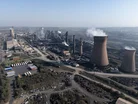
The UK government has taken emergency control of British Steel's operations in Scunthorpe, stepping in after Chinese owner Jingye refused to continue funding production.
The move aims to protect the last two functioning blast furnaces in the country and prevent thousands of job losses.
However, the Chinese foreign ministry has warned Britain against linking trade and security, while AFP reports that Chinese foreign ministry spokesperson Lin Jian is warning Britain to "avoid politicising trade cooperation."

The immediate concern facing officials and steelworkers at British Steel’s Scunthorpe plant relates to raw materials.
Without coking coal (a crucial reactant in the steelmaking process) and iron ore, the blast furnaces risk cooling to a point where they cannot be restarted.
James Murray, Exchequer Secretary to the Treasury, has confirmed that these materials are “in the UK” and “nearby” the site, while civil servants work urgently to get them delivered and maintain furnace operations.
Over the weekend, Parliament passed emergency legislation allowing the government to take control of the site, though this is not yet a formal nationalisation.
Meanwhile, Business Secretary Jonathan Reynolds says Jingye rejected all support offers, including a proposal to purchase necessary raw materials.
“It became clear to me and to the government, no financial offer of any generosity would have been accepted,” he explains.
The Department for Business and Trade is now working to source and deliver the fuel needed to keep the blast furnaces lit. Dozens of companies, including Tata and Rainham Steel, have reportedly offered raw materials or logistical help.
The urgency comes from the technical nature of blast furnaces. Once switched off, they are difficult and costly to restart and permanent damage is a risk.
The effect on UK/China trade
Some union leaders have accused Jingye of actively undermining the plant.
Roy Rickhuss, General Secretary of the Community Union, told the BBC: “The Chinese owners Jingye unfortunately were seen to be working against the business... they weren’t ordering raw materials… they were actually turning away raw materials and trying to transfer them elsewhere.”
He suggests Jingye’s plan was to close the blast furnaces and import steel from China, effectively turning British Steel into a re-rolling operation.
The Scunthorpe site produces 95% of the steel used for Britain’s railways and is the last place in the UK that can make so-called “virgin steel” – steel made directly from iron ore rather than recycled material.
Jingye had already started selling off supplies and refused to buy more. Ministers argue that losing this site would leave the UK as the only G7 country without primary steelmaking capacity, something they say would endanger economic and national security.
Luke de Pulford, of the Inter-Parliamentary Alliance on China, puts it more bluntly: “It is an explicit strategy of the Chinese Communist Party to undermine the industrial base of foreign countries.”
Security concerns and stockpiles
Network Rail, the UK’s rail infrastructure body, has been preparing for this moment for a year.
More than 80% of Britain’s rail tracks come from Scunthorpe, so the agency built a stockpile of rails at depots around the country. That buffer could last up to 12 months if supply from the blast furnaces ends.
A spokesperson says: “We do not expect the announcement to have any impact on the continued delivery of reliable rail services for passengers and freight users.”
Even so, the pressure is on to keep the furnaces alive. Jingye has said the plant is losing US$700,000 per day, citing “hugely challenging circumstances” such as US President Donald Trump’s 25% tariffs on imported steel and the cost of shifting to low-carbon production.
The company says UK energy prices are also to blame, with steelmakers paying up to 50% more than competitors in France and Germany.
Plans to replace the blast furnaces with cleaner electric arc furnaces – which recycle scrap metal rather than using iron ore – collapsed after Jingye rejected the government’s incentives. Installing such furnaces could take years and Scunthorpe’s output is critical for nuclear projects like Hinkley Point C.
The government has not ruled out full nationalisation, with Reynolds confirming a long-term plan will be published in the coming weeks.
In the meantime, ministers remain hopeful a private investor can be found. The cost of modernising the site is expected to run into billions.
Explore the latest edition of Supply Chain Digital Magazine and be part of the conversation at our global conference series, Procurement & Supply Chain LIVE.
Discover all our upcoming events and secure your tickets today.
Supply Chain Digital is a BizClik brand.