How BMW Manages Thousands of Suppliers & 36 Million Parts

Managing the procurement and logistics for a global automotive company like BMW requires navigating immense complexity. BMW’s purchasing division handles an annual spend of around US$104bn (€90bn) to keep its production lines moving and its vehicles evolving.
This process involves coordinating millions of components from a vast network of suppliers to assemble the final product that customers drive away from the forecourt.
Nicolai Martin, Member of the Board of Management of BMW AG, Purchasing and Supplier Network, outlines the scale of the task.
"Every day, we master immense complexity: merging 36 million components from thousands of suppliers worldwide – to produce one of the most complex and yet emotional products on earth," he says.
He adds: "Our annual purchasing volume is around 90 billion euros. These figures not only demonstrate the scale of our value creation, but also the enormous responsibility that comes with it."
Sustainability as a strategic lever
For BMW, sustainability is positioned as a fundamental part of its business model, not just an add-on.
"For the BMW Group, sustainability is a strategic lever for a future-proof business model. Current global challenges are accelerating the move towards circularity and more sustainable, innovative technological solutions," Nicolai explains. This focus is prompted by both market expectations and the pursuit of competitive advantages.

Adhering to sustainability requirements has become essential for gaining acceptance from both society and customers.
Nicolai says: "For us, fulfilling sustainability requirements and our commitment to the Paris Climate Agreement are our licence to operate and to lead. Only companies that act responsibly are accepted by society. And many of our customers demand more sustainability in our products."
Beyond meeting demand, sustainable supply chains can offer increased resilience, which is a critical factor for success in the automotive sector.
"More efficient, innovative and circular supply chains make us more resilient as a company," he adds.
- 3.1 million cast components
- 520,000 plastic components
- 1.5 million drive shafts
- 275,000 cockpits
- 25,000 special engines
- 560,000 logistics containers
Electric mobility and supply chain emissions
The industry's move towards electric mobility is altering the carbon footprint of vehicles, with a greater proportion of emissions originating from the supply chain.
"The ramp-up of electric mobility is increasingly shifting the focus of CO2 emissions towards the supply chain in the automotive industry," Nicolai states.
He adds: "Without appropriate measures, the CO2 emissions in the supply chain of an electric vehicle would increase instead of decrease."
This requires a comprehensive approach to decarbonisation that considers the entire life cycle of the vehicle.
The BMW iX3 serves as a case study for BMW's strategy. BMW achieved a 42% reduction in supply chain CO2e emissions for the iX3 compared to its predecessor. According to BMW, 90% of the supply chain's carbon footprint is concentrated in four material categories: battery cells, aluminium, steel and thermoplastics.
The strategy involves mandating the use of renewable energy and incorporating circular economy principles.
"Our battery cell suppliers are obliged to use 100% renewable energies in cell production as well as anode and cathode production," he says.
Secondary materials and supplier partnerships
The use of secondary materials is a key component of BMW's strategy, offering benefits that extend beyond carbon reduction. By using recycled materials, BMW can conserve natural resources and reduce its dependence on primary raw materials.
"As long as Europe lacks a functioning raw materials industry of its own, this approach is essential to strengthening our resilience," Nicolai notes.
For the iX3, around 33% of the overall vehicle is made from secondary raw materials. In its high-voltage battery cells, approximately 20% is secondary material, while for nickel, cobalt and lithium, the figure is around 50% each. Achieving these results depends on a change in how BMW interacts with its suppliers.
"To bring innovations into the company, a collaborative partnership with our suppliers is essential," Nicolai adds.
He continues: "Our supplier network stands for expertise, ideas and innovative strength. Together with our partners, we want to shape value creation intelligently."
This partnership model extends to developing CO2-reduced materials and advancing circular economy solutions.
At the heart of this transformation is the BMW Landshut plant, which, according to Thomas Thym, Head of BMW Group Plant Landshut, helps set industry benchmarks for sustainable production. The facility's Zero Defect Supply Chain Campus trains suppliers on quality and sustainability standards, ensuring best practices are shared across the network.
The plant itself embodies circularity, with two-thirds of the aluminium used in its light metal foundry already being secondary aluminium. Nicolai concludes that this integrated approach, combining supplier collaboration with production innovation, is what makes such products possible.
Company portals

Executives
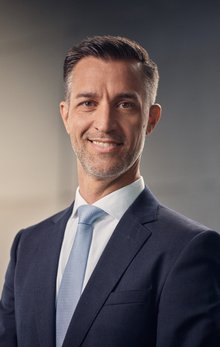
Nicolai Martin
Board Member Responsible for Purchasing and Supplier Network
Thomas Thym
Vice President Purchasing, Quality, Production Light Metal Casting, Head of Component Plant Landshut