Highest Court Targets Supply Chains in Climate Order
In a first-of-its-kind ruling, the International Court of Justice (ICJ) has confirmed that countries have legal obligations to act on climate change—setting the stage for lawsuits between states over historic emissions and climate damage.
Although non-binding, the opinion is already being viewed by legal experts, campaigners and climate-vulnerable nations as a major step toward accountability.
The decision is especially relevant for the world’s supply chains. From raw material sourcing to manufacturing and delivery, climate responsibility now has firmer legal ground.
As industries reassess their environmental footprint, the ICJ’s opinion adds a new layer of risk, compliance pressure and urgency for transformation.
Legal obligations meet supply chain realities
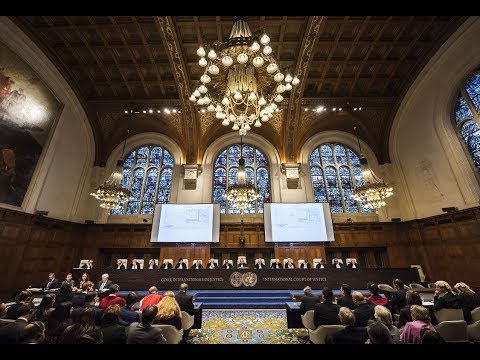
Delivered in July 2025, the ICJ’s Advisory Opinion follows a request from the United Nations General Assembly. It confirms that states are bound by international law – including human rights, customary international law, the Paris Agreement and the law of the sea – to reduce greenhouse gas emissions and limit warming to 1.5°C.
According to the Court, failure to act diligently constitutes a breach, requiring full reparation, including compensation where harm is proven.
This clarity has wide-ranging implications. Supply chains dependent on fossil fuels face heightened legal and financial exposure. Countries subsidising fossil industries or licensing new oil and gas projects could be found in breach of their international obligations.
Governments may now be held responsible not only for their own policies but also for emissions tied to companies operating within their borders.
As Professor Christina Voigt, Lead Counsel and Chair of the IUCN World Commission on Environmental Law (WCEL), puts it: “The highest judicial body of the UN has spoken and it has spoken clearly: every State has an obligation under international law to act with a stringent level of due diligence to prevent global warming from exceeding the 1.5°C threshold.”
That obligation now carries risks for companies across sectors. Legal teams will need to account for this opinion when managing transboundary operations.
New litigation could target not just states but also industries linked to emissions, particularly in high-polluting sectors like shipping, agriculture, energy and manufacturing.
Damages, accountability and new trade dynamics
The ruling supports the right of climate-vulnerable states, especially developing nations and island states, to seek compensation for loss and damage. That includes destruction of infrastructure or entire areas rendered uninhabitable by sea level rise or extreme weather events.
Jennifer Robinson, a barrister for Vanuatu and the Marshall Islands, says: “This is a huge win for climate-vulnerable states. It's a huge win for Vanuatu, which led this case and is going to change the face of climate advocacy.”
Pacific Island states are already preparing to take legal steps. The Marshall Islands, for example, has estimated its climate adaptation needs at US$9bn—money it does not have.
With legal recognition now secured, the possibility of suing historic emitters becomes more realistic, especially in courts where jurisdiction over states like the US or China can be asserted.
Litigation aside, the economic fallout could touch global trade routes. If stricter climate laws lead to tariffs or restrictions on high-emission goods, supply chains might shift toward lower-carbon options. That change will affect sourcing, transport modes and even end-product design, particularly in consumer goods and fast-moving sectors.
The ICJ ruling also underlines that countries cannot escape these obligations by exiting climate agreements.
Judge Iwasawa Yuji stressed that broad international law still applies. That includes customary principles such as the duty to avoid transboundary harm, further limiting options for countries seeking legal loopholes.
IUCN's legal role
The International Union for Conservation of Nature (IUCN) played a central role in the proceedings, contributing legal and scientific expertise on behalf of both state and non-state members.
Through its WCEL group, IUCN helped build a strong case for integrating nature protection with human rights and international law.
“IUCN welcomes this important Advisory Opinion, which strengthens the global legal framework and reinforces the urgent imperative to limit warming to 1.5 °C,” says Dr Grethel Aguilar, IUCN Director General.
“Climate change is not only a crisis of rising temperatures; it is a crisis for both humanity and nature with profound implications for human rights.
"By undermining ecosystems, climate change weakens the life-support systems upon which people’s rights to life, health, food, water and culture depend.”
For supply chains, this signals the growing importance of nature-based risk assessments and climate resilience planning.
Multinational firms may now need to align corporate strategies not only with national regulations but with global climate duties shaped by international law. Failure to do so could expose companies to legal action, reputational harm or supply disruption.
Professor Francesco Sindico, Co-Chair of WCEL’s Climate Change Law Specialist Group, adds: “We are pleased to see that all our key points are reflected in the Court’s Opinion.
"We welcome the Court’s articulation of a clear legal path for States—one grounded in the Paris Agreement, other international treaties and customary international law.”
This moment may also mark a shift in how climate action is enforced.
Whether through litigation, regulation or investment strategy, the impact of the ICJ’s decision is set to ripple through global economies—and nowhere more so than the tightly connected web of modern supply chains.