Supply Chain Podcast: Gregor Stuhler at Coupa on AI Strategy
Related Podcasts
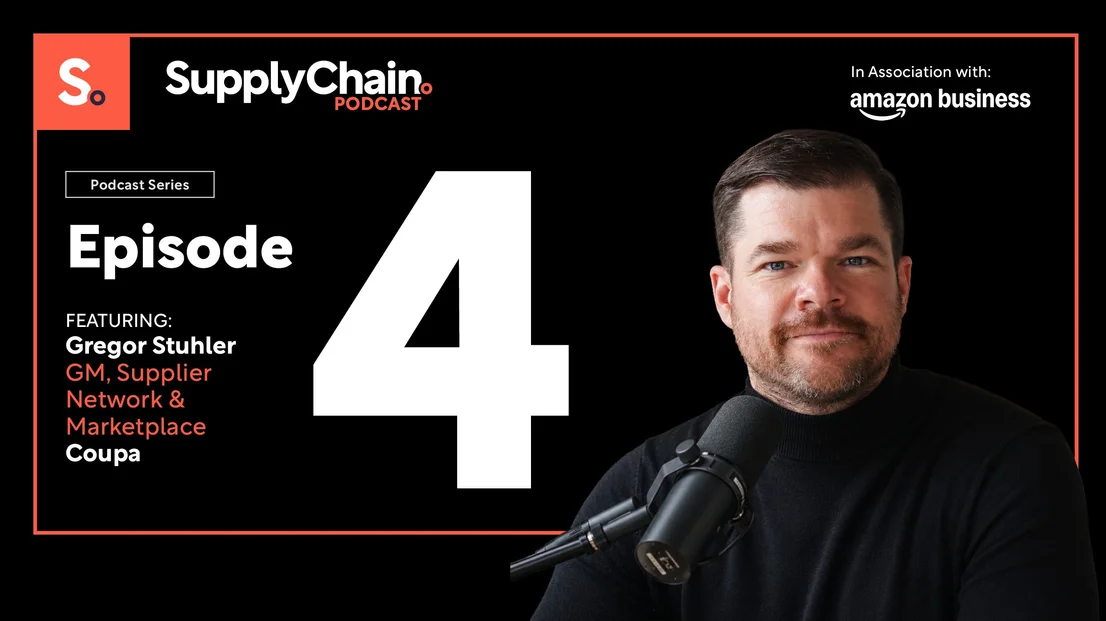
The digital evolution of global commerce is rapidly changing how organizations manage disruption and partner relationships. In the latest episode of the Supply Chain Podcast by Supply Chain Digital, host and guest explore how modern technology addresses systemic vulnerabilities. Gregor Stuhler, GM of Supplier Network & Marketplace at Coupa, shares his insights on navigating industry crises, implementing data-driven strategies, and preparing for the next wave of automation.
From Hardware Fiddling to Enterprise Software
Stuhler’s passion for technology began in early childhood with hands-on electronics and programming on a Commodore 64. This early curiosity eventually transitioned into an entrepreneurial career focused on solving complex enterprise problems. Before joining Coupa, he launched Scoutbee, a procurement platform born out of a desire to inject purpose into the heavily under-digitalized supply chain sector. His move to Coupa was driven by the opportunity to scale that impact, leveraging the company's $2 trillion in platform spend to optimize global B2B transactions.
Navigating Supply Chain Crises with Data Science
A major turning point in Stuhler’s career came when external global shocks directly threatened his operations. A tsunami in Southeast Asia wiped out 80% of his supply chain, followed by market restrictions on rare earth materials out of China. Recognizing that traditional systems were broken, Stuhler utilized his data science experience to build a comprehensive supplier map. This analytical approach allowed his team to identify alternative suppliers rapidly, demonstrating how data-driven visibility can mitigate severe macroeconomic risks.
The Role of Agentic Sourcing and AI
Looking toward the future, Stuhler emphasizes that artificial intelligence will be the primary disruptor in B2B transactions. Current buyer and supplier dynamics are often hindered by conflicting goals, where buyers seek privacy and stability while suppliers push aggressive sales tactics. The introduction of AI and agentic sourcing promises to eliminate this noise. Autonomous agents can evaluate supplier data without bias, allowing procurement professionals to focus on high-value tasks while giving smaller suppliers a better chance to be discovered.
Empowering Teams Through Modern Leadership
For Stuhler, effective leadership requires shifting authority directly to the front lines where the most accurate information exists. Rather than practicing micromanagement, he focuses on empowering individuals and building highly competent, engaged teams. Furthermore, he stresses the importance of using data to track tangible milestones. Because software development and supply chain management are continuous, celebrating clear, data-backed wins is essential for maintaining team motivation.
The Shift to Decentralized E-Commerce Infrastructure
The growth of international e-commerce is expected to undergo a fundamental structural shift. Stuhler predicts that marketplaces will evolve from user interfaces into foundational infrastructure. Instead of relying on specific, centralized platforms, the future of commerce will be decentralized, focusing strictly on data ownership and the underlying rails used to engage with it. Organizations that control these data pipelines will be best positioned to thrive as procurement becomes increasingly automated.
Conclusion
Embracing digital procurement technology is no longer optional for businesses seeking resilience. By combining decentralized infrastructure, AI-driven sourcing agents, and empowered leadership, modern enterprises can transform their supply chains from vulnerable cost centers into engines of continuous innovation.
Subscribe and Listen
Episode 4 is brought to you by Amazon Business, the one-stop destination for everything your organisation needs.
Explore More from the Supply Chain Podcast Series
Catch up on Episode 3 featuring Rathna Sharad, CEO of FlavorCloud, to discuss how AI and automation are transforming international e-commerce
Company portals


Executives
Gregor Stühler
GM of Supplier Network & Marketplace