Ep. 11 | Is Your Supply Chain AI Delivering Real Outcomes?
Related Podcasts
A key principle runs through everything that Fabienne Cêtre does: AI is only as valuable as the business outcomes it delivers. And it’s one that procurement leaders should pay attention to.
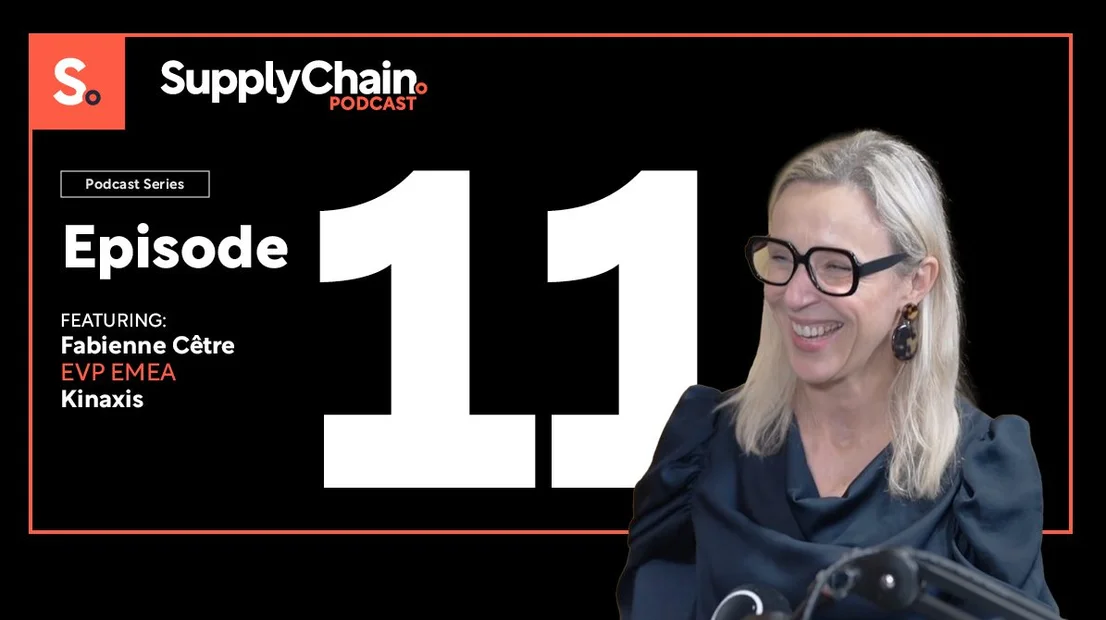
Why? Find out in this episode of the Supply Chain Digital Podcast, as host Aaron McMillan sits down with Fabienne, Executive Vice President EMEA at Kinaxis, live from Gartner's Supply Chain Symposium in Barcelona. With more than two decades in enterprise software and supply chain technology, Fabienne brings fascinating a customer-first perspective to AI, resilience and what it takes to lead high-performing teams across a diverse region.
🎧 Listen and subscribe on Spotify
▶️ Watch and subscribe on YouTube
In this episode we explore:
- Why resilience has become more important than optimisation in modern supply chains
- How enterprise AI connects planning, finance and logistics in ways that weren't possible before
- Why AI deployed in isolation creates governance and security risks, and what to do instead
- How leaders can build high-performing, customer-centric teams across multiple countries
- Why celebrating small wins matters as much as closing big deals
Building resilient supply chains
Supply chain disruption has become the norm rather than the exception. Fabienne's view is that the goal is no longer to build the most optimised supply chain. Rather, it's to build one that can adapt quickly when things go wrong and take advantage of disruption when others can't. The right platform doesn't just help you react faster. It also gives you the visibility to turn volatility into a competitive edge, something Kinaxis's most ambitious customers are already doing across pharma, manufacturing and beyond.
AI that delivers business value
For Fabienne, the distinction between enterprise AI and standalone AI tools really matters. External AI tools, however capable, aren't connected to the reality of a specific supply chain because they lack the data, the constraints and the context that make decisions actionable. Enterprise AI, embedded in the platform, works from the same data and the same processes as everything else. That's what makes it both useful and governable. The outcome she keeps returning to is simple: better decisions, made faster, with full visibility of the trade-offs involved.
Why customer outcomes come first
Throughout the discussion Aaron and Fabienne return to one key principle. Whether they’re talking about technology, leadership or AI, the measure is always the same – what did the customer actually achieve? The most successful organisations she works with don't just implement software and consider their work done. They understand their customers' ambitions, use the platform to solve problems that matter and measure success by outcomes, not deployments. It's also what drives her most: ambitious customers with complex supply chains, turning that complexity into competitive advantage.
Leadership in an AI-driven world
Fabienne's leadership philosophy is grounded and quietly confident. She believes that when you're genuinely convinced something is possible, you can make your team believe it too. That, she says, is how you energise people rather than just manage them. On handling pressure, her advice is direct: prepare thoroughly, then do your best and relax. She celebrates small wins as deliberately as big ones, arguing that a team member reporting a successful customer meeting deserves as much recognition as closing a multi-million deal. The human elements of leadership, she says, don't change just because technology does.
Human expertise remains the competitive advantage
Looking ahead, Fabienne expects AI to become fully embedded across enterprise supply chain platforms, connecting planning, finance, logistics and operations in ways that are only beginning to be possible now. But the future she describes is collaborative rather than autonomous – an environment where AI handles the analysis, surfaces the trade-offs and automates what can be automated, while people continue making the strategic decisions that matter most. The autonomous business era still has a human at the centre of it.
Subscribe and Listen
Catch up on Episode 10, featuring Gabriel Werner, VP of Supply Chain Advisory at Blue Yonder, discussing AI, specialised supply chain intelligence and why the right business problem should always come before the technology.
Company portals

Executives
Fabienne Cêtre
EVP, EMEA