Is WindRunner the Future of Oversized Cargo Transport?
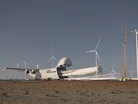
The infrastructure that supports ground transport is built for everyday use, not for the demands of today's oversized cargo.
As global needs shift, supply chains are under increasing pressure – especially in sectors like renewable energy, where sheer size of parts for wind turbines makes delivery a logistical challenge.
Radia, founded in 2016 by aerospace engineer Mark Lundstrom, is setting out to change that with WindRunner, an aircraft designed to carry the world’s largest wind turbine blades to locations previously unreachable by road or rail.
With traditional infrastructure limited to transporting blades around 70 metres long, the coming generation of turbines – with blades stretching beyond 100 metres – requires a rethink of logistics from the ground up.

WindRunner emerges not just as a cargo aircraft, but as a logistics enabler for a new energy age.
At its core, it’s about unlocking supply chains that currently struggle under the weight and length of wind turbine blades that standard ground transportation cannot handle. The design enables it to carry turbine blades more than 330 feet (approximately 105 metres) and land on unpaved, semi-prepared runways as short as 1,800 metres.
The aircraft itself offers 7,700 cubic metres of cargo space – about 10 times the volume of a Boeing 777 – and carries between 72.6 and 80 tonnes. That means it can deliver directly to sites far from ports or major roadways, cutting the need for complex, expensive last-mile logistics.
Radia revealed the WindRunner publicly at the 2025 Paris Air Show and is targeting a first flight in 2029, with service entry is expected in the early 2030s.
This is particularly relevant for onshore wind energy, which offers an easier, lower-maintenance alternative to offshore builds. However, the challenge remains: how do you get these massive components to inland locations?
GigaWind, Radia’s term for its broader initiative, is the answer. It refers to onshore deployment of the largest turbines ever used, taking scale benefits seen offshore and making them work inland. That means longer blades, taller turbines and greater output.
Wind energy’s appeal lies in its mix of consistency and affordability. With high-capacity factors and low production costs, it works both on and off the traditional electricity grid.
Wind supports not just power generation, but emerging applications like data centres and green fuel production.
Solving a supply chain bottleneck
The WindRunner does more than carry wind turbine parts. It addresses one of the main threats to clean energy growth: logistics.
In 2023, Siemens Gamesa Chief Operating Officer Tim Dawidowsky explained: “Big Western wind turbine makers need direct financial support to make the investments needed to aid decarbonisation.
"The supply chain is facing substantial challenges that could limit production capacity and increase turbine prices.”
By enabling direct delivery of larger blades to remote sites, WindRunner removes a long-standing obstacle. It bypasses congested roads and bridges, avoids the constraints of rail, and eliminates the need for costly infrastructure upgrades just to reach the build site.
This change also improves the cost curve. Taller turbines with longer blades produce more energy, more consistently. That delivers what Radia calls a "step function improvement" in both output and reliability compared to current-generation turbines.
WindRunner doesn’t only serve energy. Its vast cargo bay and rugged landing capability suit other oversized loads – military payloads, disaster relief materials and large aerospace components. It’s built to go where nothing else can.
Founder and CEO Mark Lundstrom adds: “We are essentially looking at building a platform for moving the biggest things in the world in the hardest-to-reach places.
"Wind turbines are some of the biggest ones, but there are other large military payloads as well.”
Global supplier support
Backed by more than US$150m in funding, Radia secured early investment firms including LS Power, ConocoPhillips, Capital Factory, Caruso Ventures and Good Growth Capital. A Series C round aims to raise up to US$300m, with funds directed toward accelerating aircraft development.
WindRunner’s progress rests on partnerships with aerospace names like Leonardo, AFuzion and Aernnova, covering aircraft design, certification and engineering support. Alongside them is a growing network of suppliers forming a global delivery chain fit for this oversized mission.
This layered approach – combining aircraft innovation, funding strength and a global partner network – positions Radia to reshape energy and heavy cargo logistics alike.
WindRunner offers a way to build a cleaner, more connected future by removing physical limitations from the supply chain.
Company portals

Executives
Mark Lundstrom
Founder and CEO