How Korean Air’s US$36bn Boeing Deal Reshapes Jobs and Trade
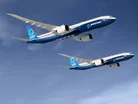
Boeing and Korean Air have agreed a jet order worth around US$36bn (£24bn), marking the largest widebody aircraft commitment from any Asian carrier and one of Boeing's most commercially vital deals in years.
The agreement reflects a global supply chain realignment shaped by diplomacy, trade policy and logistics partnerships.
Walter Cho, Chairman of Korean Air agrees: "This agreement with our long-standing partners, Boeing and GE, marks a pivotal moment for Korean Air."
As the airline prepares to merge with rival Asiana Airlines, the move locks in not only aircraft but influence across manufacturing and supply operations.
The deal includes 103 passenger and cargo aircraft: 20 Boeing 777-9s, 25 787-10s, 50 737-10s and eight 777-8 Freighters. In addition to the aircraft, Korean Air also signed a US$13.7bn agreement with GE Aerospace for engines and support, which forms a crucial part of the procurement plan.
Stephanie Pope, Chief Executive of Boeing Commercial Airplanes, calls it a "landmark agreement," confirming the US firm's continued recovery after supply disruptions and public safety concerns.
She says: "As Korean Air transitions to a larger unified carrier, we are committed to supporting the airline's growth with one of the world’s most efficient fleets."
The deal was signed during a Korea–US business roundtable held in Washington and attended by key government figures including US commerce secretary Howard Lutnick and South Korea’s trade minister Kim Jung-kwan. Executives from Samsung, Hyundai and Nvidia also joined the talks, which centred on bolstering US–Asia manufacturing and trade cooperation.
This agreement forms part of a wider package of Korean–US commercial collaborations, including a shipbuilding maintenance pact between Samsung’s marine division and Oregon-based Vigor Marine to support the US Navy.
Meanwhile, Hyundai confirmed a rise in US investment from US$21bn to US$26bn and unveiled plans to build a robotics production facility that can manufacture 30,000 robots a year.
Supporting supply chains
Boeing estimates the Korean Air order will support 135,000 jobs in the US. With more than 170,000 global employees, Boeing relies on an extensive network of domestic and international suppliers to deliver aircraft to clients across 150 countries.
Korean Air itself is a major part of this network. Its Aerospace Division manufactures components for multiple Boeing programmes, including the raked wingtips of the 787 Dreamliner and parts for the 737 MAX, 767 and 777 series. This strengthens the procurement relationship into a co-dependent supplier partnership, anchoring Korean Air deeper into Boeing’s global production line.
At present, Korean Air operates 108 Boeing aircraft. With the latest order, its Boeing fleet will increase to 175. This also includes the earlier incremental order of 20 777-9s and 20 787-10s placed in March.
The variety of aircraft included demonstrates Korean Air’s intention to serve both long-haul and regional routes efficiently.
The 777-9, with a range of 13,510 km and capacity for 426 passengers, aims to cut fuel use and emissions by 20% compared with the aircraft it replaces.
The 737-10, capable of carrying up to 230 passengers, is designed for short- and medium-haul routes with the lowest cost per seat in its class.
Meanwhile, the 777-8 Freighter will become the largest twin-engine cargo aircraft, promising 30% better fuel efficiency and lower emissions.
The deal places Korean Air in the middle of a broader strategy from Seoul to back US industry. As part of a July trade deal with Washington, South Korea pledged US$150bn in support of US shipbuilding, underlining the role of government-led trade diplomacy in shaping supply routes.

Trade policy and geopolitics shape aviation deals
The announcement comes just hours after South Korean president Lee Jae Myung meets with Donald Trump in Washington. The pair discussed the 15% tariffs imposed on South Korean imports in July, and the timing of the Boeing agreement adds weight to the idea that aviation procurement now acts as a tool of negotiation between allies.
Other countries have followed similar patterns. Japan committed to buying 100 Boeing aircraft in a deal tied to its trade pact with the US, while Indonesia's flag carrier Garuda agreed to purchase 50 Boeing jets to reduce US tariffs.
These deals are helping Boeing pull ahead of European competitor Airbus. After a turbulent few years including two fatal 737 crashes and a mid-air blowout in 2024, Boeing is now using strategic orders to reset trust and re-centre its production output.
Meanwhile, production challenges remain. A near eight-week strike in 2024 involving 30,000 workers disrupted US factory schedules, highlighting how labour movements can still delay supply.
But for now, this Korean Air order sets a clear tone: procurement decisions ripple out to jobs, supply chains, emissions targets and diplomatic relations.