
Will Supply Chains Wobble if ‘90 Deals in 90 Days’ Fails?
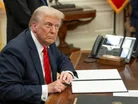
When US President Donald Trump’s administration promised “90 deals in 90 days,” supply chain leaders worldwide braced for widespread upheaval.
But as 9 July slips by, the 90-day timeframe for this first deadline passes without even nine deals completed – adding strain and delay to already-stretched trade routes.
An extension of the original deadline to 1 August, not to mention talk of further delays, adds to growing uncertainty in supply chains that have spent the past year contorting around tariff walls and trying to anticipate US policy stalls and swings.
A survey by US insurance brokerage Gallagher shows there is plenty of concern among US business owners about disruptions to the supply chain arising from President Donald Trump’s sweeping tariffs.
“Our survey showed supply chain disruptions were a concern to business owners, with 90% reporting they are concerned about the impact of tariffs on their businesses,” J. Patrick Gallagher, Chairman and CEO of Gallagher, told Reuters.
“Global supply chains, strained by geopolitical conflicts and extreme weather events, remain vulnerable to disruptions,” he added, noting that owners are seeking ways to diversify and shield themselves from potential fallout.
Treasury Secretary Scott Bessent has said the Trump administration’s attention remains fixed on the 18 countries responsible for 95% of America’s trade deficit. These include key partners such as Japan, South Korea, Germany and Mexico, all of which are deeply embedded in US-centric supply chains.
The US has sent letters to several of these countries this week, but they contain no radically new terms – just reiterations of a tariff formula first unveiled in April 2025. That formula uses the size of the trade deficit as a crude measure of alleged “trade cheating.”

For manufacturers, supply chain managers and procurement leaders, this keeps the uncertainty high and timelines short.
The letters sent to key trading partners bear more resemblance to the “Liberation Day” board once held up in the White House briefing room than to trade negotiation material. Their message is consistent: accept new tariffs or offer concessions fast.
Japan and South Korea were the first to receive these notes. Rather than opening the door to talks, they’ve reignited tensions.
During a cabinet task force meeting on 8 July, Japan’s Prime Minister Shigeru Ishiba expressed Tokyo’s deep “regret that the US government has imposed additional tariffs and announced plans to raise tariff rates".
South Korea’s finance ministry released a statement saying it would closely monitor developments, but emphasised that, if “excessive” market fluctuations emerged, the government would “take immediate and bold action in accordance with its contingency plans,” although it did not immediately clarify what these steps might entail.
Supply chains built on US–Asia cooperation now face additional friction. For US importers, that may translate into renewed risk of disruption, delays and shifting cost structures.

Stockpiling and substitution
Uncertainty has already changed behaviour on the ground. Ahead of the tariffs, importers bulked up inventories, triggering temporary spikes in shipping demand. But since then, volumes have dropped.
Chinese exports to the US are down 9.7% for the year. That reflects not only lower demand but also deliberate efforts to shift sourcing. Meanwhile, China’s exports to Africa are up 18.9%, to ASEAN countries by 12.2%, and to the UK by 7.4%.
As the US doubles down on protectionist tariffs—now estimated to be hitting a 15% effective rate, up from 2-4% historically over the past four decades—trading partners are looking elsewhere.
Global manufacturers are beginning to reconfigure production footprints. Logistics providers are revising lane strategies. And procurement heads are issuing revised supplier briefs, often with one clear goal: reduce exposure to the US tariff regime.
Retailers, inflation and shifting costs
US retailers have already warned the White House about the impact of tariffs. They’re not just worried about pricing—though that’s a concern as well. They’re watching lead times stretch, compliance requirements change and sourcing costs fluctuate.
At the Treasury Secretary’s confirmation hearing, he suggested a stronger dollar would counteract tariff-related inflation. But the dollar has fallen around 10% this year, adding fuel to price increases across the supply chain.
The result is a squeeze on both ends. Importers pay more for goods, while domestic producers see rising costs for raw materials and components sourced globally.
"The very fluid trade policies in the US and beyond, as well as regulatory risks, have increased the chance of an economic slowdown with the probability of a recession growing," said David Zinsner, Chief Financial Officer at Intel, speaking on a call with investors.
"We will certainly see costs increase," he added.
Will US tariffs be unhealthy for global pharma?
Meanwhile, President Trump is threatening 200% tariffs on pharmaceuticals, prompting global health supply chains to brace for disruptions, delays and potential cost increases.
The President suggested the new tariffs were part of an effort to bring more companies to US soil. While no concrete measures have emerged yet, the White House's investigation into pharmaceutical imports in April 2025 set the stage for tariff measures on the grounds of national security.
"We're going to give people about a year, a year and a half to come in and, after that, they're going to be tariffed," President Trump said during a Cabinet meeting at the White House on 8 July, where he also floated tariffs on semiconductor imports.
“If they have to bring the pharmaceuticals into the country... they're going to be tariffed at a very, very high rate, like 200%. We'll give them a certain period of time to get their act together.”
Jamil Ahmed, Director – Solution Engineering Global Capital Markets at Solace, outlines a possible solution: "Advanced data analytics combined with a real-time view of every ebb and flow can enhance transparency, which is crucial in the pharmaceutical industry.
"Managing a global supply chain is difficult and adding the current economic climate into the mix, such as tariffs, and things have become even more challenging. Managing intricate supply chains can be overwhelming.”
Global trade response
The global market remains steady for now, but who knows how long that will last.
And, ultimately, supply chains operate on tight margins and long-term planning – so short-term stability is small comfort.
"The current environment is simply too dynamic from which to plan results with a reasonable assurance of success," said David Weinberg, Chief Operating Officer at Skechers during a post-earnings call to investors.
Delays like this throw a wrench into every level of the global supply system. And until clear agreements are signed, procurement and supply chain leaders are left to plan around the political turbulence – or find themselves caught up in the maelstrom.