Continental: Making Supply Chains Green with Rice Husks
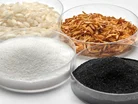
Continental is reducing its environmental impact across its global supply chains by switching to alternative raw materials in its tyre production.
The company is now using silica which is extracted from rice husks instead of traditional silica from quartz sand.
This material swap is being rolled out across its tyre portfolio and Continental sees it as part of a broader transition toward sustainable sourcing and manufacturing practices.
Rice husks as a renewable feedstock
Tyres are typically made from a mix of natural and synthetic rubbers, along with reinforcing agents like carbon black and silica.
Silica, commonly obtained from quartz sand, helps improve wet grip and fuel efficiency.
However, Continental now replaces this with silica extracted from rice husks, a byproduct of agricultural processes, including the production of Italian risotto rice.
“Using silica from the ashes of rice husks in our tyres shows that we are breaking completely new ground – without compromising on safety, quality or performance,” says Jorge Almeida, Head of Sustainability at Continental Tyres.
Rice husks are incinerated to create ash, which is then treated to remove impurities.
The resulting silica-rich powder serves the same functional role in tyres as conventional silica.
Continental claims this has contributed to a near 50% reduction in braking distances over the years, while also lowering rolling resistance and reducing fuel consumption and CO₂ emissions.
By using waste from rice production, Continental lowers its dependence on mined raw materials and reduces pressure on natural ecosystems.
This approach also tightens the integration between the agricultural and tyre sectors, building a supply chain that repurposes waste into industrial inputs.
Carbon black from waste and bio-based sources
Carbon black, which gives tyres their black colour and adds structural integrity to rubber, can account for up to 20% of a passenger car tyre’s weight.
Traditionally produced from fossil fuel-derived hydrocarbons through combustion, the material is a major contributor to the tyre industry’s carbon footprint.
Continental is now scaling up the use of bio-based and recovered carbon black. Bio-based carbon black is produced from renewable oils, such as tall oil—a byproduct of wood pulp processing.
The company also uses pyrolysis oil, a product derived from end-of-life tyres, to create recycled carbon black.
The recovered carbon black is sourced using thermolysis, a high-temperature chemical recycling method that breaks down old tyres into usable raw materials.
Continental has partnered with Pyrum Innovations to build capacity in this area and integrate the recovered carbon black into new tyre production.
By shifting to recycled and renewable feedstocks, the company reduces its dependency on virgin fossil-based inputs while aligning its procurement with circular economy principles.
Sustainable manufacturing and material sourcing
In 2024, Continental reported that 26% of the materials used in its tyres came from renewable or recycled sources.
The target for 2025 is to reach between 28% and 29%, with a longer-term goal of exceeding 40% by 2030.
These material changes are supported by upgrades to Continental’s manufacturing operations.

In May 2024, the company began producing CO₂-neutral tyres at its Lousado plant in Portugal.
The plant, which previously relied entirely on natural gas to generate steam, now uses a combination of on-site solar power and renewable grid electricity.
"In Lousado, we are demonstrating that even very large tyre plants can achieve CO₂ neutral production,” says Dr Bernhard Trilken, Head of Manufacturing and Logistics at Continental Tires.
“To do so, the availability of renewable energy sources at competitive prices is crucial. We are preparing all our plants so that they can use as much renewable energy as possible.
“The commissioning of our electric steam boiler in Lousado is the start of an exciting learning curve."
With operations stretching across multiple global sites and millions of tyres produced annually, Continental’s material and process changes represent a supply chain shift.
“Innovation and sustainability go hand in hand at Continental,” says Jorge.
By sourcing feedstocks from agricultural waste and tyre recycling and by decarbonising its factories, the company is repositioning its logistics and procurement around long-term environmental performance.