Why is JLR and Pirelli's Tyre Supply Chain Turning to Rice?
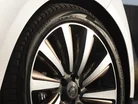
JLR is now rolling forward with tyres made using more than 70% renewable and recycled content, thanks to a new collaboration with Pirelli. This new version of Pirelli’s P Zero tyre marks a shift in how premium tyres are sourced and produced—placing pressure on every link in the supply chain to adapt.
While traditional tyres rely on petroleum-based rubber and chemicals, these new ones find alternatives in rice husks, plant-based resins and recycled materials.
JLR plans to introduce the new tyre on 22” Range Rover wheels in 2025, with a broader rollout to follow.
That said, the innovation isn’t just in the material composition. It’s in how the company is reworking its industrial processes and supply relationships to bring these materials in at scale.
"This is another example of how JLR is leading on sustainable design innovation in collaboration with its supply chain partners to deliver at scale, while reducing the environmental impact of our products,” says Reuben Chorley, JLR’s Sustainable Industrial Operations Director.
New materials, new methods
Traditionally, tyre production draws on a long list of ingredients, more than 400 chemicals in many cases, including heavy metals and complex compounds like polyaromatic hydrocarbons and benzothiazoles.
Tyre manufacture has long depended on both natural rubber and synthetic rubber derived from petroleum. But both materials carry environmental costs, from deforestation to fossil fuel extraction.
Reuben says the team faced challenges in developing this tyre without sacrificing the qualities drivers expect: “Achieving a more sustainable composition without compromising quality and performance is a challenge because of the complexity of tyre design.”
Instead of mining silica to improve wet grip, Pirelli now sources it from rice husks—a byproduct of rice milling that usually ends up discarded. Fossil-based resins and polymers have been replaced with substances from agricultural waste and even used cooking oil.
Tyre filler material known as carbon black is also getting a rethink. Normally produced through the incomplete combustion of hydrocarbons, its production is energy intensive and polluting. Pirelli has found a method to recover carbon black from old tyres, eliminating the need to generate more of it from raw fossil materials.
The P Zero tyre developed for JLR combines these approaches into a high-performance product that’s also easier on the environment.
The material blend includes natural and recycled inputs and now features Forest Stewardship Council (FSC)-certified rubber—a designation that confirms the rubber comes from responsibly managed forests.

Rethinking tyre impact across the chain
JLR is not just introducing new tyres; it’s re-engineering its supply chain to make this possible.
In 2024, the company announced a partnership with Pirelli aimed at scaling up the use of FSC-certified rubber. That certification ensures traceability throughout the chain—from the forest where rubber trees are tapped to the final manufacturing facility.
The scale of tyre manufacturing is considerable. Pirelli alone produces more than 74 million tyres annually, including for Formula 1. At this level of output, even small changes in materials can have widespread impact.
Tyre wear has also come under scrutiny, particularly as a source of microplastic pollution.
According to the University of Portsmouth, tyre wear accounts for around 28% of all microplastics entering the environment globally. These particles come not just from rubber but also from the chemicals used in tyre construction—some of which carry risks to ecosystems and human health.
With the new tyre, Pirelli aims to reduce both the front-end and back-end impact—lowering emissions during production while also mitigating harmful effects when the tyre wears down.
Andrea Debbane, Chief Sustainability Officer at JLR, calls the collaboration a turning point: “This new success is a testament to how collaboration fuels innovation - setting a new benchmark for responsible luxury without compromising performance.”
She adds that the changes go far beyond just tyres: “We're looking at every aspect of our vehicles to find solutions that enable us to redefine luxury in a way that's better for people and the planet.”
Through its ongoing partnership with Pirelli, JLR is positioning tyres not just as a functional component but as a place to embed sustainability across sourcing, production and lifecycle impact.