
Meet Daisy and Taz: Apple’s iPhone-Disassembling Robots
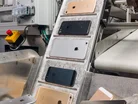
Apple is expanding its proprietary robotics initiative through machines known as Daisy, Dave and Taz.
These systems automate disassembly and offer a solution to electronic waste by recovering critical rare earth materials.
With a global workforce exceeding 166,000 people, the technology giant also relies on robotic team members to manage end-of-life logistics.
Daisy, located in Austin, processes old iPhones by freezing batteries and removing screws. Within eleven seconds, an electronic device is transformed into a collection of high-quality components for the secondary supply chain.
These machines address the high costs and environmental damage associated with discarded hardware. By integrating these systems, the company attempts to move away from traditional disposal methods and towards a circular procurement model. This shift is essential as the climate crisis intensifies and mineral shortages impact global networks.
Shifting towards a circular supply chain
For many years, the consumer electronics sector operated on a linear model. Although many consumers upgrade devices every two years, Apple assumes a three-year lifecycle for environmental modelling.
Standard e-waste recycling involves shredding devices into mixed materials, making it difficult to recover trace amounts of rare earth elements. The Material Recovery Lab in Austin provides an alternative approach to resource management.
“Advanced recycling must become an important part of the electronics supply chain and Apple is pioneering a new path to help push our industry forward,” Lisa Jackson, Apple’s Vice President of Environment, Policy and Social Initiatives explains.
“We work hard to design products that our customers can rely on for a long time. When it comes time to recycle them, we hope that the convenience and benefit of our programmes will encourage everyone to bring in their old devices.”
Daisy can disassemble 23 different iPhone models at a rate of 200 units per hour. By separating components, the system recovers materials at a quality standard that traditional recyclers might not achieve.
Copper extracted through this process is of a grade that could be sold back into the market, while cobalt from batteries is sent upstream for use in new batteries.
Specialised robotics in component recovery
While Daisy manages the primary disassembly, Dave and Taz focus on specialised recovery tasks. Dave was deployed in 2020 to handle the Taptic Engine once it is removed. The robot secures the module and cuts it open to recover tungsten and rare earth magnets.
Taz was unveiled in 2022 and uses shredder-like technology to separate magnets from audio modules. Unlike standard industrial shredders that might pulverise materials, Taz is designed to keep magnetic material intact to ensure it can be reused in future production cycles.

Managing material scarcity and scale
The scale of this robotic operation is significant for the company’s logistics. A single Daisy unit has the capacity to process 1.2 million iPhones annually.
These interventions resulted in nearly 20% of all material used in Apple products in 2021 coming from recycled sources. The company now uses 99% recycled rare earth elements in its magnets.
For these systems to operate effectively, they require a consistent supply of older devices. Trade-in programmes serve as the primary fuel supply for the Material Recovery Lab.
Every iPhone returned to a retail location provides feedstocks for the disassembly line. This strategy supports the Apple 2030 pledge, which aims for the company to be 100% carbon neutral across its entire supply chain.
Recovering materials such as aluminium and gold requires less energy than mining, reducing the carbon footprint of products like the MacBook Air by nearly half. The future of tech is about taking apart the last big thing.
Company portals

Executives

Lisa Jackson
Vice President, Environment, Policy and Social Initiatives