Volkswagen: Strengthening EV Supply Chain Independence
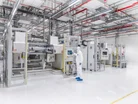
Volkswagen Group's PowerCo is producing unified cells in Europe at its Salzgitter, Germany gigafactory for Volkswagen, ŠKODA and SEAT EVs.
Volkswagen (VW) Group's PowerCo is designing, developing and producing battery cells entirely in Europe for the first time. The company expects 50% of its unified cell batteries for EVs to be supplied by these efforts. The cells are made in a gigafactory in Salzgitter, Germany, where PowerCo began production in December 2025.
"We are the first European carmaker to establish our own battery cell development and production," says Oliver Blume, CEO of Volkswagen Group.
"This step strengthens our position and independence in the global competition."
Challenges in battery supply chains
According to McKinsey, China dominates the battery market with a market share of more than 70%. China has excess capacity of batteries, leading to lower costs, while manufacturers in Europe face trade barriers, high shipping costs and variations in upstream-material availability.
The complexity of battery supply chains extends beyond raw material sourcing. European manufacturers must establish reliable partnerships with material processors and component suppliers while managing quality standards across multiple tiers of the supply chain. PowerCo's approach involves securing long-term agreements with suppliers to ensure consistent material flows and pricing stability.
According to McKinsey, for globally competitive battery manufacturing industries to emerge outside of Asia over the next ten years, challenges will need to be overcome on multiple fronts spanning supply chains, talent management, operations and technology. European manufacturing is seeking to address these challenges.

The development of upstream supply chains has been critical to PowerCo's success. The company has worked to establish local sourcing networks for key materials including cathode and anode components, electrolytes and separator films. This regional approach reduces dependency on distant suppliers and creates more resilient supply networks.
In the UK, a new battery manufacturing apprenticeship unit is being made available through the Growth and Skills Levy which the Government expects will generate more than £700m (US$937m) in annual value. Other manufacturers looking at making batteries in Europe include BMW, which has also chosen Germany for production.
Sustainability, procurement and supply chain leaders won’t want to miss Procurement & Supply Chain LIVE, taking place at Navy Pier, Chicago, on April 21–22.
Co-located with Sustainability LIVE: The US Summit, the event unites senior decision-makers at a time when supply chains, sustainability and business performance are more interdependent than ever.
Secure your place now for The US Summit – group booking discounts available.
Expanding production capacity in Europe
Production of the unified cell will be gradually ramped up during 2026 in Europe. In the first step, an annual production capacity of up to 20 GWh will be built in Salzgitter, which could be expanded to up to 40 GWh.
Salzgitter will serve as the lead plant for the following PowerCo gigafactories in Valencia, Spain and St. Thomas, Canada, all of which are based on PowerCo's factory concept. The lead plant model enables knowledge transfer and standardised processes across sites, ensuring consistent quality and production efficiency.
PowerCo is expected to cover around 50% of VW's demand for unified cells. The other half is expected to be sourced by external suppliers.
This dual-sourcing strategy provides supply security while maintaining competitive pressure and technological diversity. External suppliers include established battery manufacturers who can complement PowerCo's internal capacity during peak demand periods.
Oliver explains: "We are taking the key future technologies into our own hands. PowerCo delivers and is a central component of our strategy as a global automotive tech driver. The PowerCo gigafactory in Salzgitter sends a strong technological signal for Europe and serves as a cornerstone on our path to becoming a global automotive tech leader."
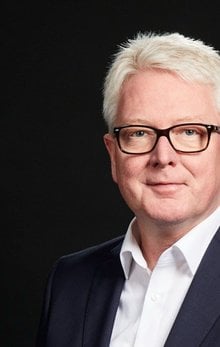
Frank Blome, CEO of PowerCo, says: "In just three years, we have built an entirely new company, developed a competitive product and completed a cell factory along with its upstream supply chain. At the same time, we are already constructing the next cell factories in Spain and Canada. In short: we deliver. This achievement is the result of an outstanding team effort by many colleagues at PowerCo and VW and I'm deeply grateful for that."
Technological advancements and development
The first PowerCo unified cell is based on nickel-manganese-cobalt (NMC) technology. Compared to previous cells, it delivers around 10% higher energy density, meaning it is one of the most powerful cells by volume segment. The standardised cell architecture enables worldwide use across brands and regions and offers economies of scale, cost advantages and technological flexibility, from lithium iron phosphate (LFP) to NMC and solid state.
It is synchronised with VW's new cell-to-pack battery system and offers advantages in range, efficiency and performance, compared to previous cells.
Thomas Schmall, Group Board Member for Technology at VW Group, says: "With PowerCo, we are consistently expanding our know-how in battery technology. In combination with the new battery system, the Unified Cell "made in Salzgitter" brings a real technological leap for our customers. This puts us in the driver's seat when it comes to a key technology for e-mobility."
Since 2022, at the VW Group research and development laboratory in Salzgitter, testing and development capacities have been strategically expanded. Another test field went into operation in January 2026.
Company portals


Executives
Frank Blome
CEO PowerCo SE
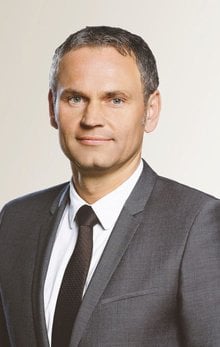
Oliver Blume
CEO
Thomas Schmall
Member of the Board of Management Volkswagen AG, Technology