IEA: Battery Prices Drop, but Supply Chain Risks Grow
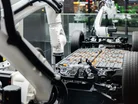
The global lithium-ion battery market has expanded six times over since 2020, reaching a value of US$150bn.
For supply chain and trade professionals, however, the story behind this growth reveals significant vulnerabilities in global sourcing strategies and geographic dependencies that could reshape procurement approaches across multiple sectors.
According to the International Energy Agency (IEA), the expansion has been driven primarily by electric vehicle demand, which accounts for more than 70% of battery deployment. Grid-scale battery storage has claimed around 15% of the market, highlighting the technology's evolution from consumer electronics into critical supply chain infrastructure.
In 2015, portable electronics such as laptops, tablets and smartphones represented nearly half of global battery production. That share has now fallen to below 5%, reflecting a fundamental shift in manufacturing priorities and trade flows.

Price dynamics reshape procurement strategies
Falling costs accelerated adoption throughout 2025, yet also exposed sustainability concerns within the pricing structure.
The average battery price dropped by 8% in 2025, driven by manufacturing efficiency and intense competition between producers. Grid storage systems fell to a third of their 2020 price levels, making batteries competitive with gas peaker plants in certain markets.
These pricing advantages, however, are not distributed evenly across regions. According to the IEA, Chinese battery packs sold for around 30% less than American equivalents and were 35% cheaper than European prices.
Lithium iron phosphate (LFP) batteries experienced price reductions exceeding 15%, compared with less than 5% for nickel-rich alternatives. LFP batteries now cost 40% less than nickel-manganese-cobalt options and command more than half of the EV market, alongside more than 90% of grid storage globally.
While advantageous for procurement teams, the IEA warns that current pricing levels could prove unsustainable, with many producers operating at a loss.
Geographic concentration creates supply vulnerabilities
China manufactured considerably more than 80% of all batteries in 2025, whilst Chinese, Korean and Japanese firms accounted for virtually all global cell production. The EU and US contributed modestly to the remainder, yet both import most battery components from China, demonstrating that dependence extends throughout the supply chain.
Nearly every battery powering electricity grids relies on China for at least one critical supply chain step. According to the IEA, 70% of EVs built outside China contain batteries or components sourced from Chinese suppliers, while more than 90% of battery storage systems worldwide depend on LFP cells produced in China.
This concentration extends beyond final assembly to raw material processing and component manufacturing. Chinese firms dominate the refining of lithium, cobalt and other critical minerals essential to battery production. Even when raw materials are extracted elsewhere, they typically pass through Chinese facilities for processing before being manufactured into battery components.
Beijing's export controls on key battery components, first introduced in 2023, have begun to expose these vulnerabilities by targeting weaknesses in non-Chinese supply chains. Korean producers are racing to establish LFP production lines as alternatives, though they face punishing competition from established Chinese manufacturers in an oversupplied market.
The strategic implications for supply chain resilience are profound. Companies relying on battery technology face limited options for diversification, whilst governments seeking to build domestic capacity must contend with entrenched advantages in cost, scale and technical expertise that took decades to develop.
For procurement professionals, this geographic concentration represents a fundamental risk that cannot be easily mitigated through traditional supplier diversification strategies. The challenge lies not simply in finding alternative suppliers, but in building entirely new supply ecosystems that can compete on both cost and reliability.
Cost competitiveness challenges Western manufacturers
Production capabilities in Europe and the US have been increasing, with both territories attracting investments using the booming EV sector to guarantee demand. However, the IEA found that production costs in the EU and US can run as much as 50% higher than in China.
These cost disadvantages stem from multiple factors beyond labour expenses. Energy costs, regulatory compliance, environmental standards and access to raw materials all contribute to the gap. Western manufacturers also lack the integrated supply chains that allow Chinese producers to source components locally at lower costs and with greater speed.
Matching the efficiency of Chinese manufacturing, where yields routinely exceed 90%, will require years of sustained investment. New producers typically waste far more material than established operations, making profitability difficult until operations fully mature. The learning curve for battery manufacturing is steep, with efficiency gains coming gradually as production teams refine processes and reduce defect rates.
The IEA notes that regions lacking industrial foundations will need patient capital and partnerships with experienced manufacturers to become competitive on the global stage. Government subsidies and incentives can help bridge the cost gap in the short term, but long-term competitiveness will depend on achieving operational excellence and economies of scale.
Scale itself presents another challenge. Chinese battery plants operate at volumes that drive down unit costs through bulk purchasing, optimised logistics and automated production lines. Western facilities starting with smaller production runs struggle to achieve comparable economics, creating a chicken-and-egg problem where lower volumes mean higher costs, which in turn limit market competitiveness and growth.
For supply chain professionals, these dynamics signal a period of significant adjustment as companies balance cost considerations against supply security and diversification strategies.