What Does Venezuela's new Mining Law Mean for Supply Chains?
Venezuela's new mining law presents opportunities and challenges for global supply chain managers seeking to diversify their sourcing strategies for critical minerals and energy resources.
The South American nation has passed legislation that opens its substantial mineral and oil reserves to private and foreign investment, potentially reshaping supply chains for materials ranging from aluminium to tantalum.
The law, approved unanimously by the government-controlled National Assembly, repeals mining regulations from 1999 and 2015 in an attempt to stabilise the country's economy following the US arrest of its leader Nicolás Maduro earlier this year.
For procurement professionals, the development could represent a significant shift in available sourcing options. Venezuela hosts the world's largest oil reserves alongside significant deposits of gold and critical minerals, including coltan, used to produce tantalum, which is used in smartphones, automotive electronics and laptops, and bauxite, the world's main source of aluminium.

Supply chain diversification opportunities
The new legislative framework replaces a long-standing system that previously restricted the private sector's role in mining. Acting President of Venezuela, Delcy Rodríguez, is working to align with the US and develop diplomatic ties with Donald Trump.
Following the raid in January, the US has loosened restrictions in Venezuela, encouraging the country to welcome outside capital in order to boost its economy once more.
Concessions are permitted for up to 30 years, with domestic, foreign, state-owned and private companies able to exploit the materials found within Venezuela's resources. The legislation creates a simplified tax scheme, which includes royalties of up to 13% of the gross production value of the mineral and a 6% tax on gross revenue from companies carrying out mining activities.
In January, a hydrocarbons law was passed, reforming its previous Organic Hydrocarbons Law to allow private sector participation in the oil and gas industry. This reduces state control over the industry, allowing private firms to directly engage in exploration and production, with less regulatory pressure.
Sustainability, procurement and supply chain leaders won’t want to miss Procurement & Supply Chain LIVE, taking place at Navy Pier, Chicago, on April 21–22.
Co-located with Sustainability LIVE: The US Summit, the event unites senior decision-makers at a time when supply chains, sustainability and business performance are more interdependent than ever.
Secure your place now for The US Summit – group booking discounts available.
Sourcing strategy considerations
The country does not have any industrial-scale mining of its resources, but the new law will welcome investments and action from outside companies. This could mean supply chain managers face both opportunity and uncertainty as infrastructure develops.
"I'm feeling very optimistic about an environment where investment is going to flow not just to offshore oil and gas, not just to Caucus, but actually to the interior where these enormous resources exist," explained US Interior Secretary Doug Burgum, after a meeting with President Rodríguez.
"The people of Venezuela have been resourceful in trying to protect their own resources from the hyperinflation that's occurred. But I think the faster that we can move on normalising relations, the faster you're going to see the gap between the official and the unofficial currency rate close.
"We saw at the ministerial that was held at the State Department with Marco Rubio on 24 February 2025, 51 countries coming to Washington DC wanting to sign agreements where nations could trade freely with the price floor around critical minerals, the resources that are here around not precious metals like gold, but critical minerals in this country and minerals that you need like bauxite for aluminium for defence and for advanced manufacturing and for your laptop.
"And if people don't understand critical minerals, just understand that every phone and every camera that you're pointing at me right now has got rare earth minerals in it. It's not just for defence and for computers. Everybody needs to have a secure supply of these to keep the global economy going.
"The United States is committed to leading in that area. And again, Venezuela as a trusted ally and partner of the United States, could play a huge role in that."
Risk management in procurement
Though this could position Venezuela as a strategic player in oil and minerals supply chains, procurement teams should evaluate several factors before committing to sourcing relationships. Critics of the bill worry that the new amendments create more opacity within operations, preventing citizens from having insights into what is occurring around them.
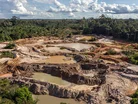
The main mineral reserves in Venezuela sit across the south, extending over Bolivar and Amazonas. A significant portion of Venezuela's mining takes place in a 11.2 million hectares stretch of rainforest, named the Orinoco Mining Arc. In 2024, it was estimated that 9,531 hectares were deforested due to mining activity, according to Amazon Conservation's Monitoring of the Andes Amazon Program.
Though the proposed law describes a commitment to 'ecological mining development', environmental groups criticise this as a form of greenwashing. The legislation does include steps for assessing environmental impact and consultation with Indigenous communities, but there is no requirement for this to occur before operations begin or contracts are signed.
For supply chain professionals evaluating Venezuelan sourcing options, due diligence around environmental, social and governance criteria could prove essential. As companies face increasing pressure to demonstrate responsible sourcing practices throughout their supply chains, the transparency and operational standards of potential suppliers could require careful assessment before procurement decisions are finalised.