Intel: The New Pressure Valve for AI Supply Chains?

As AI workloads scale across cloud computing, data centres and enterprise applications, competition for cutting-edge chip production has intensified.
Taiwan Semiconductor Manufacturing Company has warned key customers including NVIDIA and Broadcom that it cannot fully meet demand for advanced AI processors.
The world's largest contract chipmaker faces unprecedented strain as capacity at its most advanced manufacturing nodes becomes increasingly constrained, according to The Information.
For supply chain professionals, this highlights the fragility of global semiconductor networks relying heavily on a single manufacturer for critical components driving AI infrastructure.
TSMC manufactures the most advanced chips used by leading AI designers, making it a critical gatekeeper for AI progress.
However, hyperscale cloud providers, chipmakers and system designers are all seeking priority access, stretching capacity across multiple quarters. According to TrendForce's semiconductor research division, lead times at advanced nodes are lengthening, forcing some customers to explore alternative suppliers to avoid delays.

TSMC's latest financial results demonstrate the power of AI-driven demand. The company reported a 35% year-on-year increase in fourth-quarter profit, reaching a record high. Revenue hit US$33.7bn, while net income rose to US$16.3bn. Profit growth has increased year on year for 8 consecutive quarters.
High-performance computing, including AI and 5G applications, accounted for 55% of total revenue. Advanced chips measuring 7 nm or smaller made up 77% of wafer revenue, reflecting the industry's shift towards smaller, faster and more energy-efficient designs.
TSMC's Chief Financial Officer Wendell Huang says: "We expect our business to be supported by continued strong demand for our leading-edge process technologies."
The company guided for current-quarter revenue of between US$34.6bn and US$35.8bn, representing growth of up to 38% year on year.
The company began mass production of 2 nm chips last quarter and plans to ramp capacity this year. Capital expenditure is expected to rise to between US$52bn and US$56bn in 2026, up from US$40.9bn in 2025.
All supply chain, sustainability, Scope 3 and net zero leaders should attend:
- Procurement and Supply Chain LIVE: The Net Zero Summit - QEII Centre, London, March 4-5
- Procurement and Supply Chain LIVE: The US Summit - Navy Pier, Chicago, April 21-22
Co-located with Sustainability LIVE, these events brings together CSCOs, CSOs and senior decision-makers at a moment when sustainability, supply chains and commercial performance are increasingly interconnected.
Tickets can be booked online today for The Net Zero Summit and The US Summit. Group discounts available.
Intel emerges as alternative sourcing option
TSMC's capacity constraints are reshaping competitive dynamics. Intel, which has spent recent years rebuilding its manufacturing capabilities, is attracting renewed attention. For supply chain managers seeking to diversify semiconductor sourcing strategies, Intel's re-emergence as a credible foundry option could provide much-needed flexibility.
Intel does not need to overtake TSMC to benefit from the current environment. According to Bernstein Research analysts, the company has an opportunity to act as a pressure valve in an overheated supply chain. Intel's manufacturing footprint offers geographic diversification and alignment with US industrial policy, factors becoming more important as companies seek resilience amid geopolitical uncertainty.
Investor sentiment towards Intel has strengthened, with shares rising 19% in the first quarter of 2026. NVIDIA has already invested in Intel, while according to Bloomberg Intelligence analysis, Apple could use Intel's foundry services, underlining growing confidence in the company's manufacturing turnaround.
Geographic expansion introduces new complexities
TSMC is expanding its global footprint with major projects under way in Japan, Europe and Arizona. Chief Executive Officer C.C. Wei says the Arizona expansion will form a gigafab cluster designed to improve productivity and better serve US customers. This geographic diversification could reduce concentration risk, though implementation challenges remain significant.
However, overseas expansion comes with trade-offs. TSMC has warned that fabs outside Taiwan will operate at diluted margins, reflecting higher costs and operational complexity. Wei also flags global tariff policies as a potential risk heading into 2026.
Meanwhile, memory shortages and rising prices could weigh on consumer electronics demand, particularly smartphones and PCs. What's certain is that AI is driving a structural shift in semiconductor demand, pushing even the most advanced manufacturers to their limits. As capacity tightens, supply chain leaders must reassess sourcing strategies and consider how emerging alternatives could mitigate risks across the AI hardware ecosystem.
Company portals



Executives
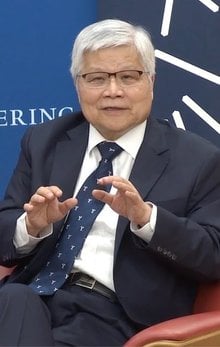
C. C. Wei
CEO
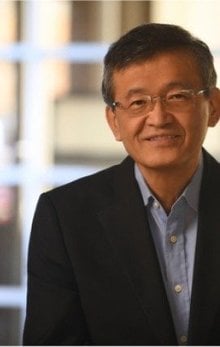
Lip-Bu Tan
Chief Executive Officer