Tata & Intel: Building India’s Silicon Supply Chain

A strategic alliance between Tata Electronics and Intel could mark a turning point for India's semiconductor sector, as the two companies work together to build domestic chip manufacturing capabilities and expand AI-powered computing across the nation.
The partnership, formalised through a Memorandum of Understanding (MoU), will see both firms explore manufacturing and packaging Intel products at Tata Electronics' forthcoming fabrication and assembly plants.
The collaboration arrives at a critical moment for India's efforts to establish itself as a credible player in global chip production whilst reducing its dependence on imported semiconductor components.
Lip-Bu Tan, CEO of Intel Corporation, says: "Intel's technology has driven decades of advancement in computing and as we continue to innovate, our ambition is to broaden our reach, accelerate growth and deliver even greater value to our customers.
"We see this as a tremendous opportunity to collaborate with Tata to rapidly scale in one of the world's fastest-growing compute markets, fuelled by rising PC demand and rapid AI adoption across India."
India's US$14bn semiconductor investment
Tata Electronics, operating under the 156-year-old Tata Group conglomerate, is committing approximately US$14bn to its semiconductor ventures. These plans encompass constructing India's inaugural semiconductor fabrication facility in Gujarat alongside a chip assembly and testing operation in Assam.
"The Tata Group is deeply committed to developing a robust semiconductor industry in India," says Natarajan Chandrasekaran, Chairman of Tata Sons, the principal investment holding company of Tata companies.
"We are excited to collaborate with Intel, and this strategic alliance would accelerate our efforts. Together, we will drive an expanded technology ecosystem and deliver leading semiconductors and systems solutions, positioning us well to capture the large and growing AI opportunity."
According to Tata, the partnership could constitute a "pivotal step towards developing a resilient, India-based electronics and semiconductor supply chain".
The two companies will also investigate methods to scale AI-powered PC solutions targeted at Indian consumers and businesses, acknowledging the nation's expanding position as a digital-first economy.
Building domestic manufacturing capabilities
India's semiconductor sector has experienced considerable expansion under Prime Minister Narendra Modi's government, which aims to establish the country as an essential component in global supply chains. Despite ranking amongst the world's largest electronics consumers, India has historically lacked indigenous chip design and fabrication infrastructure.
Through the India Semiconductor Mission, the government has approved more than 10 projects with a combined value exceeding $18 bn. The Tata-Intel collaboration is viewed as one of the most tangible demonstrations of international confidence in India's manufacturing potential.
The Gujarat foundry, upon completion, is expected to serve sectors including AI, automotive, computing and data storage. Tata Electronics has allocated billions to establish advanced manufacturing infrastructure, complemented by assembly and testing facilities designed to address domestic and export requirements.
Dr Randhir Thakur, CEO and Managing Director of Tata Electronics, says: "This MoU aligns with Tata Electronics' roadmap across EMS, OSAT and Semiconductor Fab, enabling a reliable and resilient supply chain for our customers.
"This collaboration would drive cost competitiveness, faster time-to-market, greater operational agility and enable Intel products to capture the surging demand for next-generation AI compute in India."
AI computing and future markets
The partnership extends beyond silicon production into AI-enabled PCs, amongst the fastest-growing segments in computing.
Both firms plan to explore rapidly scaling customised AI PC solutions for India's consumer and enterprise sectors, with the country projected to become a top-five global market before 2030.
This approach aligns with Intel's worldwide strategy for AI-integrated processors and Tata's evolving position as a systems integrator and technology provider. The collaboration recognises that India's digital transformation requires not just hardware manufacturing but also localised AI computing solutions tailored to the unique needs of Indian businesses and consumers.
The focus on AI-powered computing infrastructure reflects broader market trends, as enterprises across India increasingly adopt machine learning and artificial intelligence technologies to drive productivity and innovation. By establishing local manufacturing and customisation capabilities, the partnership aims to reduce costs and accelerate deployment timelines for AI solutions.

For India, this agreement could signal more than another corporate alliance. With the Tata Group's substantial domestic presence, financial resources and existing electronics expertise – including its position as an Apple iPhone component supplier – the Intel partnership could become foundational to India's next industrial phase.
Chandrasekaran's emphasis on establishing a "resilient, India-based electronics and semiconductor supply chain" encapsulates the country's objectives: transitioning from major chip importer to self-sufficient, export-capable semiconductor producer.
As geopolitical shifts continue reshaping the global technology landscape, the Intel-Tata alliance could represent a meaningful development in India's pursuit of digital autonomy – where leading semiconductor companies function not merely as suppliers, but as partners in constructing an Indian future driven by silicon and AI.
Company portals



Executives

Dr Randhir Thakur
CEO and Managing Director
Lip-Bu Tan
Chief Executive Officer
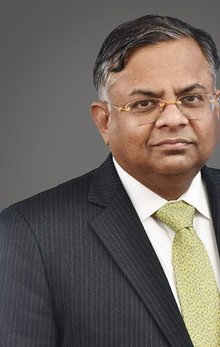
Natarajan Chandrasekaran
Chairman