Tesla: The Acid-Free Future of the Lithium Supply Chain
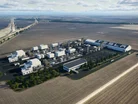
Tesla has confirmed that its lithium refinery in Corpus Christi, Texas, has reached full operational capacity, a development that could signal a fundamental shift in how North American manufacturers approach critical mineral supply chains.
The US$1bn facility is now processing battery-grade lithium hydroxide domestically, potentially reducing reliance on Asian refining infrastructure that has dominated the sector for decades.
The announcement, shared through the company's official account on social media platform X on 15 January 2025, positions the achievement as a step towards regional energy independence.
CEO Elon Musk, in a statement posted to X, highlighted the facility's status as the largest lithium refinery in the Americas, emphasising its role in Tesla's vertical integration strategy designed to secure critical minerals for long-term manufacturing objectives.
The facility's operational milestone comes at a critical juncture for the EV industry, where supply chain resilience has emerged as a strategic priority alongside production capacity and technological innovation.
Reimagining refinery processes
Constructed across more than 480 hectares with capital investment exceeding US$1bn, the facility employs a proprietary alkaline leach process that eliminates the need for acid roasting, a conventional method requiring concentrated sulphuric acid. This acid-free approach removes dependence on hazardous reagents and prevents the creation of toxic by-products such as sodium sulphate.
Instead, the process yields Analcime, or anhydrite, a benign sand-like material. Rather than storing this output in tailings ponds, Tesla is repurposing it as an additive for the construction industry, particularly in concrete production. This approach could transform what would traditionally be considered industrial waste into a secondary resource stream.
The refinery's processing methodology represents a departure from conventional lithium extraction techniques that have long relied on environmentally intensive chemical processes.
By developing proprietary technology in-house, Tesla has positioned itself to potentially license this cleaner refining method to other manufacturers seeking to reduce their environmental impact.
The facility's design incorporates closed-loop water systems and energy-efficient processing equipment, further reducing the operational footprint compared to traditional lithium refineries. These technical innovations could establish new benchmarks for sustainable mineral processing in the battery supply chain.

Economic impact on local communities
Since construction began in 2023, the project has generated more than 1,000 temporary construction positions and now supports more than 250 permanent roles, including specialised technicians, operations managers and chemical engineers. Tesla's investment in the Coastal Bend region extends beyond employment figures into educational infrastructure.
The company has established talent development partnerships with Robstown Independent School District, apprenticeship programmes at Del Mar Community College and internship opportunities with Texas A&M University–Corpus Christi. These initiatives aim to build local expertise capable of managing advanced mineral refining operations.
Local economic analysts estimate the refinery contributes approximately US$45m annually to the regional economy through direct wages, supplier contracts and secondary spending. The facility's presence has also attracted ancillary businesses, including specialised equipment suppliers and logistics providers, creating a developing industrial cluster around critical mineral processing.
Beyond immediate economic contributions, the refinery has catalysed infrastructure improvements in the Corpus Christi area, including upgraded transport links and expanded industrial utilities. These enhancements position the region to attract additional advanced manufacturing investments, potentially diversifying the local economy beyond its traditional energy sector foundations.
Shortening the global supply chain
The facility processes spodumene concentrate, a hard-rock ore, directly on-site to produce battery-grade lithium hydroxide for high-nickel cathode batteries. This localised refining eliminates the traditional 20,000-mile shipping route where raw materials are sent to Asia for processing before returning to Western manufacturing facilities.
By regionalising this segment of the supply chain, Tesla could reduce both logistics costs and the carbon footprint associated with international shipping. The refinery's designed capacity supports production of approximately one million electric vehicles annually, ramping towards 50 GWh, positioning it as a critical node in the company's supply network.
The timing of this announcement coincides with Tesla's decision to discontinue its Model S and Model X programmes. Production lines at the Fremont factory are being repurposed to manufacture Optimus humanoid robots, indicating a strategic pivot from traditional automotive manufacturing towards what the company describes as "physical AI" development.
While the Texas refinery secures lithium supplies for ongoing Model 3, Model Y and Cybertruck production, it could also provide the chemical foundation for battery requirements in an increasingly autonomous manufacturing ecosystem where robotics and self-driving vehicles represent core business operations.