Musk at Davos: AI to Overhaul Supply Chains by 2026
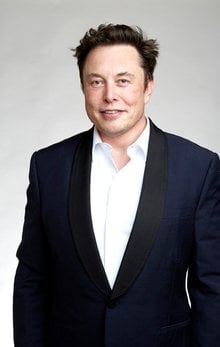
Elon Musk's appearance at the World Economic Forum in Davos was a notable shift for the Tesla and SpaceX chief, who has previously criticised the annual gathering as "elitist" and "unelected".
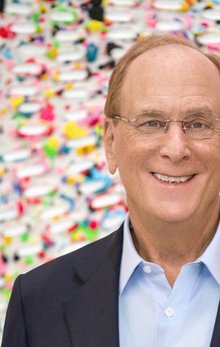
Speaking with BlackRock CEO Larry Fink, Musk outlined ambitious technological targets that could reshape global supply chains, logistics networks and manufacturing operations.
His stated aim remains to "maximise the probability that civilisation has a great future", but the implications for how goods and services move around the world could be profound.
The Tesla chief's predictions span autonomous vehicles, renewable energy infrastructure, AI and robotics – all technologies with the potential to transform supply chain operations, warehouse management and last-mile delivery systems.
For logistics professionals and operations directors, Musk's timeline suggests that fundamental changes to transportation networks and manufacturing processes could arrive sooner than many industry forecasts suggest.
Autonomous vehicles and logistics networks
Musk claimed that "self-driving cars is essentially a solved problem at this point", despite Tesla's Cybercab facing federal investigation.
According to Reuters, traffic rules were broken during public trials in Austin, Texas.
He said Tesla has already deployed robotaxis in several American cities and expects "very widespread" rollout across the US by the end of 2025.
For supply chain operations, autonomous vehicle technology could mean significant changes to freight movement and delivery systems.
Musk announced that Tesla is pursuing regulatory approval for "supervised full self-driving" in Europe, saying "we hope to get... approval in Europe, hopefully next month".
A similar timeline is being targeted for China, suggesting that autonomous logistics fleets could become viable in major markets within months rather than years.

The infrastructure challenge for AI
The Tesla chief addressed energy supply constraints that could impact the data centre infrastructure underpinning modern supply chain management systems.
He argued that the US could be entirely self-sufficient through solar power, stating "you could take a small corner of Utah, Nevada or New Mexico... to generate all of the electricity that the US uses".
However, Musk flagged trade tariffs as a barrier to solar deployment, saying "the tariff barriers for solar are extremely high and that makes the economics of deploying solar artificially high".
This could affect the rapid expansion of energy-hungry data centres required for AI-powered supply chain optimisation tools and logistics platforms.
His position diverges from US President Donald Trump's stance on renewable energy.
While Musk advocates for solar power to meet growing energy demands, Trump has encouraged oil and gas expansion and implemented a freeze on solar project approvals.
Musk emphasised that securing sufficient power is "critical" as demand soars due to AI development.
Robotics transforming warehouse operations
Musk provided a timeline for AI capabilities that could revolutionise supply chain automation.
"I think we might have AI that is smarter than any human by the end of 2025," he said, adding it would happen "no later than 2026".
By "2030 or 2031, call it five years from now, AI will be smarter than all of humanity collectively".
He predicted "there will be more robots than people" in future, describing the combination of robotics and AI as "the path to abundance for all".
Musk told Fink: "The only way to do this is AI and robotics."
He envisions robots becoming "ubiquitous," leading to "an explosion in the global economy" that could transform manufacturing capacity and warehouse productivity.
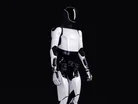
Tesla's Optimus humanoid robot is currently performing "simple tasks in the factory", but Musk expects commercial availability soon.
"By the end of this year, I think they will be doing more complex tasks, and probably by the end of next year, I think we would be selling humanoid robots to the public," he said.
By late 2026, he suggested the robots would have "very high reliability" and handle almost any task.



Executives
Elon Musk
Tesla CEO
Larry Fink
Chairman and Chief Executive Officer