
Tate & Lyle: Increasing Circularity in Food Supply Chains
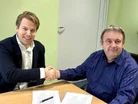
Tate & Lyle has extended its partnership with Van Triest CirQlar to enhance the distribution of citrus pulp co-products, marking a strategic move to strengthen circular value chains within its ingredient production operations.
Across the world, 30 March 2026 marks the United Nations' International Day of Zero Waste. This year's focus is on food and how organisations can promote circularity through climate plans, food waste reduction targets and public-private partnerships.
Every year, around 1 billion tonnes of edible food is thrown away, showing the scale of the issue which requires redesigning global food systems. The challenge extends beyond household waste to encompass the entire food production chain.

To help build these circular food systems, ingredient solutions provider Tate & Lyle has announced the extension of its partnership with Van Triest CirQlar. Under the agreement, Van Triest CirQlar will manage the main aspects of citrus pulp co-product sales and distribution from Tate & Lyle's pectin production facility in Großenbrode, Germany.
Van Triest CirQlar specialises in the purchasing and sales of co-products and is part of animal feed business ForFarmers. The company will oversee logistics and distribution operations for citrus pulp co-product generated during pectin production at the German facility.
This pectin is a nature-based ingredient derived from citrus fruit peels, which is a co-product of the juice industry. During pectin production, nutritious material left over becomes a citrus pulp co-product, which is widely used as animal feed.
Tate & Lyle supplies this natural animal feed to livestock farmers in northern Germany through an established distribution network. The arrangement ensures that valuable nutrients contribute to sustainable agricultural practices.
Sustainability, procurement and supply chain leaders won’t want to miss Procurement & Supply Chain LIVE, taking place at Navy Pier, Chicago, on April 21–22.
Co-located with Sustainability LIVE: The US Summit, the event unites senior decision-makers at a time when supply chains, sustainability and business performance are more interdependent than ever.
Secure your place now for The US Summit – group booking discounts available.
Optimising co-product value chains
The partnership could allow Tate & Lyle to leverage Van Triest CirQlar's specialised market expertise, customer network and active market management capabilities to optimise value realisation across its co-product streams.
Roel van Haeren, Managing Director at Van Triest CirQlar Europe, says: "This partnership aligns with our objective to lead in managed co-product value chains and is an important step in further strengthening our relationship with Tate & Lyle."
"It is a strategic expansion of our activities in Germany and our citrus pulp position in this market. It's exactly how Van Triest CirQlar grows – by professionalising co-product streams and turning them into dependable, circular value."
The agreement aims to bring long-term market access and structured pricing for Großenbrode's citrus pulp co-product capacity. This approach could reduce commercial risk and increases planning reliability, providing greater operational visibility for supply chain planning.
By outsourcing co-product distribution management, Tate & Lyle can focus on its core food and drink ingredient customer offering while ensuring efficient utilisation of production by-products.
Strengthening operational performance across facilities
In 2024, Tate & Lyle acquired its Großenbrode facility, which has supplied farmers in northern Germany with citrus pulp co-products for animal feed for more than 40 years. This helps ensure the beneficial use of a significant residual stream from production while generating additional value.
Tate & Lyle already had a partnership with Van Triest CirQlar for several of its corn-based co-products at its facility in the Netherlands. The existing relationship provided a proven foundation for expanding collaboration to additional production sites.
Through this new partnership, Tate & Lyle is strengthening the commercial and operational performance of its co-products by harmonising distribution models across multiple sites. Sönke Schweiger, Tate & Lyle Plant Director in Großenbrode, says: "At our Großenbrode facility, we turn upcycled citrus peels into high value ingredients and give their co-products a second life – that's circularity in action."
"With this expanded partnership, we can maximise the commercial and environmental value of our pectin production. By harmonising our co-products models across two sites drawing on external expertise, we can focus on delivering high quality, functional food and drink ingredients that support healthier diets while caring for our planet and making good use of its resources."
Strategic alignment with waste reduction targets
Tate & Lyle's partnership forms part of its wider sustainability strategy, which focuses on caring for the environment and minimising its impact through its supply chain and operations. The company has a target to beneficially use 100% of its waste by 2030, especially waste from its corn wet milling process.
This waste is organic matter which can be used as nutrients for animals and land of local farms. The commitment demonstrates the company's recognition that waste reduction requires systematic approaches and strategic partnerships.
According to Tate & Lyle, by 2025 the company had achieved a 90% share of its waste being beneficially used, which was helped by its commitment to improve waste management in every one of its sites worldwide. The expanded partnership with Van Triest CirQlar could support this operational objective by providing professional management of co-product distribution networks.
This ensures reliable supply routes to end markets and reduces the complexity of managing secondary product streams across multiple production facilities. The collaboration represents a practical step towards achieving the company's ambitious 2030 waste reduction targets.
Company portals


Executives
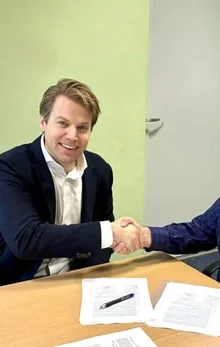
Roel van Haeren
Managing Director, CirQlar Europe
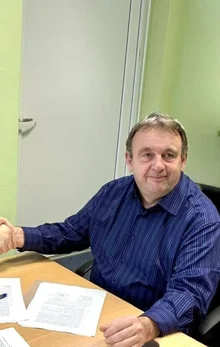
Sönke Schweiger
Plant Director Tate & Lyle in Großenbrode