
What Does the Backtrack on Tariffs Mean for US-EU Trade?
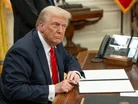
When US President Donald Trump made his plans to acquire Greenland – the semi-autonomous territory of Denmark – known, European countries began showing their support for the Kingdom.
Following this, the President originally vowed to implement further taxes on those countries opposed to him, but after a week-long conference at Davos, hosted by the World Economic Forum, these growing tensions seem to have reached an agreement.
Trump's administration now speaks of no further tariffs and a mystery deal regarding Greenland.

Increasing trade tensions
Since beginning his second term, US President Trump has been transforming trade relationships around the world, with ongoing policies adding to supply chain disruption. When his first set of tariffs came into effect on 1 February 2025, they began to reshape global supply chains, creating or escalating trade tensions and retaliatory measures.
Following on from this initial round, President Trump implemented a baseline 10% tax on US imports, with various regions being charged as high as 50%. These measures were put in place to encourage US-based manufacturing, but the leader was also encouraging of building new deals with those countries wanting to dispute their charges.
In July, the US and Europe reached a deal, reducing the 30% levies down to 15%. This reduction came as long as Europe agreed to invest in the US and make changes to its operations in order to increase US exports.
In recent months, Trump has been aiming to acquire Greenland, a self-governing territory within the Kingdom of Denmark. Until his time at Davos, he was clear that he would not rule out military force in order to obtain the country as part of the US, despite most European countries being against this move.
Setting trade boundaries
On January 17th, Trump announced he would implement an extra 10% tariff on Denmark, the UK, Finland, France, Germany, The Netherlands, Norway and Sweden, until he was able to obtain the country. This would come into action on the 1st February and increase to 25% on June 1st.
At Davos, a group of European Parliament members blocked a vote to approve a US-European trade deal in response to these threats.
Bernd Lange, Chair of the European Parliament's International Trade Committee, said it was "left with no alternative but to suspend work on the two Turnberry legislative proposals."
He announced that these trade plans would remain on hold until the US altered its strategy. By leveraging US-EU trade, the committee demonstrated that the US would not be able reach all of its goals by using force, instead, pushing for collaboration and peace.
Bernd affirmed that, until Trump stepped down from his threats, there would be no global compromise between the two forces.
Following on from the suspended approval Trump announced he will not be taking Greenland by force, nor will he be imposing extra tariffs on those opposed to him.
"Based upon a very productive meeting that I have had with the Secretary General of NATO, Mark Rutte, we have formed the framework of a future deal with respect to Greenland and, in fact, the entire Arctic Region,” Trump wrote in a post on Truth Social.
“Based upon this understanding, I will not be imposing the Tariffs that were scheduled to go into effect on February 1st.”
All sustainability, net zero and sustainable procurement leaders should attend:
- Procurement & Supply Chain LIVE: The Net Zero Summit - QEII Centre, London, March 4-5
- Procurement & Supply Chain LIVE: The US Summit - Navy Pier, Chicago, April 21-22
Co-located with Sustainability LIVE, these events brings together CPOs, CSCO, CSOs, ESG leaders and senior decision-makers at a moment when sustainability, supply chains and commercial performance are increasingly interconnected.
Tickets can be booked online today for The Net Zero Summit and The US Summit. Group discounts available.
Building supply chain resilience
By implementing boundaries and negotiations to the mix, a new deal has eased global tensions for the time being. While there are currently no details as to what this new deal entails, or where the ownership of Greenland now lies, the efforts of Allies has proven to be a step in the right direction for maintaining trade.
As 2025 saw ongoing turbulence, leaders in 2026 are eager to prevent further volatility from arising or threatening supply chain stability. Through the collective efforts of the European Parliament, there appears to be a momentary agreement for supply chain integrity and global trade relations.
Company portals



Executives

Bernd Lange
Chair of the European Parliament's International Trade Committee