What is the Supply Chain Impact of Heineken's Workforce Cut?
Heineken is set to reduce its headcount by 6,000 employees – approximately 7% of its workforce – across 2026 and 2027, a decision that could have significant implications for the brewer's supply chain operations.
The job cuts, announced alongside the company's full year results on 11 February, are expected to unlock approximately US$500m in savings as the business responds to falling beer sales and shifting consumer preferences.
The reduction could reshape Heineken's operational footprint, with cuts anticipated across both brewery facilities and white-collar positions.
According to the company, total sales fell 1.2% in 2025, prompting the need a significant supply chain restructure. The workforce reduction forms part of broader operational changes that could affect how Heineken manages its supply chain.
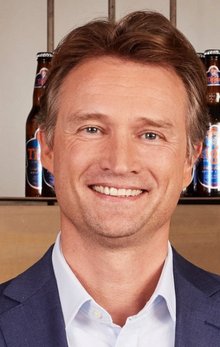
CEO, Dolf van den Brink, says: "Our first priority is to accelerate growth, funded by stepped up productivity and operating model changes that will involve a significant cost intervention over the next two years. This will unlock stronger people productivity and enable greater speed and efficiency."
All supply chain, sustainability, Scope 3 and net zero leaders should attend:
- Procurement and Supply Chain LIVE: The Net Zero Summit - QEII Centre, London, March 4-5
- Procurement and Supply Chain LIVE: The US Summit - Navy Pier, Chicago, April 21-22
Co-located with Sustainability LIVE, these events brings together CSCOs, CSOs and senior decision-makers at a moment when sustainability, supply chains and commercial performance are increasingly interconnected.
Tickets can be booked online today for The Net Zero Summit and The US Summit. Group discounts available.
Brewery closures and operational consolidation
The planned brewery closures could require Heineken to reconfigure its manufacturing and logistics networks. Closing production facilities may mean longer transportation routes for raw materials and finished products, potentially affecting delivery times and increasing transportation costs in certain markets.
However, the company suggests these changes are designed to create a more streamlined operation that could improve overall efficiency. The consolidation strategy aims to optimise production capacity across fewer sites whilst maintaining output levels.

The integration of artificial intelligence (AI) into operations is expected to contribute to productivity gains, particularly in white-collar functions. This technological shift could affect supply chain planning, inventory management and demand forecasting processes, potentially allowing the company to operate with fewer personnel while maintaining or improving operational oversight.
The restructuring responds to broader market trends that could continue to affect Heineken's supply chain planning. According to Drinkaware, 49% of UK adults are choosing no or low alcohol options, whilst Gallup research shows just 62% of young people drink alcohol, compared to 72% from 2001 to 2003.
Leadership transition amid transformation
The operational restructuring comes alongside a significant leadership change.
In January 2026, Heineken announced that Dolf would step down as CEO in May 2026, after six years in the role.
Announcing his resignation, Dolf says: "After six years as CEO and more than 28 years at Heineken, I believe this is the right moment to transition leadership as the company prepares for the next phase of the EverGreen strategy."
Dolf will remain with the company in an advisory capacity to support the transition. Heineken has not yet named his replacement, with the Board indicating it is considering both internal and external candidates.
Russ Mould, Investment Research Director at broker AJ Bell, says of the company's CEO succession: "Whoever becomes Heineken's new CEO will walk into the top job with many difficult decisions having already been made."
These changing consumption patterns could require adjustments to production volumes and product mix across Heineken's manufacturing network. The company's EverGreen 2030 strategy aims to address these challenges by creating a more agile organisation.
This includes consolidating more than 60 separate human resources (HR) systems into one platform and implementing AI to facilitate internal mobility. The streamlined approach is designed to improve operational efficiency across the global organisation.
In a company statement, Dolf says the strategy was created as the company is "fundamentally transforming our business to stay ahead in an increasingly volatile geopolitical and economic landscape.
"EverGreen 2030 is further sharpening Heineken's growth strategy, allowing us to confidently navigate consumer shifts and capturing structural growth opportunities through its advantaged global footprint, leadership in growth segments and its power brands."
Company portals
Executives
Dolf van den Brink
Chairman of the Executive Board/ CEO