How Brewer Heineken is Building Supply Chain Resilience
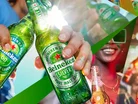
The global brewing industry is confronting a convergence of supply chain pressures, from climate-related agricultural disruption to the increasing demand for transparency across complex value networks.
Heineken, the world's second-largest brewer, is responding through its "Brew a Better World 2030" strategy, which positions supply chain resilience and sustainable procurement as core business imperatives. By embedding sustainability across its sourcing, production and distribution operations, the company is building a buffer against the volatility reshaping global manufacturing.
The challenges facing the sector are multifaceted. Rising temperatures are affecting crop yields in key agricultural regions, whilst extreme weather events are disrupting logistics networks with increasing frequency.
At the same time, regulatory frameworks around carbon reporting and environmental disclosure are tightening across major markets. Consumer expectations have also shifted markedly, with transparency and environmental credentials now influencing purchasing decisions across demographics.
These converging pressures are forcing manufacturers to rethink traditional supply chain models. The focus has moved from purely cost-driven procurement to value-based sourcing that accounts for long-term risk, environmental impact and social responsibility.
For Heineken, this strategic pivot represents both a defensive measure against external shocks and a proactive investment in competitive advantage. The company's approach demonstrates how sustainability and resilience are becoming inseparable in modern supply chain management.
Renewable energy powers decarbonisation across operations
Central to Heineken's strategy is the decarbonisation of its own operations (Scope 1 and 2) alongside its extended value chain (Scope 3). The company has committed to reaching net-zero carbon emissions in its own operations by 2030 and across its full value chain by 2040.
This transition is being driven by a shift to renewable energy sources. At several European and Asian breweries, Heineken has replaced fossil fuel-powered boilers with green hydrogen and heat pump technology.
The company is also deploying Power Purchase Agreements (PPAs) to ensure that 100% of its electricity consumption is sourced from renewable sources. This commitment is validated by the Science Based Targets initiative (SBTi), which ensures alignment with the 1.5-degree goal of the Paris Agreement.
Dolf van den Brink, CEO and Chairman of the Executive Board of Heineken, who is stepping down on 31 May 2026, says: "Sustainability is not something we do on the side. It is at the heart of our strategy." (Source: Heineken corporate communications)
Regenerative agriculture and circular procurement drive upstream resilience
Heineken's supply chain resilience is directly linked to the health of the agricultural systems that provide its barley, hops and maize. To mitigate upstream vulnerabilities, Heineken has launched a global regenerative agriculture programme focused on improving soil health, increasing biodiversity and enhancing carbon sequestration.
By working directly with farmers to implement low-till practices, cover cropping and optimised fertiliser management, the company is building long-term stability into its raw material sourcing.
Procurement at Heineken has evolved into a strategic function that prioritises value-based sourcing. The company's "Sustainable Procurement" programme requires all Tier 1 suppliers to adhere to a strict Code of Conduct, with growing emphasis on Scope 3 carbon reporting.

Heineken is using its market position to foster innovation among suppliers, particularly in packaging. The company is collaborating with glass manufacturers to develop ultra-lightweight bottles and increase recycled content, reducing the carbon footprint of production whilst lowering emissions associated with logistics and transport.
Hervé Le Faou, Chief Procurement Officer and Sustainability Leader at Heineken, has been a vocal advocate for this collaborative approach: "We cannot reach our net-zero ambitions alone. Our suppliers are our most important partners in this journey." (Source: Heineken corporate communications)
Digital technology and water stewardship secure long-term viability
To manage the complexity of a global supply chain spanning over 70 countries, Heineken is investing heavily in digital technology and artificial intelligence (AI). The company uses AI-driven "Digital Twins" of its breweries and logistics networks to simulate scenarios and identify inefficiencies, enabling real-time optimisation of energy use, water consumption and transport routes.
Heineken's "Every Drop" water strategy targets water stewardship in regions facing high water stress, aiming to reach water neutrality in these areas by 2030. This involves restoring water in local watersheds through reforestation, wetland restoration and efficient irrigation for local farmers.
As Heineken moves towards its 2030 and 2040 targets, the focus remains on integrating people, planet and profit. By securing agricultural feedstock, decarbonising industrial processes and fostering partnerships with suppliers, Heineken is positioning its supply chain for resilience in an increasingly resource-constrained global market.
The company's integrated approach demonstrates that supply chain transformation is not a single initiative but a comprehensive reimagining of how value is created, delivered and sustained. As environmental and social pressures continue to mount, this model of resilience through sustainability may well become the industry standard.
Company portals
Executives
Dolf van den Brink
Chairman of the Executive Board/ CEO
Hervé Le Faou
CPO - Chief Procurement Officer & Sustainability leader