Strait of Hormuz: 6 Experts Have Say on Supply Chain Crisis
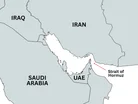
The situation in the Middle East is evolving rapidly, with tensions around the Strait of Hormuz creating new risks for global trade.
For supply chains, this uncertainty is unlike anything seen in recent years, as key maritime corridors face potential disruption. Shipping companies, energy producers and manufacturers are all reassessing routes and contingency plans in real time.
The ripple effects extend beyond oil and gas, touching fertiliser, food production and industrial supply chains worldwide.
To make sense of the challenges ahead, Supply Chain Digital spoke to six experts offering insight into what comes next.
Christian Bueger
Professor of International Relations at the University of Copenhagen
How vulnerable is the Strait of Hormuz compared to other chokepoints?
The Strait of Hormuz is uniquely vulnerable as the only waterway connecting the Arabian Gulf’s resources to the world.
Unlike the Bosporus or Danish Straits, no dedicated legal treaty governs it; Iran has not ratified UNCLOS. It is a crucial artery for a fifth of global energy, fertilizers, and helium housing major maritime logistic hubs.
What forms of disruption are most likely in the coming months?
The Strait will remain a high-risk area. Future stability depends on international governance and protection mechanisms.
Cyber or underwater provocations are likely. If escalation continues without a ceasefire, Iran will restrict passage for ships not associated with its interests.
Military solutions offer limited protection against drones, missiles and mines.
How should supply chains interpret rising maritime security risks?
Expect more instability and threat proliferation as US naval power faces limits.
Diversification of supply chains and rethinking energy dependencies are key. The industry must actively influence new regional maritime security mechanisms.
Lars Jensen
CEO of Vespucci Maritime
If disruption in the Strait of Hormuz persists, how do you expect carriers to adjust their global network strategies?
Looking at this from an operational container shipping perspective, this is a large regional problem, but not a global problem. Carriers are already adapting to this.
There are two ways to now service the Gulf region. You can sail the vessels to the southern ports of Oman outside the Gulf and then move cargo overland. Or you can sail the cargo into the Saudi ports in the Red Sea and move the cargo overland. This is also already happening.
For smaller regional shipping lines, they have been using the southern crossing near Yemen throughout the Red Sea conflict, but for the global shipping lines this entails entering the Red Sea only from the North via the Suez Canal.
What knock-on effects could this have on container reliability, capacity and scheduling worldwide?
The indirect effects are much larger than the effects strictly in container shipping. Rapidly escalating fuel prices increase costs and can in turn end up reducing demand as consumers then have to reign in spending elsewhere.
The gulf is also the origin for a large part of fertilizer globally. This is moved in bulk vessels and not in containers. However, the impact on fertilizer will eventually hit food production globally and increase the price of food. This is especially problematic in poorer countries.
Are shippers underestimating how quickly this could escalate into a broader supply chain disruption?
It appears to me that we are only in the opening act of the ripple effects and many are not yet fully realising the impact this will have.
Sheri R Hinish
C-Suite Advisor in Transformation and Founder of Supply Chain Queen
How are supply chain leaders responding to sustained uncertainty?
Most leaders operate from playbooks designed for isolated disruptions, but the Strait of Hormuz crisis, where traffic dropped 97%, exposes systemic fragility.
With the Red Sea compromised and the Suez Canal functionally offline for Western shipping, three critical corridors are degraded simultaneously.
Effective leaders now treat fragility as the baseline. They are moving away from ‘how do we reroute?’ to designing networks that function when any corridor fails.
A key shift is managing ‘geopolitically tiered access,’ where transit is determined by political alignment rather than maritime law.
Forward-thinking organisations are building multi-corridor architectures, accelerating AI-enabled scenario modelling, and abandoning lean, just-in-time models incompatible with weaponised chokepoints.
What leadership challenges emerge in prolonged disruption?
The deepest challenge is the collapse of foundational assumptions: that corridors remain open and shipping stays neutral.
Leaders must manage the obsolescence of their strategic models while delivering results.
This crisis cascades into energy, finance and board-level capital allocation.
How should organisations prepare teams for ongoing instability?
Organisations must retire ‘disruption’ language; this is a structural realignment. Preparation requires geopolitical fluency at the operational level and proficiency in AI-powered decision intelligence.
Teams need "adaptive leadership under ambiguity" to make decentralised decisions when conditions change faster than planning cycles.
Robin Mills
CEO at Qamar Energy
How likely is the more prolonged disruption scenario in Hormuz?
It depends on the definition of ‘prolonged’, but it seems likely we are in for at least one or two months or more of war; then at least one or two months for normalisation. And Iran probably retains significant control over the Strait and ability to disrupt it.
What escalation pathways should supply chain leaders be watching?
Further damage to energy and industrial facilities in the GCC countries and Iran; attempts by the US at ground operations in Iran including against its islands; renewed blockage of transit in the southern Red Sea by the Houthi forces in Yemen.
At what point do energy markets trigger even wider supply chain instability?
We are already there, depending on the part of the supply chain, as we have seen run cuts and even shutdowns in Asian refineries and petrochemical plants. Over the next one or two months we will see further disruption as stocks of oil, gas and input materials run short in Asian countries, and much higher trucking, shipping and aviation fuel costs hit transport.
Blythe Milligan
Host of 'Everything is Logistics' podcast
What does this crisis already mean for day-to-day supply chain operations?
Supply chain teams are double-checking everything, overriding systems and calling carriers directly because they don’t trust the plan to hold. What used to be stable for months is now changing week to week, and the inconsistency is the real problem.
The whole supply chain feels like it’s less about optimisation and more about avoiding getting burned.
How should businesses balance cost versus resilience right now?
Most companies are still saying ‘resilience’ but acting like cost is the only metric that matters.
The ones getting it right are treating this as a prioritisation problem. Not every shipment deserves the same strategy. High-impact freight gets protected, flexible freight gets optimised.
The mistake is either going all-in on cost or overcorrecting and paying for redundancy everywhere. The middle ground is knowing exactly where failure actually hurts the business and investing there.
What practical steps should companies take immediately?
Start by pressure-testing how your network actually works, not how it’s supposed to work.
Look at your top lanes and ask what happens if they fail tomorrow. Talk to your core carriers now, before you need them. Tighten communication internally so issues don’t sit too long before someone acts.
Pay attention to where your team is manually stepping in, that’s where your systems are breaking down. And be intentional with inventory by focusing on what actually impacts revenue instead of blanket increases.
James Moffatt
Director at Baringa, specialising in Supply Chain and Logistics Consulting
Where are businesses most exposed if disruption in Hormuz continues?
The greatest exposure is not a single operational failure but the broader macroeconomic disruption sustained instability creates.
Rising energy prices, transportation rates and insurance costs flow through the entire cost base, pressuring profitability and forcing difficult decisions on passing costs to customers.
Many businesses enjoyed relative stability in 2024 and 2025, but a prolonged Hormuz crisis could abruptly reintroduce volatility just as organisations were regaining financial and operational footing.
What practical steps should supply chain teams be taking now?
Immediate priorities are securing supply and activating contingency plans, while simultaneously intensifying cost-reduction efforts to protect margins.
What risks are being underestimated at an operational level?
Pivoting quickly from supply continuity to cost savings is difficult, with short-term trade-offs and cost-out fatigue increasing execution risk when speed and resilience matter most.

Company portals


Executives

James Moffatt
Director
Lars Jensen
CEO
Robin Mills
CEO