
How Siemens & Kuehne+Nagel Reduce Supply Chain Emissions
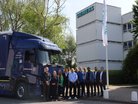
Siemens and Kuehne+Nagel are trialling electric heavy goods vehicles on regional UK routes, testing whether current technology can meet industrial supply chain demands whilst reducing emissions.
The decarbonisation of logistics networks has become a critical priority for industrial manufacturers seeking to reduce their environmental impact.
Siemens's latest initiative with Kuehne+Nagel could demonstrate how electric heavy goods vehicles (eHGVs) might reshape supply chain operations across regional distribution networks in the UK.
The deployment represents a strategic shift in how companies might approach the electrification of their freight operations.

Electric fleet serving regional routes
The eHGVs will replace conventional diesel lorries operating on fixed-route "milk run" circuits, where individual vehicles collect and deliver goods across multiple stops along predetermined paths. This distribution model could prove particularly suited to electric vehicle deployment, given the predictable distances and established charging patterns.
Each vehicle offers a 400 km range with capacity to transport loads up to 44 tonnes, specifications designed to match the operational requirements of Siemens's existing supply chain. Should the trial prove successful, both organisations plan to extend the model across additional Siemens facilities throughout the UK.
Rob Palmer, Commercial Director at Kuehne+Nagel, positions the project within broader industry transformation.
"We're proud to partner with Siemens in accelerating the shift to low-emission transport across their operations," he says. "It's inspiring to see industry leaders like Siemens championing the adoption of electric trucks - setting a powerful example for how the UK can scale low-emission logistics."
Measuring supply chain decarbonisation
According to Siemens, each eHGV route could eliminate approximately 12 tonnes of CO₂e annually. While this figure appears modest on a per-route basis, the multiplication effect across expanded networks could deliver more substantial emissions reductions if operational performance matches expectations.
Rob Matthews, Managing Director of Siemens Congleton, frames the initiative as a fundamental reconsideration of logistics strategy rather than simple vehicle replacement.
"This partnership represents a meaningful shift in how we approach logistics and sustainability," he explains. "By introducing electric Heavy Goods Vehicles into our operations at Congleton, we are not only reducing emissions but also rethinking how we deliver efficiency and resilience across our supply chain."
Rob emphasises that maintaining operational standards remains essential alongside environmental objectives. "This is a clear example of how collaboration and technology can accelerate the transition to a low-carbon economy while continuing to support the industries and communities we serve," he said.
The Congleton facility already generates 75 kW of renewable electricity through the Havannah Weir Hydro Scheme, developed alongside Dane Valley Community Energy. The site manufactures low-voltage variable speed drives and power electronics.
Integration with existing programmes
The eHGV deployment aligns with Siemens's DEGREE Framework, which integrates sustainability considerations throughout product development and operational processes.
However, challenges remain for broader adoption. The 400 km range suits regional distribution networks, yet longer-haul routes present different infrastructure considerations. Charging infrastructure coverage remains inconsistent, and payload-to-range calculations continue to influence fleet decisions despite battery technology improvements.
The success of this trial could provide valuable insights for other manufacturers considering similar transitions. The collaboration between Siemens and Kuehne+Nagel represents a practical test of whether current electric vehicle technology can meet the demands of industrial supply chains whilst delivering meaningful emissions reductions.
Company portals

Executives

Rob Matthews
Managing Director of Siemens Congleton

Rob Palmer
Commercial Director