Inside Amazon's Record-Breaking UK Electric Fleet
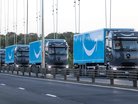
Amazon is shifting its supply chain to a higher gear with the launch of the UK’s largest ever fleet of electric heavy-goods vehicles (eHGVs).
The 160-strong rollout makes up part of a 1,000-vehicle push across vans and trucks – all all electric and all aimed at stripping emissions out of the company’s freight and last-mile delivery network.
With more than 35,000 electric vans already on the roads worldwide, Amazon is adding long-haul transport into its decarbonisation plans, moving towards its goal of net-zero carbon emissions by 2040.
The new eHGV fleet – the largest in Amazon’s global network – will carry out inter-site freight transfers between logistics hubs across the UK.
Nicola Fyfe, Vice President of Amazon Logistics for the EU, explains: “The first vehicles from our record-breaking eHGV order are now on Britain’s roads, transporting products between our hubs.
"This marks a major milestone in our journey to decarbonise our UK transportation network. These trucks, alongside more electric vans and on-foot deliveries, are a win for our customers, the environment and our business.”
The new supply chain backbone
The new electric HGVs are Mercedes-Benz eActros 600 models, capable of hauling up to 22 metric tonnes per journey. These trucks now link Amazon’s fulfilment centres, sortation hubs and delivery stations, operating as the backbone of the company’s UK logistics chain.
The addition means Amazon’s eHGVs will cover the equivalent of 450 laps around the Earth every year, shifting more than 300 million products between sites.
These zero-exhaust trucks are run by Amazon’s logistics carrier partners, with a portion of the fleet part-funded through the UK Government’s Zero Emission HGV and Infrastructure Demonstrator (ZEHID) programme, in collaboration with Innovate UK.
Charging is managed in-house. Amazon installs its own fast-charging infrastructure at UK sites, bringing batteries from 20 to 80 percent in just over an hour. But scaling that model across the wider industry remains a challenge.
Nicola adds: “The challenge is scaling this approach across the logistics industry, however, is charging infrastructure. We’ve invested in our own facilities but need continued industry and government collaboration to help develop the national network required for widespread electric vehicle adoption.”
The trucks are manufactured by Daimler Truck Limited, as Managing Director Heiko Selzam says: “The eActros 600 was designed for forward-thinking companies like Amazon – businesses taking real action to make logistics more sustainable.
"Seeing these trucks now on the road, delivering to Amazon customers, marks an exciting step toward the decarbonisation of road freight and the future of long-haul transport.”
Expanding last-mile delivery
The supply chain refresh isn’t limited to long-haul. Amazon is also bringing in 800 new electric vans, Mercedes-Benz eSprinters, for its final-mile delivery fleet. These vans include built-in shelving, sliding doors and ergonomic designs to support quicker, safer package handling and better working conditions for drivers.
In London, the company is also stepping up its on-foot delivery model. Having delivered more than one million packages on foot in 2025, Amazon now expands this method into Camden after earlier rollouts in Hackney, Westminster and Islington.
Aimed at reducing road congestion and cutting urban emissions, the approach uses parked electric vans as localised micro-distribution points, with delivery associates walking parcels to addresses in the surrounding streets.
Councillor Adam Harrison, Cabinet Member for Planning and a Sustainable Camden, adds: “We are partnering with Amazon to support a trial of walking deliveries from a private industrial site in Camden. We hope this trial will help reduce van miles and improve local air quality. We will monitor the impacts closely and use the findings to shape future freight policy.”

Infrastructure remains a critical obstacle
The full shift to electric across the freight and delivery chain still depends on infrastructure. While Amazon builds its own charging facilities, there is no standardised national network able to support a complete transition across the logistics sector.
The ZEHID funding offers a partial solution, but long-term success requires coordination. With Amazon moving early to electrify both middle-mile and final-mile transport, the pressure now turns to wider logistics partners, infrastructure operators and public sector bodies to meet the demand.
Amazon’s dual strategy – combining electric long-haul HGVs with electric vans and on-foot delivery – offers a working model for sustainable supply chain design at scale.
The company’s own investments show what’s possible with focus and funding, but turning this into an industry-wide norm requires a much broader collective effort.
Company portals


Executives
Heiko Selzam
Managing Director
Nicola Fyfe
VP, Amazon Logistics Europe