How Sandvik is Developing Resilience Amid Global Volatility

Global supply chains faced unprecedented disruption in 2025, forcing organisations across industries to demonstrate agility and adaptability.
For the mining sector, these challenges were compounded by increased demand for critical minerals and mounting pressure to diversify sourcing strategies amid escalating trade tensions.
Yet Swedish industrial technology group Sandvik managed to not only weather these supply chain storms but emerged with strong momentum, according to Sandvik's 2025 Annual Report.

The company's performance in 2025 demonstrates how strategic supply chain management, combined with technological innovation and operational flexibility, can build resilience during periods of significant market volatility.
As mining supply chains underwent fundamental restructuring driven by geopolitical tensions and the global energy transition, Sandvik's approach to maintaining operational continuity while expanding its market presence offers insights into navigating disruption.
Sandvik provides solutions for the mining, manufacturing and infrastructure industries, with offerings that include tools, equipment, digital solutions and services for rock processing, machining, rock excavation and mining operations.
The company operates through 23 divisions globally, serving customers across multiple continents.
Building resilience through supply chain adaptation
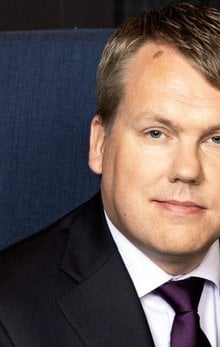
According to Stefan Widing, President and Chief Executive Officer at Sandvik, the company's ability to maintain performance during 2025 reflected years of strategic transformation focused on supply chain resilience.
"We can look back on a successful 2025 for Sandvik," Stefan says.
"In a year characterised by significant geopolitical uncertainty and trade barriers, we proved the strength of our strategy by delivering good growth, a strong cash flow and resilient profitability, while at the same time advancing our long-term ambitions."
The company's approach centred on strengthening its presence within the customer value chain, expanding operational capacity and leveraging long-standing customer relationships to anticipate supply chain disruptions. By prioritising cost optimisation and operational efficiency, Sandvik worked to mitigate the impacts of currency headwinds and logistics challenges that affected global supply chains throughout the year.
Sandvik's strategy also involved building leading digital platforms that could provide greater visibility across supply chains, enabling more predictive responses to potential disruptions. This focus on digitalisation aimed to unlock value not just within its own operations but across the broader supply chains in which the company participates.
The company's transformation extended beyond technology to encompass organisational restructuring and process optimisation. These changes enabled Sandvik to respond more rapidly to shifting market conditions and maintain continuity of supply even as global trade patterns underwent significant reconfiguration.
Supply chain pressures reshape mining sector
The mining industry's supply chains faced particular pressure in 2025 as geopolitical tensions prompted countries to diversify sourcing away from dominant suppliers like China. This reshoring and localisation trend, combined with surging demand for critical minerals needed for electrification and the global energy transition, created significant supply chain reconfiguration across the sector.
These shifts were occurring alongside broader industry challenges including skills shortages, demographic changes and an aging workforce. The sector's response has involved introducing automation while investing in targeted upskilling programmes to maintain operational capacity across increasingly complex supply chains.
According to Sandvik's 2025 Annual Report, Sandvik's performance reflected its ability to adapt to these supply chain dynamics. The company established stronger local presences within global communities, training and upskilling technicians to reduce dependency on centralised expertise and improve supply chain responsiveness. This localisation strategy could help address both workforce challenges and the growing demand for regionalised supply chain solutions.
The mining sector's transformation required suppliers like Sandvik to rethink traditional distribution models and develop more flexible approaches to serving geographically dispersed operations. This shift towards localised support infrastructure represented a fundamental change in how mining supply chains operate.
Strategic investments for growth
Sandvik's investments in expanding manufacturing capacity also supported supply chain resilience. In 2025, the company introduced a new surface drilling production line at its Tampere site, potentially reducing lead times and improving supply chain flexibility for customers in key markets. The company also launched AutoMine Surface Fleet, which allows operators to manage more than 15 Sandvik surface i-series drill rigs from any connected location, potentially reducing the supply chain complexity associated with on-site personnel deployment.
"Despite geopolitical uncertainty and shifting trade conditions, we delivered strong performance with 11% organic order intake growth, 5% organic sales growth, resilient profitability and a robust cash flow, while keeping safety as our top priority," Stefan explains.
"With our new strategy, Advancing to 2030, we are sharpening the focus on profitable growth, innovation and digital leadership."
According to Sandvik's 2025 Annual Report, the company achieved an adjusted operating margin of 19.3% and cash conversion of 95% despite currency headwinds that affected global supply chains throughout the year. These results suggest that strategic supply chain investments and operational flexibility can help maintain profitability even during periods of significant market disruption.
As Sandvik advances towards its 2030 targets, the company's experience navigating 2025's supply chain volatility provides a framework for building long-term resilience in an increasingly uncertain global trade environment. The lessons learned from this period of disruption continue to inform strategic decisions across the organisation.
Company portals

Executives
Stefan Widing
President and CEO