Real-Time Maritime Orchestration: 300,000 Daily Transactions
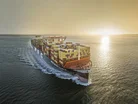
With more consumers buying online and businesses expanding their global operations, more product than ever needs to be transported from point A to point B.
Businesses must adapt to the high volume of materials they are required to ship.
In order to meet this demand, many logistics companies have turned to the world of advanced analytics.

A well-oiled machine
MSC Mediterranean Shipping Company, the cargo division of the MSC Group, operates within the global container shipping and logistics sector. Its fleet maintains a presence across major trade routes, providing cargo transportation alongside intermodal and inland logistics services.
Currently, the company manages more than 900 vessels across 300 routes, supported by a physical infrastructure in 155 countries. This network allows the organisation to provide localised services tailored to specific regional requirements.
MSC has more than 50 years of sea freight experience, having spend decades moving containers of goods across the seas, ensuring synchronicity with inland connections and intermodal transport. It has a range of container types to ensure each product is shipped in the best mode to maintain product quality. It has advanced reefer containers to transport refrigerated and frozen goods, as well as having the capacity to transport goods that do not fit in a container.
In order to meet demand accurately and be confident in the solutions it is offering, MSC uses advanced analytics to gain insights into market conditions.
Meeting demand
Working across handling transport and the necessary process chain is a complex operation, with risks of extreme weather conditions and strikes being a major potential that logistics companies need to be aware of.
Alongside this, logistics companies need to handle significant volumes of data and information that ensure traceability and legality of goods. This includes certificates of origin, documents of title to goods, way bills, bills of lading, commercial and customs invoices, packing lists and more.
The central IT system in Geneva electronically processes and validates more than 300,000 transactions every day, which MSC attempts to process in real-time to allow customers to gain accurate insights into the movement of their freight through the Tracking and Tracing tool. In order to handle this immense data load, companies need to adapt their operations to become more flexible, more agile and to be able to gain insights into more data points.
MSC noted it was unable to manage the volumes of data, process and validate it in real time, and ensure it could reach its customers without delay. As a result, it turned towards data platform technology in order to undergo transformation. It opted for InterSystems as its platform of choice, recognising its capability to scale reliably, with flexible and fast delivery.
All supply chain, sustainability, Scope 3 and net zero leaders should attend:
- Procurement and Supply Chain LIVE: The Net Zero Summit - QEII Centre, London, March 4-5
- Procurement and Supply Chain LIVE: The US Summit - Navy Pier, Chicago, April 21-22
Co-located with Sustainability LIVE, these events brings together CSCOs, CSOs and senior decision-makers at a moment when sustainability, supply chains and commercial performance are increasingly interconnected.
Tickets can be booked online today for The Net Zero Summit and The US Summit. Group discounts available.
Building resilience
The solution is fully integrated across the company, processing data in real-time in order to mitigate risks before they can take hold.
MSC uses the integrated 'Just -in-Time' analytics to provide its global agencies with dashboards covering up-to-date status of all its stock, adapting by the minute when product levels change. As a result, this reduces the 'dead time' that many shipping companies face, caused by port strikes, documentation errors and extreme weather.
Technological innovation and data analytics is resulting in reduced delays, minimised operational costs, enhanced fuel efficiency, optimised inventory management, reduced port congestions and transparency across supply chain operations.
As trade lanes become increasingly volatile due to geopolitical concerns including trade wars and climate change, this high level of insight is a must-have for shipping companies who want to remain resilient. Companies that do not adapt to modern features risk falling behind during turbulent times. MSC, however, demonstrates its success through this technological advancement.