
High-Protein Yoghurt: Danone’s Supply Chain Answer to GLP-1
Danone's full-year results could signal a fundamental shift in the dairy industry.
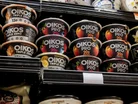
While the broader yogurt portfolio was described as a "work in progress," the company's high-protein segment (encompassing Oikos, GetPRO and HiPRO) maintained double-digit growth throughout 2025.
CEO Antoine de Saint-Affrique says that North American growth was almost entirely sustained by the "winning momentum" of high-protein products, which helped offset softer performance across other dairy categories.
Behind these headline figures, however, lies a rather more complex supply chain story.
The GLP-1 opportunity
The unexpected impact of GLP-1 medications on consumer demand could be reshaping the dairy market in ways few anticipated.
Roughly 14% of US adults have taken GLP-1 drugs to lose weight or manage conditions such as diabetes. These appetite-suppressing medications have created significant anxiety across the food industry, with many fearing a meaningful drop in overall consumption.
Danone appears to have turned this challenge into a commercial opportunity.
Its protein-packed, low-sugar offerings have benefited considerably from the trend, and the company has begun marketing its products directly to users of these medications.
Shane Grant, former Deputy CEO of Danone Americas, explains: "75% of (US consumers) want more protein in their diet, and GLP-1s are only accelerating this demand. We see the explosive growth across lots of demographics and occasions."
According to Circana data provided by Danone, retail sales of Oikos surged 40% during 2024. Too Good & Co and Light & Fit have similarly seen an uptick in sales among GLP-1 users.
Addressing the capacity bottleneck
To sustain this level of growth, Danone has had to move decisively from a bulk dairy mindset to what it describes as an Agile Nutrition model.
The clearest expression of this strategic shift is its £110m (US$138m) investment in its Minster, Ohio facility. This is a response to a very real bottleneck in high-concentration processing.
Producing products with 20 grams or more of protein per serving requires specialised ultra-filtration technology to remove water and lactose while concentrating casein and whey proteins.
The new production lines are specifically engineered for these high-viscosity products. Danone North America sources 90% of its ingredients and packaging within the United States. This is a "regional for regional" strategy designed to insulate the business against the kind of global shipping volatility that proved damaging in 2024 and 2025.
The expanded facility also incorporates a semi-automated logistics centre, capable of handling the increased complexity of high-velocity SKUs that move far faster through the supply chain than traditional yogurt lines.

Rethinking upstream farmer relationships
Feeding a projected 60% increase in milk demand has required Danone to fundamentally rethink its upstream relationships.
Rather than simply purchasing more milk, the business has launched its Milk Academy. This is a global initiative with a Centre of Excellence in Ohio to train farmers in regenerative agriculture.
This is not merely a sustainability exercise. More stable soil could lead to more predictable feed costs, which in turn could stabilise Danone's raw material pricing.
As part of its Triple A climate commitments, Danone is also working with farming partners to reduce methane emissions by 30%. This is a consideration that could be becoming increasingly important to European and North American retailers alike.
Looking ahead, the global supply chain faces what might fairly be termed a transparency challenge.
Incoming 2026 regulations (including the EU Deforestation Regulation and the Green Claims Directive) will require Danone to demonstrate that every litre of milk and every tonne of soy in its supply chain is deforestation-free.
Simultaneously, 20 grams of protein has emerged as a new consumer baseline globally, intensifying competition for high-quality whey and plant proteins and driving protein-centric mergers and acquisitions across the industry.
Danone's move to market directly to GLP-1 users is, at its core, a demand-shaping strategy. It is one that could optimise factory utilisation around the company's most profitable lines while future-proofing the supply chain against an increasingly complex global landscape.
Company portals
Executives

Antoine de Saint-Affrique
CEO

Shane Grant
Deputy CEO of Danone Americas