How is Danone Cutting Methane in Africa’s Dairy Supply?
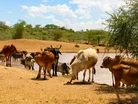
Danone is putting its supply chain at the centre of a broader plan to cut emissions and build resilient farming communities across Africa.
The company’s approach to sustainability focuses not only on greenhouse gases but also on how local dairy systems function day to day, how farmers engage with new technologies and how regional supply chains can grow under pressure.
Methane emissions from dairy farming remain a major concern across global food systems, but Danone is aiming to show that practical supply chain changes can work both for climate targets and farmer livelihoods.

Danone teams up with Sistema.bio in 2025 to roll out biodigesters to 6,500 smallholder dairy farmers by 2030. A biodigester is a sealed system that uses natural biological processes to break down livestock manure.
The result is biogas, an alternative to fossil fuels, and organic fertiliser – both produced on the farm. This process not only limits methane, a greenhouse gas with more than 80 times the warming potential of CO2 in the short term, but also supports circular agriculture, where farm waste becomes an input for future productivity.
This integration of low-tech and high-impact solutions is already reshaping how African dairy farmers manage their resources.
Othmane Essaker, a farmer in Morocco, says: “The biodigester technology... allows us to use the processed liquid as natural fertiliser in our fields dedicated to cereals and legumes or fodder mix, and it has shown extremely positive results.”
The ability to use waste from the same farm to improve soil health helps reduce costs and replaces chemical fertilisers.
The system fits into Danone’s broader Dairy Methane Action Plan, which promotes smarter herd management, feed improvement, and waste handling. It also includes data monitoring tools like the Cool Farm Tool, which collects greenhouse gas data from farms.
Together, these actions contribute to Danone’s global methane emission reductions – which were down by 25.3% from its fresh milk supply by the end of 2024, compared to a 2020 baseline. The new target is 30% by 2030.
Investment in supply chains and local infrastructure
Sustainable dairy isn’t just about what happens on farms.
Danone also works to reinforce the systems around the farms: milk collection, cold storage and data-sharing tools. In places like Nigeria and Morocco, where smallholder farmers account for much of the milk supply, these interventions are key to maintaining milk quality, cutting waste, and boosting income.
In Morocco, Danone’s “Hlib Bladi” programme offers a clear example of how the supply chain model can evolve.
The programme includes farmer training on feed, herd and manure management, alongside improvements to infrastructure such as milk collection centres and digital cold-chain systems. These changes lead to a 50% improvement in farmer incomes and allow for more consistent milk quality despite environmental fluctuations.
Danone continues to invest in building out the physical and digital infrastructure needed for strong supply chains in the region.
The company’s renewed interest in Nigeria, despite economic pressure, shows a long-term view on the importance of domestic sourcing and local relationships.
Partnerships and procurement as climate tools
At the heart of Danone’s supply chain sustainability strategy is collaboration.
The company signs a memorandum of understanding (MoU) with Sistema.bio to expand access to biodigesters and works with other stakeholders through the Dairy Methane Action Alliance. These partnerships enable innovation and help test new approaches that can be scaled across the region.
More than 80% of Danone’s dairy supply by volume now comes from suppliers who are part of the Sustainable Dairy Partnership. This group of suppliers agrees to align with environmental goals, including methane reduction and regenerative practices.
Danone’s approach includes influencing how suppliers manage their own farm relationships, data tracking and environmental targets.
Danone’s work in Africa shows how supply chains can adapt to support both environmental and economic goals.
From biodigesters that reduce methane and generate fertiliser to digital systems that improve milk collection and payment processes, the company embeds sustainability across all levels of the dairy chain.