
How Pentagon Designation is Disrupting Federal Supply Chains
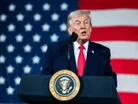
A federal judge's decision to temporarily block the Trump administration's "supply chain risk" designation of Anthropic could signal broader implications for government procurement processes and contractor compliance requirements across the defence sector.
The ruling from US Judge Rita Lin halts enforcement of directives that would have forced immediate technology transitions across federal agencies and required supply chain audits throughout the defence industrial base.
Judge Lin granted Anthropic's request for a preliminary injunction, suspending two directives: a presidential order requiring federal agencies to "immediately cease" all use of Anthropic's technology and the Pentagon's designation of the company as a "supply chain risk".
This national security label has historically been applied to firms based in adversarial nations like China and Russia.

"Punishing Anthropic for bringing public scrutiny to the government's contracting position is classic illegal First Amendment retaliation," wrote Judge Lin in her ruling.
The order prevents the Trump administration from implementing or enforcing both the presidential directive and the Pentagon's designation while the underlying lawsuit proceeds. A final verdict could be months away.
Sustainability, procurement and supply chain leaders won’t want to miss Procurement & Supply Chain LIVE, taking place at Navy Pier, Chicago, on April 21–22.
Co-located with Sustainability LIVE: The US Summit, the event unites senior decision-makers at a time when supply chains, sustainability and business performance are more interdependent than ever.
Secure your place now for The US Summit – group booking discounts available.
Contract negotiations trigger procurement crisis
The dispute originated from a £160m (US$200m) contract Anthropic signed with the Department of Defence in July 2025. During negotiations over deploying Anthropic's Claude models on the Pentagon's GenAI.mil platform, discussions stalled over a single contractual clause.
The Pentagon sought broad permission to use Anthropic's tools for "any lawful use".
Anthropic, led by CEO Dario Amodei, refused, insisting on explicit assurances that Claude would not be used to power fully-autonomous weapons systems or to conduct mass domestic surveillance of American citizens. The company declined to sign without those guardrails in place.
In late February, Secretary of Defense Pete Hegseth declared Anthropic a supply chain risk. This designation required defence contractors including Amazon, Microsoft and Palantir to certify they were not using Claude in their military work, potentially forcing technology substitutions across active contracts.
In response, President Trump posted on Truth Social ordering all federal agencies to phase out Anthropic tools within six months.
"WE will decide the fate of our Country – NOT some out-of-control, Radical Left AI company," he wrote.
Anthropic, which had never previously been described in such terms by a government partner, filed suit, arguing that its business had suffered material harm and that the government had violated its constitutional right to free expression.
Supply chain designation exceeds security scope
In her order, Judge Lin questioned the administration's rationale for applying the designation. She observed that Trump and Hegseth had publicly labelled Anthropic "woke" and described its staff as "left-wing nut jobs" – language that appeared unrelated to any genuine national security concern.
"Nothing in the governing statute supports the Orwellian notion that an American company may be branded a potential adversary and saboteur of the US for expressing disagreement with the government," she wrote.
The Pentagon argued that Anthropic's refusal to accept new contract terms created a genuine security risk, but Judge Lin remained unconvinced: "If this were merely a contracting impasse, DoD would presumably have just stopped using Claude."
Instead, she said the challenged actions "far exceed the scope of what could reasonably address such a national security interest".
Judge Lin pressed government lawyers on precisely why the supply chain risk designation had been applied. Her language in the written order was sharper still.
Contractor compliance requirements on hold
Because the administration relied on two distinct legal provisions to justify its actions, Anthropic has had to pursue them in separate courts. A second lawsuit challenging the formal designation has been filed in the US Court of Appeals in Washington.
In a statement following the ruling, Anthropic said it was "grateful to the court for moving swiftly".
It added: "While this case was necessary to protect Anthropic, our customers and our partners, our focus remains on working productively with the government to ensure all Americans benefit from safe, reliable AI."
The court ruling serves as victory for Anthropic, but only an initial one. Anthropic's Claude models may continue to be used across government and by contractors for now, but the deeper question of whether Washington overstepped its authority in a politically-motivated dispute with one of the biggest players in AI is still to be answered.
Company portals
Executives

Dario Amodei
CEO and Co-Founder