o9: Most Companies Lack Operating Model Infrastructure

Supply chain leaders and CEOs around the world are working to ensure operational resilience amid ongoing turbulence.
However, despite the investments they are putting in and the AI tools they are adopting, many are failing to see significant growth.
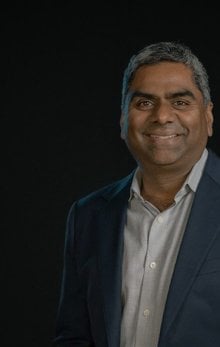
o9's CEO and Co-Founder Chakri Gottemukkala argues that this is because most companies are ignoring a vital tool: a strong operating model.

A failing system
Today's supply chains are facing unprecedented levels of volatility, with ongoing trade disputes, conflict, climate impacts and more reshaping supply chain operations every day. Businesses are tirelessly working to ensure their company can stay afloat, introducing new technology and AI tools to develop resilience.
The use of AI has become a necessity for gaining visibility and predictive insights into the wider market. Leaders know where they want to – how much they want to grow, what demand they need to face, which innovations they are looking to implement – but they are still failing to gain a streamlined operation. Forecasts are missed, consumer response time falls, inventory builds up and more.
o9 argues that this is because there is a failing of how decisions are made – the operating model is not strong enough. Rather than having true collaboration and communication, decisions are fragmented across finance, supply chains, sales, operations and product. These layers cause delays in information, wasted productivity with meetings and spreadsheets, as well as greater risk with manual entries.
In today's world of constantly shifting demand and supply chain regulations, this is not a strong enough system. Singular disruptions have the capability of disrupting entire company operations, simply through outdated systems.
“If you ask questions like, why did we miss the forecast for product x in market y,” Chakri said, “it takes many people with their tribal knowledge… to come together to answer these questions.”
Increasing efficiency
The implementation of AI adds a new level of efficiency to workplace operations. It automates processes, but it also significantly impacts decision-making.
The right model can answer the right questions, sharing the information to anyone in the business who needs it, without delay.
Chakri explains: “With neuro-symbolic AI agents, the model becomes accessible to all roles across the organisation, not just the planners and analysts.”
Through this, much of the friction which causes delays or wider risks gets taken out of daily operations. Leaders can see, in real time, the implications of decisions or actions they are planning. With this greater sharing of content, decisions can move faster, with greater accuracy. Speed, however, is not everything.
o9 introduced APEX, an operating model which is designed to move alongside constantly changing environments. It has a focus on:
- Agility - how quickly the organisation can detect and respond to situations, in real-time
- Adaptability - continuously improving forecasts, decisions and policies
- Autonomy - the ability to automatically handle routine and high-frequency decisions
APEX is designed to fundamentally change how an organisation operates – for the better.
The real-time effect
Through post-game analysers, organisations can understand why things happened the way they did, exploring gaps between plan and execution. With innovation centres, teams can utilise AI and other platforms to gain ownership of evolving processes.
By using business simulators, organisations can build greater alignment and capability through witnessing how decisions will play out, before spending the time and resources on something which may not work.
This offers a stronger foundation for supply chain resilience, new capability development and stronger decisions.
“In the past, companies have filled the gap by throwing more and more people and spreadsheets and manual processes at the problem,” Chakri comments.
o9 argues that smaller but faster means of improvement are the key, with constantly evolving capabilities allowing for real-time reaction.
Company portals

Executives
Chakri Gottemukkala
Official member