o9: Delivering Operational Agility for Supply Chains

Supply chain professionals at Google, HPE and Silicon Labs are transforming their planning and execution capabilities through integrated intelligence platforms that address the mounting pressures of volatile market conditions.
In a volatile, uncertain, complex and ambiguous (VUCA) world, traditional functional optimisation is not enough for supply chain operations. When systems are highly interconnected, improvements in one area can create bottlenecks in another.
Supply chain leaders are increasingly recognising that siloed planning approaches undermine the agility their organisations need to compete effectively.

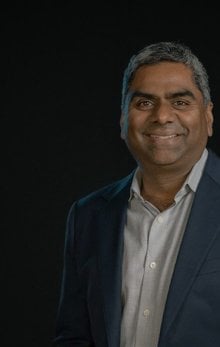
o9 Solutions' Executive Chairman, Co-Founder and CEO, Chakri Gottemukkala, has introduced the APEX operating model: agile, adaptive and autonomous planning and execution. The model is powered by neuro-symbolic AI that combines large language models with structured reasoning.
Supply chain leaders from companies including Google, Hewlett Packard Enterprise (HPE), Apollo Tyres and Silicon Labs are addressing critical operational challenges using the o9 platform and driving continuous improvements across their networks.
Chakri says: "When LLMs emerged, we immediately saw their strengths and weaknesses in an enterprise decision-making context. Given our AI roots, we were laser-focused on connecting them to the Enterprise Knowledge Graph to solve the toughest challenges in driving operational value."
Google delivers measurable results
Google Networking Operations has achieved ROI by codifying decision logic, according to o9. The team has embedded agility across the supply chain that supports its critical global data centre infrastructure, moving from reactive firefighting to engineered responsiveness.
Supriya Iyer, Director of Networking SC & Operations at Google, says: "We achieved double-digit improvements in order-to-delivery performance. Delivery in full, on time improved by double digits in the first year. It then improved by another 10% the following year."
Previously, Google's responsiveness relied on what Supriya calls "heroics", but the team decided to engineer agility into the operating model using the o9 platform. For supply chain professionals managing complex networks, this shift from ad-hoc problem-solving to systematic capability building represents a fundamental change in how operational excellence is achieved.
Sustainability, procurement and supply chain leaders won’t want to miss Procurement & Supply Chain LIVE, taking place at Navy Pier, Chicago, on April 21–22.
Co-located with Sustainability LIVE: The US Summit, the event unites senior decision-makers at a time when supply chains, sustainability and business performance are more interdependent than ever.
Secure your place now for The US Summit – group booking discounts available.
HPE builds internal planning capabilities
HPE saved millions of dollars in avoided external development costs by committing to continuous improvement and created a Centre of Excellence (CoE) behind a planning transformation, according to o9. The CoE was designed as a business-owned capability responsible for governance, prioritisation, configuration, onboarding and continuous enhancement of the o9 platform.
Brian Louis, Senior Director of Digital Transformation and Analytics at HPE, says the goal was to create "an engine that could continuously improve the system, grow adoption, and keep proving value". The CoE helped the organisation move from expected value to realised value. This included introducing monthly tracking of KPIs and verified benefits to ensure impact is measurable and sustained.
For supply chain professionals, this approach demonstrates how planning transformations require dedicated internal capabilities rather than relying solely on external consultants or vendors.
Silicon Labs achieves supply chain visibility
Using o9, Silicon Labs now operates with automated supply plans, monthly executive versions, daily refreshes and scenario simulations. The company designs chips and outsources manufacturing across wafer fabrication, assembly and testing partners.
Its self-service model helped to establish a single source of truth and improve data quality at the source. This helped to improve performance, increasing batch runtime by more than 15%, according to o9.
The approach also embedded quality controls and introduced structured prioritisation, evaluating requests based on business value and impact, urgency and available resources. For supply chain professionals managing outsourced manufacturing networks, the ability to maintain visibility and control across multiple partners is essential for operational success.
Chakri says: "With o9's breakthrough Neuro-Symbolic AI technology to power the APEX Model, enterprises can now learn systematically from post-game analysis, improve faster across functions, deploy new capabilities at the pace of the market and continuously evolve their operations. Our clients see APEX as a strategic differentiator for their businesses in the coming years."
Company portals



Executives
Brian Louis
Senior Director of Digital Transformation & Analytics
Chakri Gottemukkala
Official member

Supriya Iyer
Director of Supply Chain and Commercial Operations