How NVIDIA & India are Automating Future Supply Chains
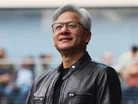
India's manufacturing sector is experiencing a significant transformation as more than US$100 bn flows into new production capacity, with NVIDIA positioned as a key technology partner in creating software-defined facilities.
The company is supporting the IndiaAI Mission through tools including NVIDIA Omniverse and NVIDIA CUDA-X, which enable automation and design acceleration across the country's emerging industrial landscape.
At the AI Impact Summit 2026, NVIDIA outlined its role in connecting operational data and integrating physical AI into India's next generation of factories.
The NVIDIA CUDA-X and NVIDIA Omniverse libraries are being deployed to support this infrastructure development, with India's largest manufacturers adopting these technologies through partnerships with Cadence, Siemens and Synopsys.
"India is home to the world's largest youth population, the biggest pool of tech talent and one of the most expansive tech-enabled ecosystems," says India's Prime Minister Narendra Modi at the event.
"Artificial intelligence is such a transformation in human history. What we see today, what we predict today, are only the early signs of its impact. The real question is not what artificial intelligence can do in the future, but what we choose to do with it today."
The investment landscape for India's manufacturing and AI sectors has expanded considerably following Finance Minister Nirmala Sitharaman's launch of India Semiconductor Mission 2.0 in the Union Budget on 1 February 2026. The initiative significantly expands incentives for domestic electronics manufacturing, prompting major corporations to announce substantial commitments to expanding manufacturing operations in India.
Gautam Adani, Chairman of the Adani Group, announced a US$100 bn investment in the energy transition and digital infrastructure during the AI Impact Summit. Reliance Industries is also investing US$110bn in building gigafactories for solar, batteries and hydrogen alongside an AI-data infrastructure build-out.
Sundar Pichai, CEO of Google, unveiled a US$15 bn investment to build AI in India including a subsea cable that connects to the US, while Microsoft announced a US$17.5 bn commitment in infrastructure, engineering and skilling in India from 2026 to 2029.
Accelerating simulation and iteration
Electronic design automation tools from Synopsys and Cadence are powered by NVIDIA AI infrastructure and libraries, allowing for rapid design iteration and operational intelligence across multiple sectors. Havells India Limited is using Synopsys' Ansys Fluent, powered by NVIDIA CUDA-X, to accelerate simulation.
According to NVIDIA, Havells achieved six times faster fluid dynamic simulations using this tool. L&T Semiconductor Technologies uses Cadence Spectre X with CUDA-X libraries on NVIDIA GPUs to shorten design iterations of AI chips.
Deploying physical AI solutions
Tata Consultancy Services is investing in AI infrastructure to deliver enterprise solutions, using the NVIDIA Metropolis platform alongside digital twins built on Omniverse libraries for automated quality checks and safety compliance at Tata Motors.
Tata is also deploying physical AI applications including autonomous safety and quality inspections using quadruped robots, which could help the company to reduce risk across complex manufacturing environments.
Tata Consulting Engineers's Cognitive Twin platform is built on NVIDIA Omniverse and creates real-time industrial simulations that work across manufacturing, energy and infrastructure applications for project planning and optimising operations.

Wipro PARI is using the NVIDIA Isaac robotics development platform to deliver solutions for its consumer and automotive customers. This technology can stress-test operations virtually before physical deployment.
Building software-defined factories
Siemens industrial software, integrated with NVIDIA CUDA-X and Omniverse libraries, is being used to design, build and operate software-defined factories. Reliance New Energy, part of Reliance Industries, is combining Siemens' digital twin technology with NVIDIA Omniverse libraries for simulation and plant design.
Addverb Technologies, a warehouse automation and robotics business, uses Siemens' Technomatix portfolio, NVIDIA Omniverse libraries and NVIDIA Cosmos world foundation models to create digital twins of its factories and train its robots in simulation.
Hero MotoCorp uses Siemens Xcelerator and NVIDIA infrastructure to accelerate product development lifecycles with computer-aided engineering, numerical virtual verification and validation.
Company portals










Executives

Gautam Adani
Chairman
Sundar Pichai
CEO