
How Nvidia Won China’s H20 AI Chip Export Play
The battle for semiconductor dominance between the United States and China has hit AI chip supply chains particularly hard, and few companies have felt the impact like Nvidia.
Over the past two years, what began as a trade spat has evolved into a complex policy tangle, bringing export controls, licensing barriers and geopolitical friction to the centre of the tech sector. With AI chips increasingly seen as strategic infrastructure, both governments are watching every move.
This week, Nvidia says it plans to restart sales of its H20 chip in China.
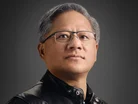
The announcement follows direct talks between Chief Executive Jensen Huang, US President Donald Trump and senior officials in Beijing. It’s a sign that the company is attempting to steady its position between two superpowers that have weaponised semiconductors as part of broader industrial and security agendas.

Trade policies cut US$15bn from Nvidia’s bottom line
Nvidia controls around 80% of the global AI processor market, but this dominance hasn’t shielded it from the blowback of export restrictions.
With Washington continuing to tighten controls on high-end chip exports to China, Nvidia has seen US$15bn in revenue vanish.
The US government’s position has hardened under the Trump administration, particularly with rules introduced in April that essentially blocked sales of the company’s most powerful legal chip in China — the H20.
The H20 was developed after earlier export rules were introduced in 2023. It’s a stripped-down version of Nvidia’s flagship AI processors, designed to meet US guidelines but still appeal to Chinese buyers. Even so, when the ban came into effect, Nvidia had to write off US$5.5bn in stock.
Despite being pushed out of its second-largest market, the company hasn’t given up.
Instead, Nvidia has built facilities to make AI supercomputers entirely within the US and started designing chips specifically to meet regulatory standards.
These efforts are aimed at proving its value to US policymakers while also finding ways to maintain ties with China’s technology sector, which still depends on Nvidia’s CUDA platform — software that allows developers to run complex AI applications on graphics processors.
At the same time, Chinese firms have been stockpiling processors and developing alternatives. US officials worry that advanced chips could aid Chinese military technologies, particularly surveillance and weapon systems.
New chips and new supply routes into China
Nvidia has begun filing applications with the US government to resume H20 chip sales.
According to company statements, it expects licences to follow after receiving informal assurances from Washington. This push comes alongside a newly developed AI chip called the RTX Pro GPU, purpose-built for the Chinese market and said to be “fully compliant” with US rules.
The RTX Pro GPU is geared towards AI tasks like digital twins, virtual replicas of physical systems, in industries such as logistics and manufacturing.
Jensen Huang has made public remarks in both Washington and Beijing promoting the model, stating that it is “ideal for digital twin AI for smart factories and logistics.”
Reuters reports the new chip is based on the RTX Pro 6000D and is priced well below the H20. It’s also built with simpler specifications, which makes it easier and cheaper to produce, allowing Nvidia to position it competitively in a restricted market.
The financial incentive is clear. Nvidia reported US$17bn in revenue from China in the last financial year, about 13% of its global total.
Reclaiming access to even a portion of that revenue matters — not only for shareholders but for the company's long-term viability in global AI hardware.
A diplomatic balancing act
Jensen Huang’s meetings with President Trump and Chinese leaders underline just how sensitive Nvidia’s situation has become.
In Washington, he has presented the company as a key partner in domestic job creation and AI infrastructure. He’s also been advocating for continued access to global markets, arguing that open AI research and platforms will benefit everyone — not just tech giants.
“We believe that every civil model should run best on the US technology stack, encouraging nations worldwide to choose America,” Jensen told reporters in DC.
Chinese state media also reports on his comments that stress the need for a US presence in China: “The Chinese market is massive, dynamic and highly innovative and it’s also home to many AI researchers. Therefore, it is indeed crucial for American companies to establish roots in the Chinese market.”
Still, his visit has drawn political attention. A bipartisan group of US senators has written to him, urging Nvidia to steer clear of companies linked to Chinese military and intelligence sectors.
For now, the company is walking a narrow line, pressing forward with new product launches that keep its supply chain open to China while staying inside the rules set by Washington.
The broader standoff may continue, but Nvidia is trying to turn a geopolitical flashpoint into a business opportunity — and it’s doing so chip by chip.
