
Why Muji is Pursuing a Policy of Localisation

Japanese retailer Muji is establishing itself in Southeast Asia by opening flagship stores in Thailand and Vietnam.
As part of its growth plan, it is implementing localisation strategies by offering tailored items at each store.
Its flagship stores demonstrate a strategy to pay close attention to consumer trends and product development.

Localisation strategy
Muji is a Japanese retailer selling a range of household and consumer goods. The company is designed around a minimalist philosophy, placing an emphasis on a 'no-brand' policy, recycling and reducing waste. Ryohin Keikaku Co., Ltd oversees the planning, development and manufacturing of Muji goods.
Now, Muji is further developing its brand across Southeast Asia. Its new Bangkok location is now the company’s largest store in the region by floor space, while the reopening of the Ho Chi Minh City store marks a significant expansion for the business.
At the same time, Muji is introducing products tailored to local tastes, strengthening both its supply chain and customer base. By adapting its offer to each city, the brand is positioning itself as an organisation that understands and responds to local needs.
In Ho Chi Minh City, for example, motorcycle helmets are a key product category, reflecting the prevalence of scooters on Vietnam’s roads.
Muji's footprint in Southeast Asia is still small in comparison to its standing in Japan and mainland China, but with the company's focus on local products specifically catered to those areas, the region is shaping up to be a profit driver in the coming years.
In Thailand, staff noted that customers preferred to hang their clothes as opposed to store them in drawers, so an inexpensive hanger was developed.
By catering to consumer trends, Muji is setting itself up for success – particularly if it can adapt to regional demands.
"It's important to provide items necessary for local life and customs," says Tetsuya Nagaiwa, General Director at the company's Vietnam subsidiary.
"We aim to enhance Muji's presence not only domestically but also throughout the ASEAN region. We want the flagship stores to serve as hubs for disseminating information."
Product research and development
In Thailand, food items have become the key driver of local products, including coconut rolls and shrimp snacks. The number of food items, including locally-developed products, has doubled to around 200 products.
A food development team is in place, forming collaborations between experienced personnel from Japan and local staff and suppliers.
This team will work together to expand the food products to 300-350 items. Currently, 4% of Muji's Thai sales are from food products, but the goal is to increase this to 7% by 2028 and 10% by 2030.
"Food will positively impact customer numbers, which have been a challenge, so we want to focus on and strengthen it as a key category," comments Akihiro Kamogari, Managing Director of the Thai subsidiary.
"Without this [flagship store's] success, I don't believe the entire ASEAN business will succeed. We've been preparing to get off to a good start, and after opening, we will continue to focus on initiatives like product assortment and marketing."
A competitive edge
In the financial year ending August 2025, Ryohin Keikaku's Southeast Asia and Oceania business revenue had increased by 28% to 50.1 billion yen (US$321m). This is set to play a key role in the company's three-year target of one trillion yen (US$6.4bn) in revenue and 100 billion yen (US$640.9m) in operating profit.
Its site in Bangkok will have a dedicated area which introduces its consumers to food sold in other regions, helping consumers try new things. As well as this, Bangkok will also host a workshop space which will hold lifestyle events, helping spread Muji's brand image.
As retailers from Japan and China look to grow their presence in Southeast Asia, the competition for Muji is increasing. However, the company's localisation strategy could work, showing an ability to adapt to consumer needs.
Company portals
Executives

Akihiro Kamogari
Managing Director, Thai subsidiary
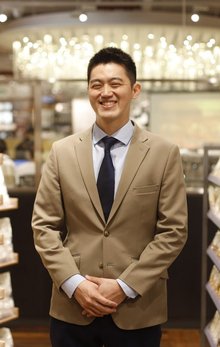
Tetsuya Nagaiwa
General Director, Vietnam subsidiary