
How Mattel Fulfils Women's Sports Demand with Barbie
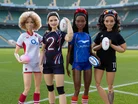
Mattel and Barbie have introduced Team Barbie- four dolls inspired by professional women's rugby players.
After the Women's Rugby World Cup 2025 broke records for consumers and shareholders alike, Mattel is honouring the athletes which have been taking over our screens.
The entire tournament saw 444,465 tickets sold, whilst 26% of parents think their daughters would be more likely to stay in sport if they had more female role models - indicating high consumer demand for both rugby merchandise and further product diversification within the toy industry.
Though its Team Barbie series are one-of-a-kind dolls, the Ilona Maher (of USA Sevens fame) doll is set to enter the market in Autumn 2026.

Team Barbie
Since 1959, Barbie has been dedicated to inspiration and empowerment.
The latest celebration follows the Women's Rugby World Cup - a record breaker event which has inspired thousands of girls around the world.
Krista Berger, Senior Vice President of Barbie, Mattel says: "By showcasing the stories of incredible role models whose confidence has fuelled groundbreaking success, we’re showing girls that the future of sports – or wherever their passion takes them – is theirs to claim, with Team Barbie cheering them on.”
To celebrate International Day of the Girl, Mattel has introduced Team Barbie.
The chosen four include:
- Ilona Maher (US) - Olympic medalist, social media icon (5.3m followers on Instagram) and body positivity advocate.
- Ellie Kildunne (UK) - the 2024 World Rugby Player of the Year and is a key member of the Red Roses - England's rugby team.
- Portia Woodman-Wickliffe (NZ) - two-time Olympic & World Champion, with a series of record-breaking performances.
- Nassira Konde (France) - a dynamic rugby star and an Olympic medalist.
Commercial opportunities
Global management consulting firm McKinsey & Company predicts that women's sports could generate a minimum of US$2.5bn in value for rights holders within the US by 2030.
The 2025 Women's Rugby Cup final between England and Canada had a record attendance of 81,885 people and the entire tournament saw 444,465 tickets sold, as well as 13,420 travel and hospitality packages.
The commercial revenue potential for any deal with women's rugby has the capacity to be huge - even for a toy company as big as Mattel.
In Mattel's Q2 2025 report, it showed a 6% decrease in net sales - equating to US$1.02m - from Q2 2024, driven by a 16% decrease in North America.
Worldwide gross billings for Mattel's dolls were down 19% as reported and in constant currency, at US$335m, partially caused by declines in Barbie.
The Ilona Maher Barbie doll will be available to buy in 2026. With a new body sculpt design, it includes an athletic torso, defined arms, shoulders and legs, as well as sculpted core and back muscles.
“We all doubt ourselves at times, myself included,” says Ilona Maher, Professional US Rugby Player.
“But I am where I am today, because I kept showing up anyway."
Investing in the future
Since its beginnings, Mattel's brands have inspired generations of consumers to dream big and to never back down from their full potential.
Its three priorities in its dolls are: representation, empowerment and environmental impact.
Barbie recognises that representation is not enough without the resources to maintain the inspiration, which is why it funds initiatives and highlights role models.
As a global leader in toy manufacturing, Mattel works to empower the next generation, with its Barbie brand advocating for social and environmental change.
This begins with building ethical and sustainable supply chains, promoting worker health and safety and environmental responsibility.
In 2021, Mattel conducted an overhaul of its supply chain sustainability goals. By 2030, it aims to achieve zero manufacturing waste. Moreover, it is optimising its process for materials recovery and reuse, working on packaging that can be part of play.
It also aims to reduce Scope 1 and Scope 2 emissions by 50% by 2030 versus a 2019 basis.
From renewable energy to sustainable packaging, Mattel is reshaping its supply chains to invest in a greener future.
Through its blend of sustainable sourcing and product representation, Barbie is showcasing how toys can have a positive impact for future generations.


Executives
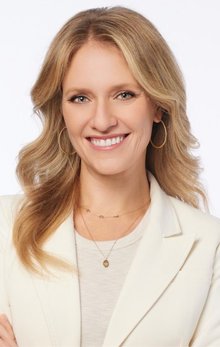
Krista Berger
Senior Vice President, Global Head of Barbie