
The Boom of Labubu: Can Supply Meet Consumer Demand?
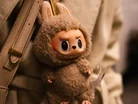
Chinese toy maker Pop Mart has seen a boom in Labubu sales this year, becoming one of the highest valued toy manufacturers in the world.
TikTok and celebrity culture have enticed consumers, resulting in mass market interest. Though businesses largely aim for their marketing strategies to increase product visibility, the surge in demand proved to be more than anticipated within the UK.
In May 2025, Pop Mart pulled all Labubu products from its UK stores, due to fights breaking out between customers on stock-drop days, with some stores running out of Labubu products.
After the increased interest in Labubu, Pop Mart is valued at US$44.43bn in June 2025, which is more than the combined creators of Transformers (Hasbro at US$9.45bn), Hello Kitty (Sanrio at US$11.2bn) and Barbie (Mattel at US$6.08bn).

The rise of Pop Mart
Designer Kasing Lung created Labubu in 2015 with How2Work, before collaborating with Pop Mart in 2019. The Labubu dolls quickly became a bestseller for Pop Mart, with new products dropping and consumers queuing up to buy them.
The 2025 launch of Labubu 3.0 added US$1.6bn to the net worth of Wang Ning, CEO and Founder of Pop Mart, in one day–making him the 10th richest man in China according to Forbes' Real-Time Billionaires List.
Labubus can be seen everywhere around the world, with an increase of visibility, especially in 2025.
The Labubu bag charms have been spotted on the bags of Rihanna and Dua Lipa, and enjoyed by BLACKPINK’s Lisa on Instagram.
In London, Selfridges opened two new Robo Shops – vending machines for toys – dedicated to Pop Mart products, with Labubu advertisements all over.
These large-scale partnerships have increased consumer awareness of the brand, as Wang explains: "The global attention and affection we have garnered make it possible for us to become a world-class cultural and consumer brand.”
A vision of global expansion
In its 2024 Investor Relations Document, Pop Mart proposed a vision of global expansion. The US has one of the world’s largest consumer markets, spending US$14tn in 2021 - and with the nation's fascination with pop culture, Labubu greatly benefits from US consumerism – the company operates 26 stores in the US, with plans to expand with two flagship stores.
Much of its visibility has come from celebrity endorsements and collaborations with brands. In late 2024, Pop Mart released a Coca-Cola blind box series, which included eleven winter themed Labubus. Non-US collaborations include a 13-figurine line with One Piece in early 2025, and the ‘Lalubu’s Artistic Quest’ series which partners with museums around the world.
More than 70% of Pop Mart's production comes from factories in Dongguan, south China's Guangdong Province, the heart of China's toy manufacturing industry.
“We definitely hope to capture the success of 2024 and further grow Pop Mart into a global brand,” says Pop Mart’s Head of Strategic Partnership, Kevin Zhang.
“We are not only focusing on shouting out our Chinese identity. We're still growing and expanding so we do need support from brand partners and the fan community.”
Unprepared for demand
The demand for Labubu dolls has also seen an increase in delivery time, with retailers battling long lines and resale frenzies. Many of the dolls are even part of ‘blind boxes’ – meaning the customer does not know which doll they have bought until they open it.
At a Labubu themed Yongle International Auction in June 2025, 200 people gathered for the chance to buy 48 items. One of those, a 4ft4in Labubu doll, was bought for US$150,324.
In the UK alone, prices for these products vary significantly, which only increases with demand: at retail prices they are priced between £13.50 and £50 (US$18.17 and US$67.32), but the demand for the dolls has seen the second hand market spike.
Due to unsustainable demand for the dolls, Pop Mart made the decision to limit stick both online and in-store, ensuring the company hits but does not exceed its monthly production capacity of 10 million units.
Going forward, demand forecasting and real-time inventory management will be critical to ensure a smooth supply chain.
This model is working–by the first quarter of 2025, the US Pop Mart had already exceeded 2024's total revenue, proving the demand and need for expansion–with a membership base exceeding 1.7 million.
With the company’s plans for growth and enduring consumer interest, Labubu continues to stand out as one of Pop Mart’s most profitable and exciting products.
Explore the latest edition of Supply Chain Digital and be part of the conversation at our global conference series, Procurement & Supply Chain LIVE
Discover all our upcoming events and secure your tickets today.
Supply Chain Digital is a BizClik brand.